
The unemployment rate in the United States sat at 4.3 percent in April, according to a jobs report released by the Bureau of Labor Statistics on May 8.
Positions in healthcare, transportation, warehouses, and retail trade ticked up last month as federal government jobs dipped.
But the future of the job market remains uncertain, especially for college graduates, amid fears that the quickly growing rise of artificial intelligence (AI) could replace current and future opportunities.
The Epoch Times asked readers to weigh in on the economy and job market amid the Iran War and AI advancements, and 2,835 people responded.
Artificial Intelligence
More than seven million Americans were unemployed in April, according to the Bureau of Labor Statistics.
The government agency suggested that 6.1 million unemployed people were actively looking for a job.
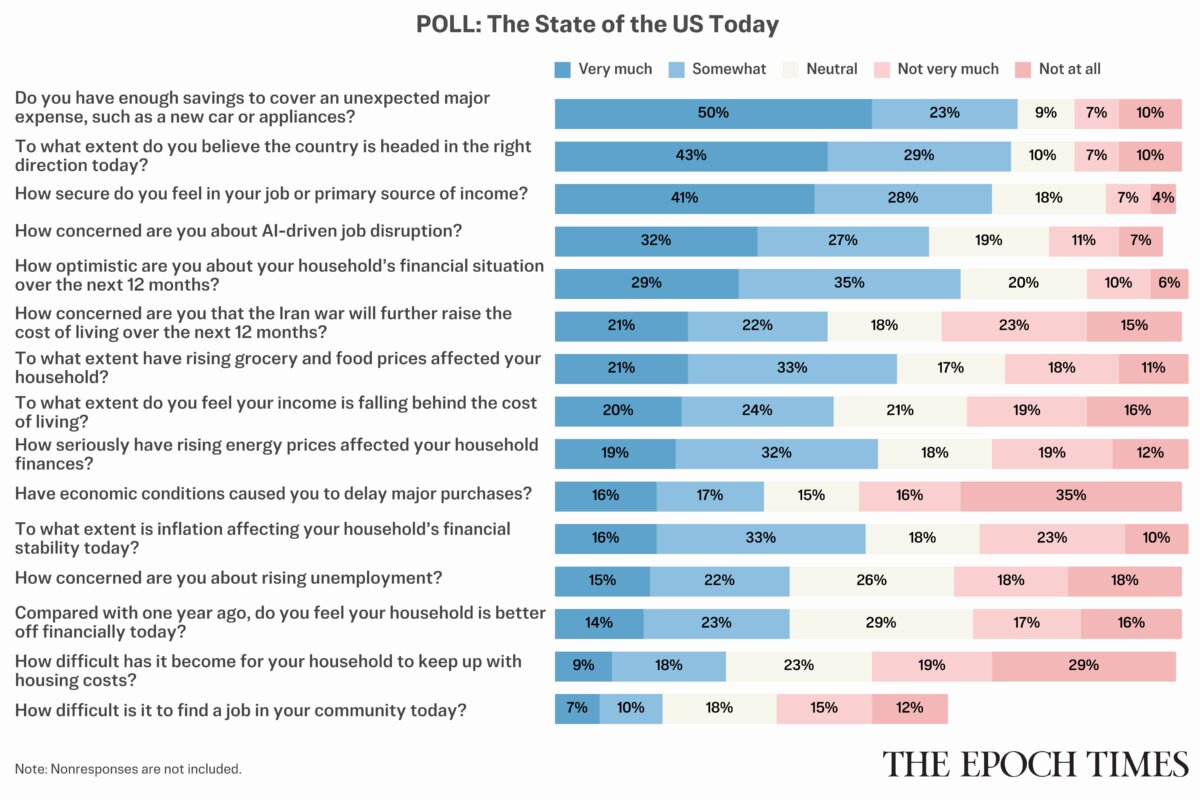
In the latest Epoch Times survey, only 17 percent of polled readers said it was difficult to find a job in their community, but they had concerns about the rise of AI.
Nearly 60 percent of survey-takers were concerned that AI could disrupt the job market, 18 percent were not worried, and the rest remained either neutral or did not have a response.
Poll participants had mixed reactions when they were asked if they were concerned about the rising unemployment rate, with 37 percent agreeing they were concerned, 36 percent suggesting they were not worried, and just over one-quarter (26 percent) remaining neutral.
Nearly 70 percent of the sample group suggested they felt secure in their jobs while 11 percent of people polled reported “not very much” security or “not at all.”
Readers were divided on if they felt that their personal income was falling behind the cost of living. When polled, 44 percent agreed, 35 percent disagreed, and 21 percent were neutral.
Financial Stability
Respondents were mixed on how inflation has impacted their households.
When survey respondents were asked how inflation has impacted their household’s financial stability, one-third of people polled said it was “somewhat” impacting them, while another third suggested it wasn’t affecting them “very much” or even at all.
Only 16 percent of people polled suggested inflation was “very much” impacting them.
More than half (54 percent) of readers surveyed agreed that rising grocery and food prices have affected their household, 29 percent said it did not have a large impact, and 17 percent remained neutral.
More than half (51 percent) of poll respondents agreed that rising energy prices have affected their household finances, 31 percent disagreed, and 18 percent remained neutral.
When survey-takers were asked if their household was better off financially today than it was one year ago, 37 percent agreed, 29 percent remained neutral, and 33 percent polled “not very much” or “not at all.”
Nearly 3 out of 4 respondents said they had enough money in savings to cover an unexpected expense like a new car or appliance.
Just over half (51 percent) of poll-takers suggested economic conditions have not caused them to delay major purchases, while 33 percent said conditions did impact their purchasing decisions.
As poll-takers looked ahead to the next 12 months, 64 percent suggested they were optimistic about their household’s financial situation over the next 12 months, 16 percent said they were not, and 20 percent stayed neutral.
Energy Costs
The war in Iran has surged gas prices across the globe since it started on Feb. 28.
Two days before the conflict in the Middle East, the average price for a regular gallon of gasoline in the U.S. was $2.98, according to the American Automobile Association (AAA).
As of May 29, AAA reported the price for a regular gallon of gasoline was $4.39.
When people polled were asked if they were concerned the Iran war would keep raising the cost of living over the next 12 months, 43 percent agreed they were worried, 38 percent were not concerned, and the rest remained neutral or said they did not know.
When asked about the future of the United States, 72 percent of readers polled said they thought America was going in the right direction, 17 percent disagreed, and 11 percent remained neutral.
 Friends Read Free
Copy
Facebook
Tweet
Friends Read Free
Copy
Facebook
Tweet