
In the aftermath of Typhoon Halong, evacuees from southwest Alaska have begun to face the reality that they may not return home for some time.
“There was a meeting with the tribal leaders and their people inside of the shelter, and so they had us attend with them. I am in touch with all these tribal leaders, and that got very touchy,” Amy Metz, a meteorologist with emergency-relief organization the United Cajun Navy, told The Epoch Times.
“They had people [who would] say, ‘You know, we’re still looking to see what is damaged, what we need to repair. We’re buying the materials now. We don’t know if we can go home,’ and the tribal leaders are like, ‘We don’t have the answers,’ and people are upset.”
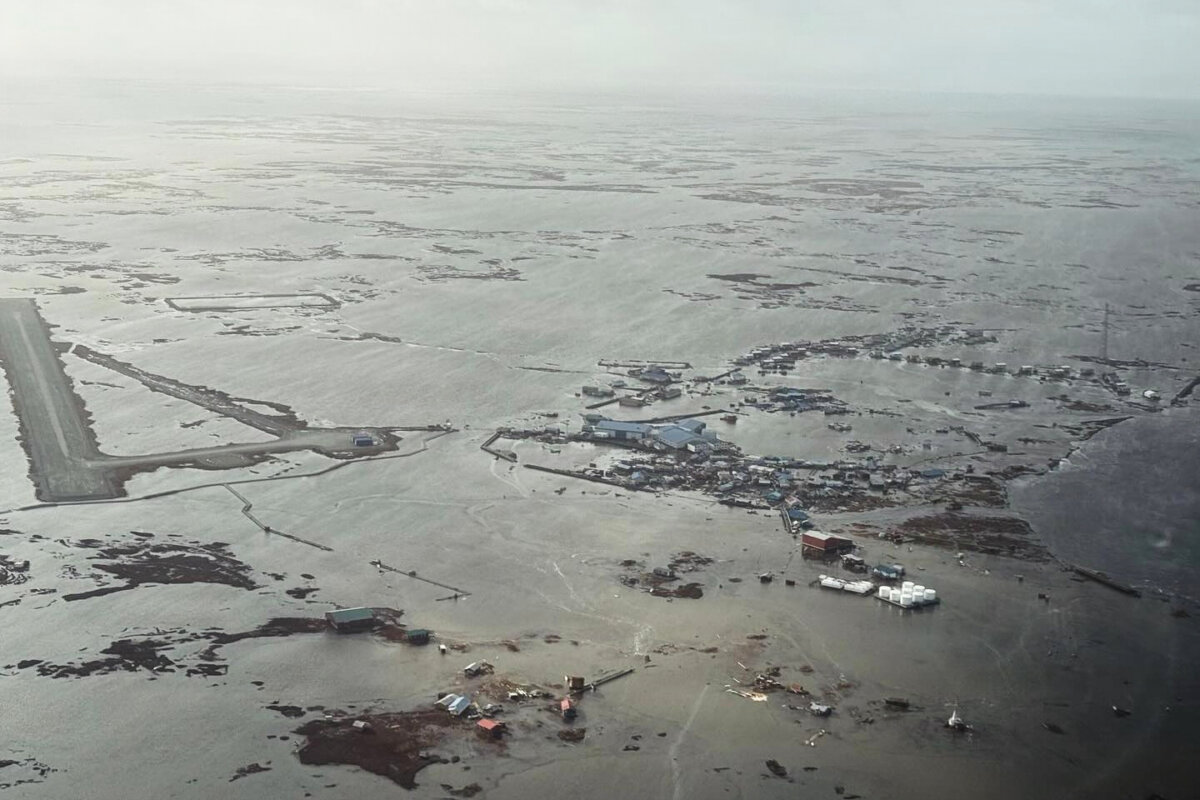
It has been nearly 10 days since the remnants of Typhoon Halong struck the isolated communities of southwest Alaska, killing at least one person and displacing more than 1,500 as hurricane-force winds and a catastrophic storm washed away homes and buildings.
Two people remain missing, scores of pets remain separated from their owners, and damage assessments are still underway as winter begins to set in.
Alaska’s Division of Homeland Security and Emergency Management said more than 650 people had been evacuated from Bethel to Anchorage as of Oct. 20, with 315 staying in shelters.
It also said that debris clean up and repair work has already begun. Pets are entering foster homes, reunification processes have begun, and 60 students have been enrolled in the Anchorage School District.
The United Cajun Navy and a variety of government, tribal, and non-profit organizations continue to deliver and distribute supplies destined for those displaced and in shelters as well as for groups deployed further west.
Metz said that she and Incident Commander Josh Gill have remained in Anchorage to ensure the arrival and delivery of pallets of supplies sent from Baton Rouge, Louisiana. They have also assisted native leaders in acquiring traditional foods, including moose legs donated from a butcher and native berries sourced via social media.
“A lot of people are not sure if they’re going to be going back to their villages,” Metz said. “Some of them got jobs in Anchorage already and are just like, ‘Nope, this is gonna be my new life here.’”
She said the United Cajun Navy is working with tribal emergency managers to secure temporary living in native communities surrounding Anchorage.
Her statement echoes one that Jeremy Zidek, a spokesman for Alaska’s Division of Homeland Security and Emergency Management, made to The Epoch Times.
“Some of those folks have found relatives here in Anchorage to go and stay with,” he said. “I would imagine some of them have just [gone] out and got their own accommodations, whether that’s a hotel room, an Airbnb, or something else. Maybe they found some other housing. So it’s a real variety of solutions that are taking place.”
Regarding the work left in Bethel and other affected communities, Metz said they would be helping to winterize homes, look for the missing, and deliver testing kits to Bethel Friends of Canines as part of the effort to reunite pets with their families.
“We’re going to pick up those test kits from Anchorage and then fly them over tomorrow morning and join them for two days at least,” Metz said.
“The first day will be in the shelter with the dogs,” she said. “And there’s a chance, you know, when we’re there, that we’re looking to get aircraft so that we can get into the villages and help retain some of the belongings that people have asked us to get. And of course, the animals are a top priority. If we can’t take them all out, we are setting up ways that they can stay warm and stay fed, even if they’re stuck there longer.”
 Friends Read Free
Copy
Facebook
Tweet
Friends Read Free
Copy
Facebook
Tweet