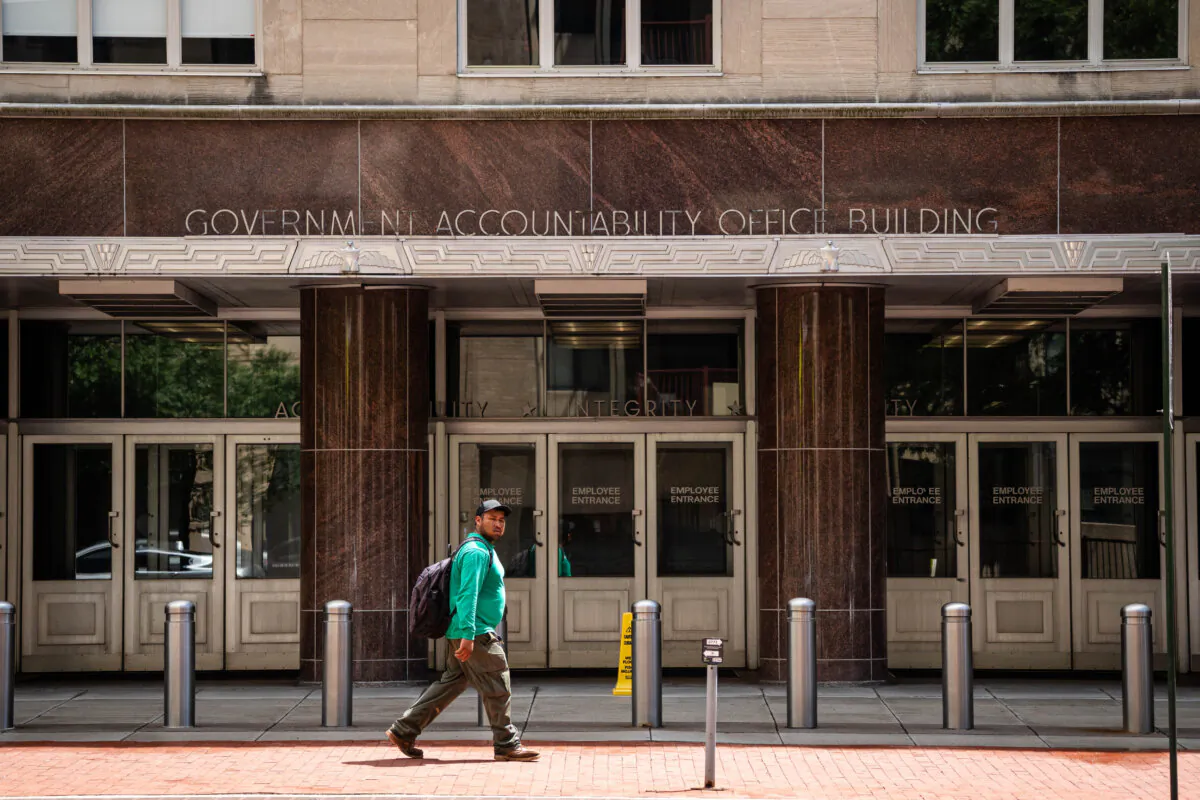

Although the public health emergency from the COVID-19 pandemic is over, some government programs are still in place and being taken advantage of, a senior official from the Government Accountability Office (GAO) told the Senate Committee on Small Business and Entrepreneurship on Dec. 10
“Fraud risks and improper payments didn’t disappear with the end of the public health emergency,” Courtney LaFountain, acting director of Financial Markets and Community Investments at the GAO, told the committee.
She said her office has made dozens of recommendations for improvement within the U.S. Small Business Administration (SBA) and its pandemic relief programs since June 2020.
She told the committee that the GAO made 42 such recommendations, of which 17 have been implemented.
Most GAO recommendations the SBA implemented were related to fraud risks, including implementing oversight plans, conducting fraud risk assessments, and developing a fraud strategy, according to the GAO.
“GAO has estimated that the additional controls SBA put in place for its pandemic-relief programs collectively had saved the government more than $30 billion as of the end of fiscal year 2025,” LaFountain said.
LaFontain said that while the SBA has made progress, it has yet to fully utilize data analytics, fix weaknesses in fraud referrals, and improve improper payment tracking.
LaFountain’s office also made 14 recommendations on protecting the Small Business Administration from cyberattacks. She said the SBA agreed with three, partially agreed with three, and disagreed with the other eight recommendations.
“It may be that they’re thinking their current efforts are sufficient, or they’re kind of making progress,” LaFountain told The Epoch Times in an interview on Dec. 11.
When a federal agency heeds the GAO’s advice, progress is made, sometimes in unforeseen places, LaFountain said.
With improved oversight implemented in the Paycheck Protection Program and COVID-19 economic injury disaster loan, there were positive spillover effects down the road into newer pandemic programs and the restaurant revitalization fund, LaFountain said.
“Our recommendations are important because they’re based on evidence and kind of aimed at helping shore up programs and strengthen weaknesses,” she told The Epoch Times. “We have seen clear improvements where SBA has taken steps that address our recommendations.”
LaFountain said that simply addressing weaknesses in existing, and sometimes outdated, government systems and technology is a step toward improvement.
Historically, and more recently in COVID-19 relief programs, a main problem was ensuring intended participants were receiving the benefits being offered, LaFountain said, which was especially evident early on in the COVID-19 pandemic.
“You need to have the right technology infrastructure both to administer the program appropriately and make sure you know you’re serving the intended participants as well as keeping out the bad actors,” she told The Epoch Times.
Another witness from the committee hearing, Open the Books CEO John Hart, discussed running the government like a small business with lawmakers.
“We’re here, of course, because government doesn’t operate like a small business. Instead of doing more with less, we routinely see government doing less with more,” Hart said.
“Today, we have more than 400 agencies and subagencies in the federal government. Do small businesses need 400 agencies to succeed, or would they be better off with 300, 200, 100, or maybe the four our founders authorized in the Constitution? And the agency charged with helping small businesses often misses the mark.”
The Epoch Times reached out to the Small Business Administration for comment, but did not receive a response by publication time.
 Friends Read Free
Copy
Facebook
Tweet
Friends Read Free
Copy
Facebook
Tweet