
President Donald Trump approved an emergency declaration on Feb. 21 for Washington following a massive raw sewage spill into the Potomac River, the Federal Emergency Management Agency announced.
The White House named the Environmental Protection Agency (EPA) as the lead federal agency in response to at least 240 million gallons of wastewater discharged from the Potomac Interceptor sewage line into the waterway last month. Trump blamed local leaders for not responding adequately to the crisis, while governors blamed the federal government.
There is no impact to the drinking water provided to the Washington metro area, according to an EPA statement.
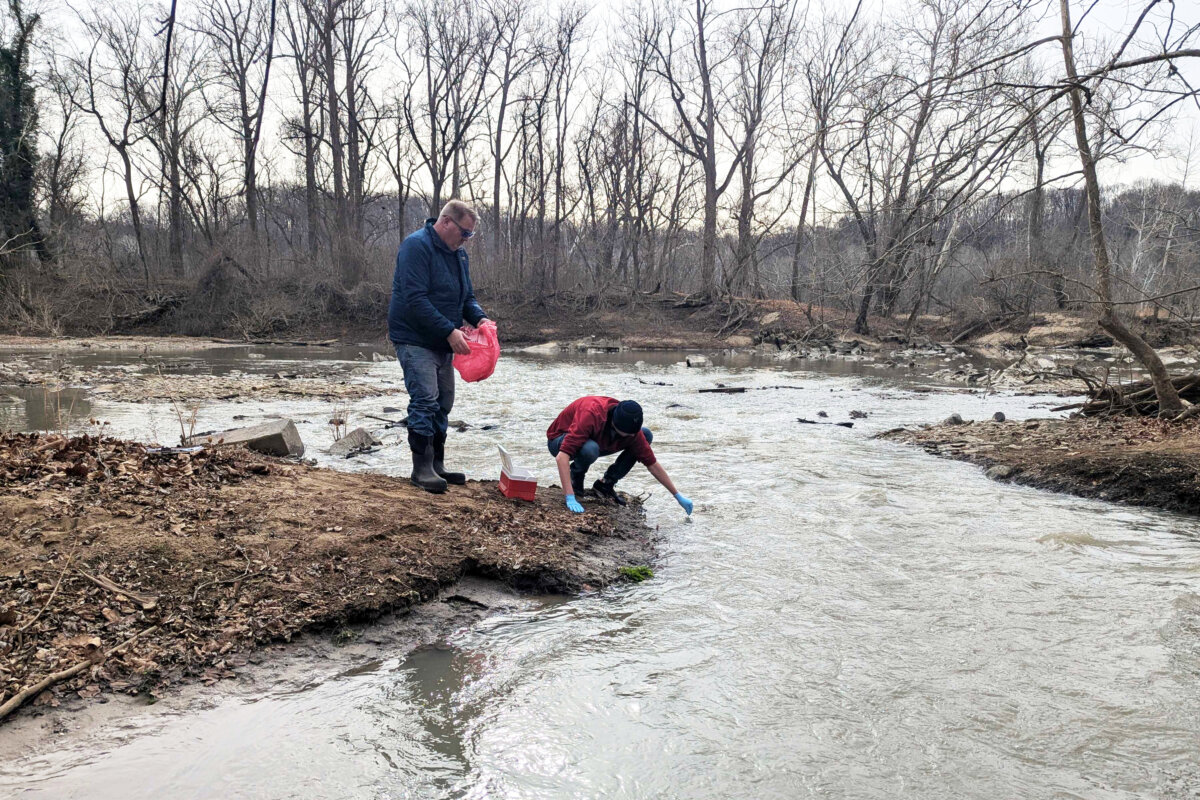
However, water samples collected from the Potomac River have returned high levels of E. coli and Staphylococcus aureus, the bacteria that cause staph infections, according to University of Maryland researchers.
“The Potomac Interceptor collapse and overflow is a sewage crisis of historic proportions,” EPA Administrator Lee Zeldin said in the statement.
At Trump’s direction, both the EPA and Federal Emergency Management Agency will collaborate with local and state partners on the Potomac River spill.
Zeldin additionally appointed Assistant Administrator for Water Jessica Kramer as the senior response officer for the emergency.
“We will work thoroughly and efficiently to support the long-term health of the Potomac, the region’s water supply, and local residents and communities,” Kramer said in the EPA statement.
Initially, state and local leaders did not request federal assistance.
But Trump, blaming “incompetent” local and state management for the spill, directed federal emergency teams on Feb. 16 to respond to the crisis anyway, stating in a social media post that he does not want local leadership “to turn the River in the Heart of Washington into a Disaster Zone.”
“There is a massive Ecological Disaster unfolding in the Potomac River as a result of the Gross Mismanagement of Local Democrat Leaders, particularly, Governor Wes Moore, of Maryland,” the president posted on Truth Social.
Maryland Gov. Wes Moore’s spokesperson told The Epoch Times via email that the president has his facts wrong and that the federal government is responsible for the Potomac Interceptor.
“For the last four weeks, the Trump Administration has failed to act, shirking its responsibility and putting people’s health at risk,” the spokesperson said.
The EPA is the primary regulator, alongside state partners who regulate state waterways and wetlands, while pipe operator DC Water—an independent public authority of the District of Columbia—oversees repairs and cleanup and gives operational updates to state and federal partners.
Two days after Trump directed federal emergency teams to respond, Washington Mayor Muriel Bowser declared a local public emergency and requested help from the White House.
Bowser, who has maintained that drinking water in the Washington area is safe, said in a letter to the president that she intends to seek a full reimbursement from the federal government for the response and repair costs.
Following Bowser’s request, Trump called on the governors of Maryland and Virginia to do the same.
“If they can’t do the job, all they have to do is call, be polite and respectful,” Trump said in a Feb. 19 Truth Social post. “ACT FAST. I am awaiting your call.”
The EPA said it will work with partners to ensure that the cleanup is complete before the festivities begin for the America250 celebrations set to start in Washington on July 4.
The spill began on Jan. 19 after a section of the Potomac Interceptor sewer line collapsed in Maryland. The disaster became one of the largest spills in U.S. history.
The section of the Potomac Interceptor that failed was a 60-year-old, 72-inch concrete pipeline along the Clara Barton Parkway in Montgomery County, Maryland. The sewer line moves up to 60 million gallons of raw sewage from parts of Virginia and Maryland to DC Water’s Blue Plains Advanced Wastewater Treatment Plant.
On Jan. 25, DC Water redirected the spill back into an undamaged portion of the Potomac Interceptor to be transported for treatment, preventing further contamination of the river.
“We will work transparently, collaboratively, and efficiently to fulfill President Trump’s desire to quickly end this disaster … and prevent it from ever being repeated,” Zeldin said in a post on X.
DC Water is handling repairs to the pipe, which are projected to be completed by mid-March, the EPA said.
 Friends Read Free
Copy
Facebook
Tweet
Friends Read Free
Copy
Facebook
Tweet