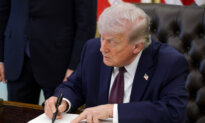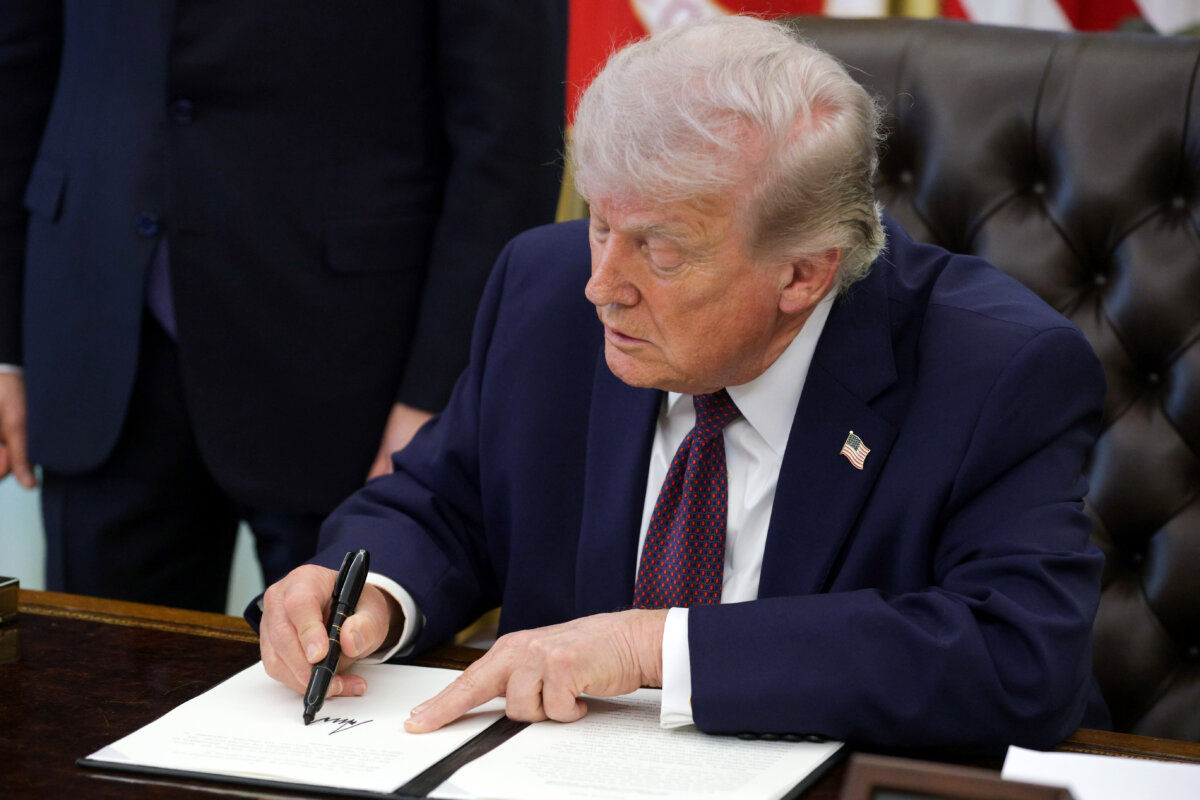

President Donald Trump signed an executive order to “save college sports” on April 3.
“It has become clear that more comprehensive executive action is required before college sports are lost forever,” Trump’s April 3 executive order reads.
The order proposes a series of changes that include allowing federal agencies to cut funding for colleges that do not comply with mandates covering transfers, eligibility, and pay-for-play.
Trump said the rules governing pay-for-play and eligibility have been substantially loosened through a number of judicial rulings.
Starting on Aug. 1, college athletes will be able to transfer only one time as they receive their undergraduate degree. They will be able to transfer an additional time if they receive a four-year degree.
Additionally, the transfer window cannot “incentivize interference with athletic seasons or the academic year,” according to the order.
The order states that college athletes will be able to play for only a five-year period but that there will be exceptions for military service and missionary service.
Universities have faced enormous pressure to win football and basketball games—which are the main revenue generators for athletic departments—but Trump said the competition has caused an “out-of-control financial arms race” in sports that has put some departments hundreds of millions of dollars in debt.
The president said this executive action will help end the “chaotic state of affairs” that has undermined competition, reduced opportunities for student-athletes, and jeopardized support for the current range of college athletics.
“Fair competition cannot occur without a consistent set of rules concerning pay-for-play or player eligibility that cannot be endlessly relitigated in court,” the executive order reads.
Last year, a federal judge approved a $2.8 billion settlement, which resolved three lawsuits filed by student-athletes who argued that the NCAA’s rules barring revenue sharing between schools and students violated U.S. antitrust laws.
The ruling allowed schools to share athletic revenues with student-athletes for the first time.
The announcement from the White House will also affect women’s sports by ensuring that the sharing of revenue between schools and students “preserves or expands scholarships and collegiate athletic opportunities in women’s and Olympic sports.” The order also prohibits the use of federal funds for name, image, and likeness schemes, revenue-sharing payments, or coaching or athletic compensation.
The order came down less than one month after Trump hosted lawmakers, conference commissioners, the president of the NCAA, and CEO of the U.S. Olympic and Paralympic Committee for a roundtable discussion at the White House.
Trump warned on March 6 that the “whole educational system” could go out of business without fixes to college sports.
The Associated Press contributed to this report.
 Friends Read Free
Copy
Facebook
Tweet
Friends Read Free
Copy
Facebook
Tweet