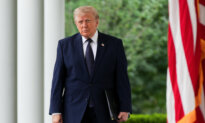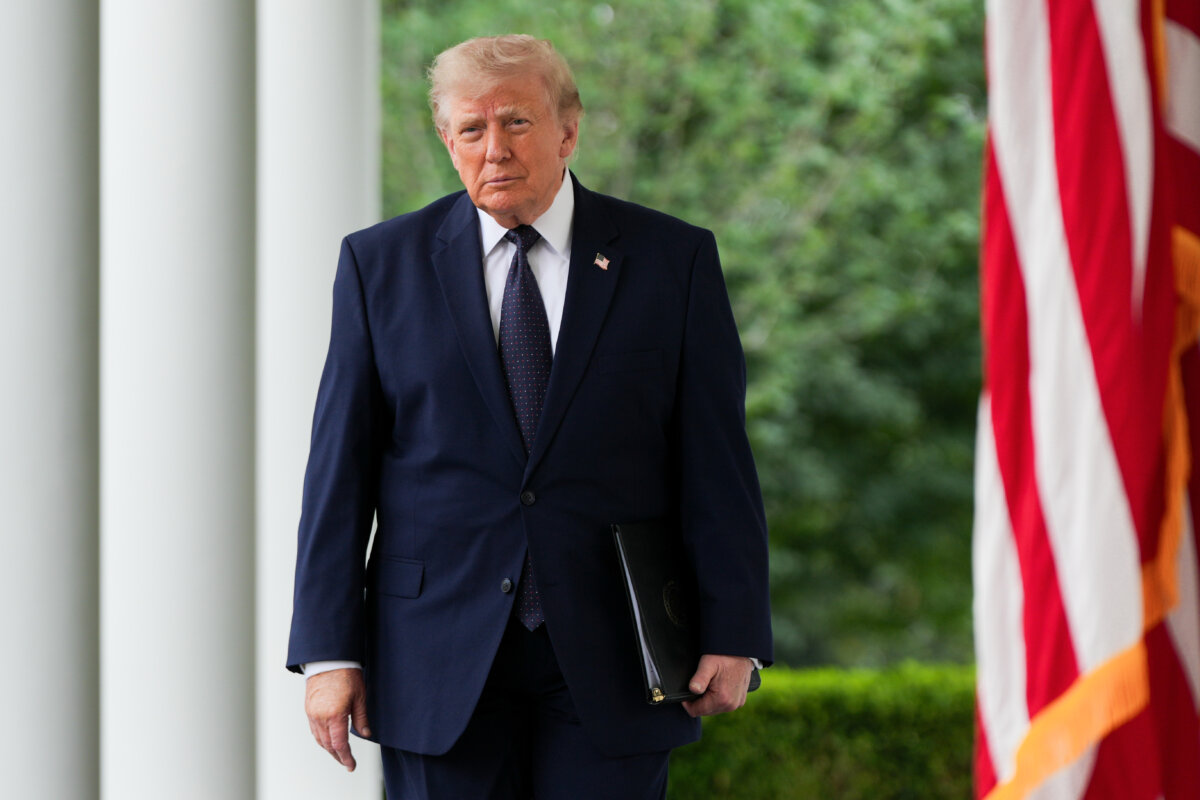

President Donald Trump said on July 8 he will ask the Supreme Court to rehear a case challenging his executive order on birthright citizenship after justices rejected his policy in a landmark ruling on June 30.
“I will be asking for a Rehearing by the United States Supreme Court, IMMEDIATELY,” Trump posted on Truth Social. “This miscarriage of justice will destroy America if they don’t change their absolutely insane decision.”
“Signs and Billboards are being put up all over our Southern Border, and Mexico, advertising BIRTHRIGHT CITIZENSHIP, with ‘Deliveries starting at $4000,’” Trump wrote.
U.S. Solicitor General John Sauer argued during the Supreme Court case that birthright citizenship had “spawned a sprawling industry of birth tourism as uncounted thousands of foreigners from potentially hostile nations have flocked to give birth in the United States in recent decades, creating a whole generation of American citizens abroad with no meaningful ties to the United States.”
The Center for Immigration Studies estimated in 2020 that the number of birth tourists each year is 20,000 to 26,000.
“American citizenship is not for sale! In fact, that is a crime, and therefore, the Supreme Court’s ruling is wrong,” Trump said in his Truth Social post.
In 2019, 19 people were indicted on federal criminal charges in connection with a massive Orange County-based birth tourism business that catered to wealthy pregnant clients and government officials, charging them tens of thousands of dollars so their children could get U.S. citizenship.
Federal authorities have also busted other birth tourism rings in recent years.
Trump’s executive order 14160, signed the day he was sworn into office, Jan. 20, 2025, declared that the 14th Amendment should not be interpreted to extend citizenship universally to everyone born within the United States.
The president argued that the 14th Amendment was created to grant citizenship to freed slaves and their children, not to children born to temporary visitors.
The Supreme Court ruled 6–3 in Trump v. Barbara to strike down the executive order.
Chief Justice John Roberts wrote in the majority opinion, “A child born on American soil and subject to American law was made an American citizen.”
Justices Clarence Thomas, Neil Gorsuch, and Samuel Alito dissented. Justice Brett Kavanaugh concurred in the majority opinion but disagreed with aspects of the reasoning.
Parties have 25 days to file a petition for rehearing after the Supreme Court issues a decision, but the court rarely rehears a case decided on the merits.
The last time the court granted a rehearing was in 1956 in Reid v. Covert, which resulted in the only instance in which the court reversed a decision.
The reversed ruling barred civilian dependents of armed forces stationed overseas from being tried in military courts.
 Friends Read Free
Copy
Facebook
Tweet
Friends Read Free
Copy
Facebook
Tweet