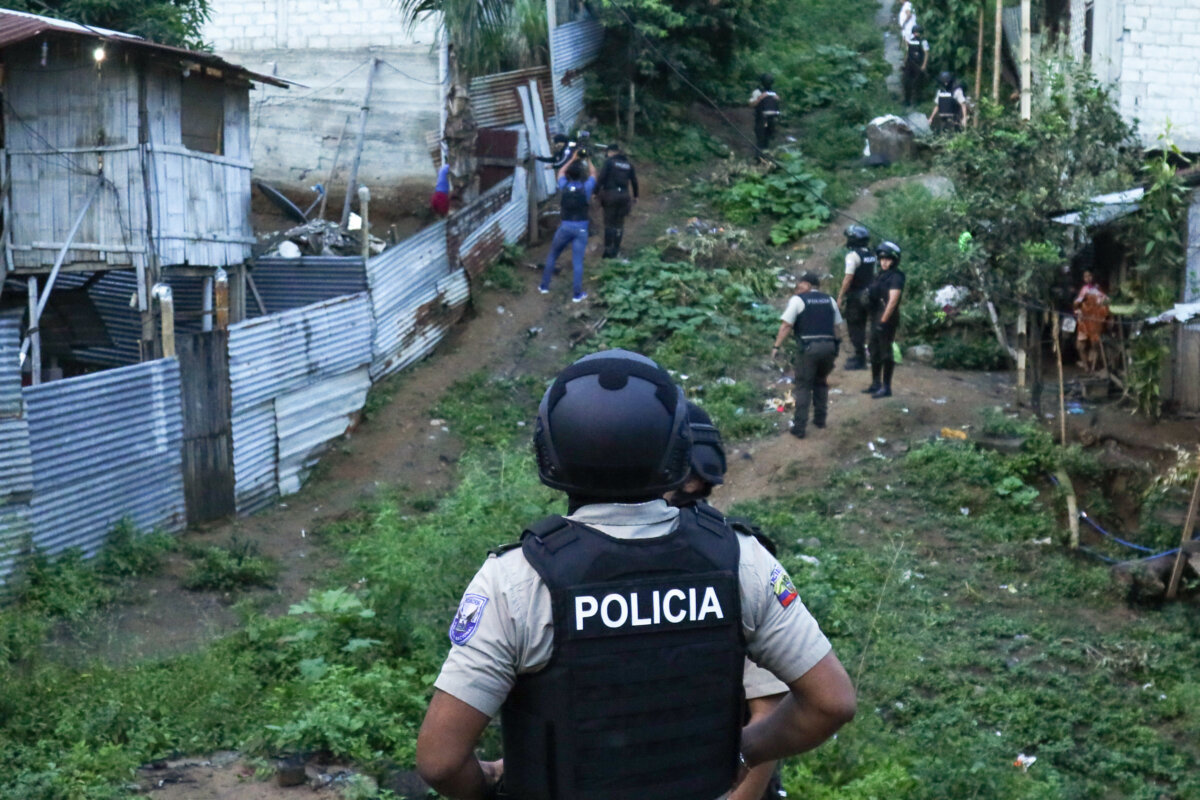

The U.S. Treasury Department on Aug. 20 sanctioned 15 people linked to two of Ecuador’s biggest gangs for their involvement in monthly shipments of thousands of kilograms of cocaine from Ecuador, via Mexico, to the United States.
In a statement, the Treasury Department said the network was affiliated with Los Choneros and Los Lobos, which were designated as foreign terrorist organizations (FTOs) in September 2025.
“Operating under the guise of legitimate fishing businesses, a fleet of Ecuador-based vessels near Manta, Ecuador, secretly transfers cocaine to small power boats—known as go-fast vessels—that transit north through the Eastern Pacific Ocean (EPAC), en route to the United States,” the Treasury said.
The department said the cocaine is then smuggled into the United States by the Sinaloa Cartel and its rivals, the Cartel de Jalisco Nueva Generacion (CJNG).
“Under President [Donald] Trump’s leadership, Treasury is relentlessly targeting the narcoterrorist networks that profit from poisoning Americans,” Treasury Secretary Scott Bessent said. “Working alongside our law enforcement partners, we will continue to disrupt the cartels’ drug trafficking operations and protect our borders.”
Boat Strikes in Eastern Pacific
The U.S. military has killed more than 200 people in boat strikes targeting narcotics traffickers in the Caribbean and Eastern Pacific in the past year.
U.S. forces have targeted a wide range of craft—including semi-submersibles designed to evade radar detection, high-speed boats, and commercial fishing vessels—in international waters in the Eastern Pacific, a route frequently used by Ecuadorian and Mexican drug smugglers.
Trump has said the strikes are justified as the United States is involved in a war with Latin American drug cartels that are intent on getting narcotics into the country.
In recent years, Ecuador has become a major transit hub for cocaine being exported to North America, and the country has seen a massive spike in violence, linked to the drugs trade.
Last year, Ecuador recorded a homicide rate of 50 murders per 100,000 residents—its highest rate in decades—according to the country’s Ministry of the Interior.
Since 2021, local gangs in Ecuador have battled for control of ports and trafficking routes from Colombia and Peru, the world’s top cocaine producing countries.
Ecuadorian President Daniel Noboa has partnered with the Trump administration to target the narcotics traffickers.
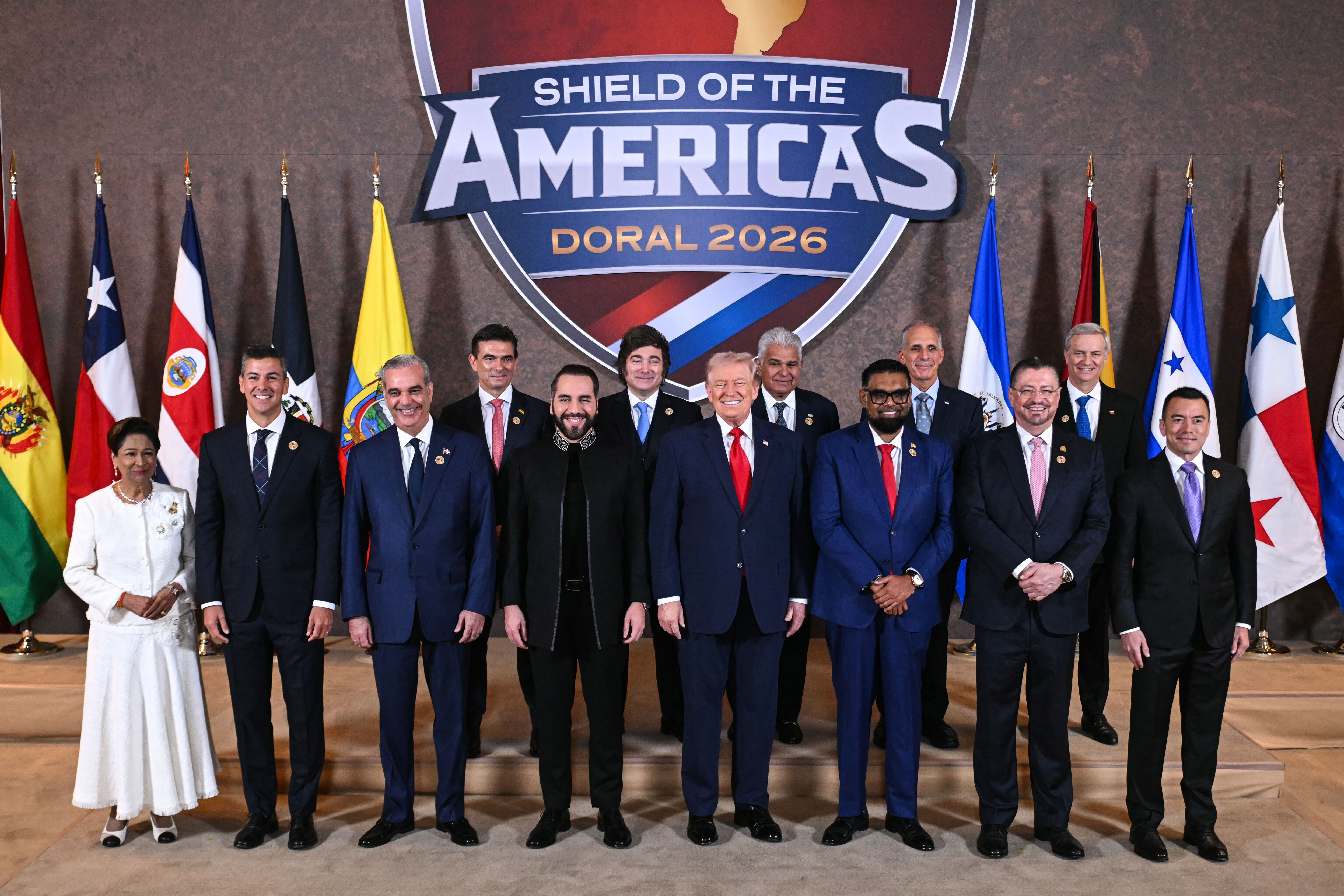 Ecuadorian President Daniel Noboa Azín (front row, far R) with U.S. President Donald Trump (front row, C) and other Caribbean and Latin American leaders at the Shield of the Americas summit in Miami on March 7, 2026. (Saul Loeb / AFP via Getty Images)
Then on March 3, 2026, U.S. Southern Command stated that U.S. and Ecuadorian military forces had conducted joint operations against designated terrorist organizations.
Alleged Los Choneros Leader Extradited
In July 2025, the alleged leader of Los Choneros, José Adolfo Macías Villamar, also known as “Fito,” was extradited from Ecuador to the United States and was arraigned in Brooklyn federal court, where he pleaded guilty to various narcotics and firearms charges.
On Aug. 20, Ecuadorian Defense Minister Gian Carlo Loffredo announced that two U.S. warships with interceptor boats and helicopters would begin patrolling Ecuador’s territorial waters as part of the war on drugs.
Loffredo made the announcement on Instagram after a meeting in the port of Manta with Gen. Francis Donovan, head of U.S. Southern Command.
Loffredo said, “Three Black Hawk helicopters are in Manta and will be conducting operations.”
“Today, Ecuador is expanding its enforcement capabilities and taking this fight into new arenas,” Loffredo said in a separate Instagram post. “Every route we reclaim represents lost ground for criminals and restored peace of mind for our families.”
He also posted images of himself boarding and inspecting a fishing vessel along with Adm. Hugo Armijos, from the Ecuadorian navy, and Gov. Xavier Negrete of Santa Elena province.
“We are making progress,” Loffredo said. “This war is being fought at sea, too, and we are going to win it.”
The Associated Press contributed to this report.
 Friends Read Free
Copy
Facebook
Tweet
Friends Read Free
Copy
Facebook
Tweet