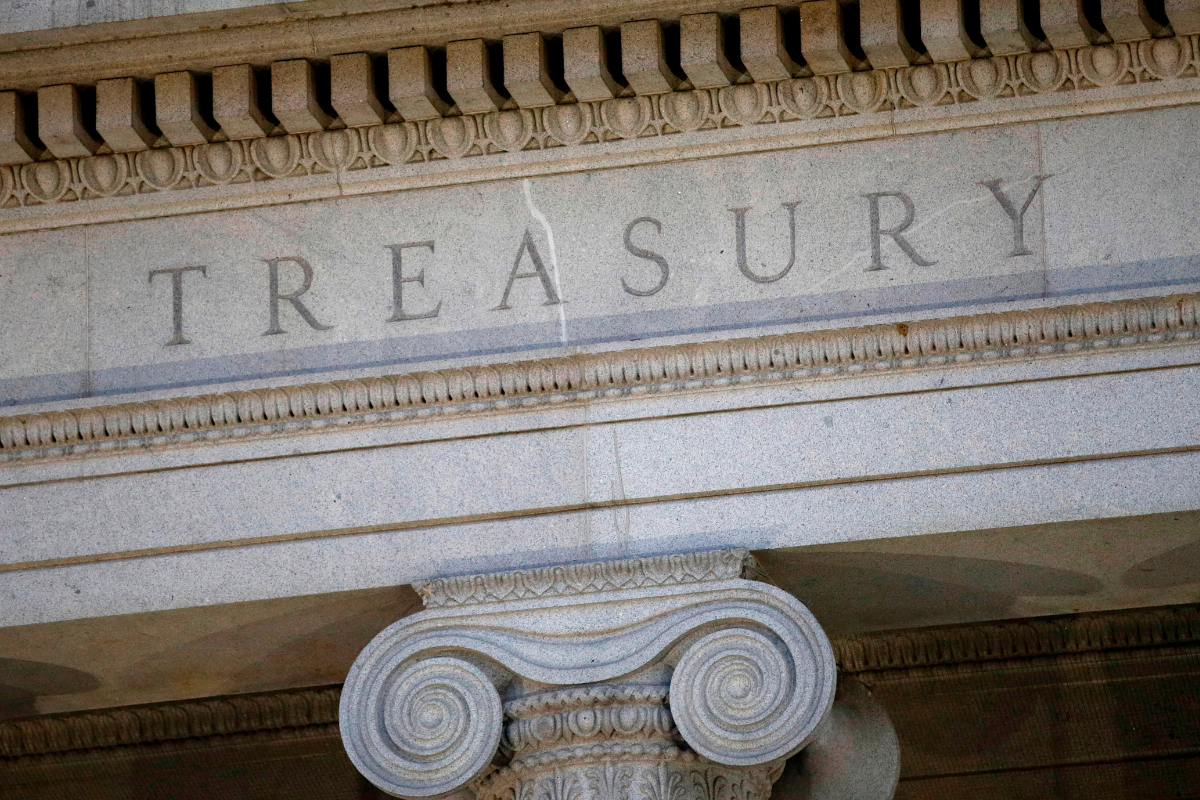

The U.S. federal government has sold 30-year debt at auction at a yield above 5 percent for the first time since 2007.
The Treasury Department sold $25 billion of new 30-year bonds on May 13, with the auction yield reaching 5.046 percent.
Treasury bond yields represent the return investors receive for lending to the U.S. government over different periods. They move in the opposite direction to prices, meaning higher yields usually reflect falling bond prices or investors demanding a better return to buy the debt.
The auction was part of the Treasury’s wider May refunding plan. On May 6, the Treasury said it would sell $58 billion in three-year notes, $42 billion in 10-year notes, and $25 billion in 30-year bonds, while raising $41.7 billion in new cash from private investors.
The rise in borrowing costs has been driven partly by an energy shock linked to the Iran war, which has lifted inflation and reduced expectations that the Federal Reserve will soon be able to cut interest rates.
On May 11, a host of global brokerages recast their projections for U.S. rate cuts in 2026, as the 10-week-old Middle East war has pushed energy prices higher.
“Global yields have probably come to the point where they are high enough to hurt sentiment. Between a resilient global economy powered by AI build-out and elevated energy prices, central banks are probably more worried about inflation,” DBS Bank senior rates strategist Eugene Leow said on May 15.
Daniel von Ahlen, senior macro strategist at GlobalData TS Lombard, said on May 15 that we are seeing “a reset of this global bond risk premium because the market is just realising we’re living in a much more volatile inflation climate.”
In a May 13 post on X, Jim Bianco, president and macro strategist at Bianco Research, said the U.S. 30-year yield was “now 5.03 percent.”
“It has only been higher for a handful of days in the last 19 years. And it is now just 8 basis points from a new 19-year high,” he said.
The pressure has not been limited to the United States.
Investors are reassessing inflation, interest rates, and Japan’s government borrowing needs.
Japan’s 10-year government bond yield hit its highest level since May 1997, according to Jiji Press, which cited Japan Bond Trading Co.
“Against a backdrop of market wariness over fiscal expansion and other factors, the long-term interest rate could reach 3 percent within this year,” Katsutoshi Inadome, senior strategist at Sumitomo Mitsui Trust Asset Management Co., told the publication on May 15.
Jiji said Japan’s bond market was also weighed down by concerns about accelerating inflation, as the de facto blockade of the Strait of Hormuz is expected to persist.
German and Italian bonds also came under pressure in early European trading.
Italian 10-year yields rose almost 11 basis points to around 3.89 percent, bringing the rise for the week to nearly 16 basis points. Benchmark German Bund yields climbed almost 7 basis points to around 3.12 percent.
In the UK, 10-year gilt yields hit their highest level since July 2008, reaching 5.137 percent amid political uncertainty and global inflation, raising concerns in London.
British Prime Minister Keir Starmer’s leadership has come under pressure after Labour suffered heavy losses in local and regional elections last week, while Nigel Farage’s Reform UK made sweeping gains.
Greater Manchester Mayor Andy Burnham is weighing up a possible leadership challenge, unsettling investors.
“A process involving Burnham promises to be more protracted and ‘noisy’, thereby prolonging and exacerbating the uncertainty about the political situation in the UK,” AJ Bell investment director Russ Mould said on May 15.
Reuters and Rachel Roberts contributed to this report.
 Friends Read Free
Copy
Facebook
Tweet
Friends Read Free
Copy
Facebook
Tweet