
The Southern Poverty Law Center (SPLC) has been hit with an 11-count indictment alleging that it defrauded donors by sending millions of dollars to informants who infiltrated white supremacist and hate groups that it publicly opposed.
The indictment by a grand jury in Montgomery, Alabama, charged the SPLC with wire fraud, making false statements to a federally insured bank, and conspiracy to commit concealment money laundering.
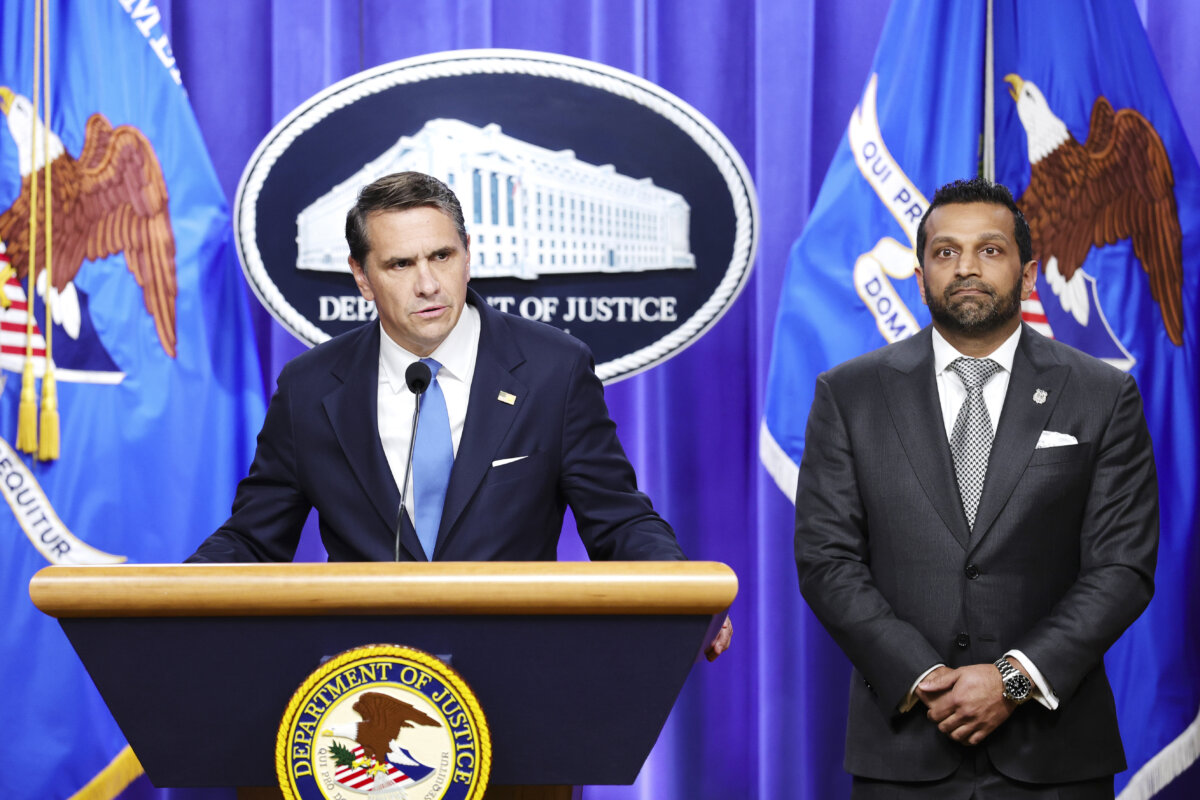
The charges, announced on April 21 by FBI Director Kash Patel and acting Attorney General Todd Blanche, sparked political backlash and new questions about the group, which was used as a credible source in media to track extremist groups with its “Hate Map” and other resources online.
Here is what we know about the group and the charges it faces.
Alleged Scheme
The indictment filed in the United States District Court for the Middle District of Alabama accused the SPLC of secretly sending more than $3 million in donated funds to leaders and organizers of racist groups, including the Ku Klux Klan, the Aryan Nation, and the National Alliance, between 2014 and 2023.
The nonprofit organization was accused of sending donations into bank accounts of fake entities that had names such as “Rare Books Warehouse” and “Tech Writers Group.” The accounts were then used to funnel money into the pockets of alleged informants in the racist groups that it claimed to strongly oppose.
The informants were called “field sources” or “Fs.”
The indictment alleged that the donation money, which was supposed to dismantle violent extremist groups, actually was being used, in part, to pay and benefit leaders in the exact groups the nonprofit alleged it was trying to take down.
One of the informants, it says, was part of a leadership chat group that planned the 2017 “Unite the Right” protest in Charlottesville, Virginia, that turned deadly.
The informant, whom the indictment called F-37, allegedly made “racist postings under the supervision of the SPLC and helped coordinate transportation to the event for several attendees.”
The informant received more than $270,000 between 2015 and 2023 from the SPLC.
The SPLC is alleged to have paid a separate informant more than $1 million between 2014 and 2023 to leak information about neo-Nazi organization the National Alliance.
One informant was the leader of the National Socialist Party of America, a neo-Nazi group founded in 1974 by the remnants of the American Nazi Party. The SPLC paid that person, who was not named in the indictment, more than $70,000 between 2014 and 2016. Meanwhile, they had their own “Extremist File” webpage of the group that the SPLC solicited donations to fight.
The SPLC faces six counts of wire fraud for allegedly devising a scheme to “defraud donors” and attempting to raise money under “false and fraudulent pretenses.”
The nonprofit faces four counts of making false statements to a federally insured bank, which allegedly had false and misleading information about the owners of the bank accounts that were used to move money from the SPLC to the informants.
The final charge the SPLC faces is one count of conspiracy to commit concealment money laundering.
SPLC Responds
The nonprofit organization issued a swift response to the indictment on April 21.
Interim President and CEO Bryan Fair claimed that the 11-count indictment was the latest example of the Trump administration targeting organizations it does not align with.
“The federal government has been weaponized to dismantle the rights of our nation’s most vulnerable people, and any organization—like ours—that tries to stand in the breach,” Fair said.
“We stood in the vanguard then, and we stand in the vanguard today. We will not be intimidated into silence or contrition, and we will not abandon our mission or the communities we serve.”
Fair suggested the nonprofit would share what it learned with the FBI but did not share its use of informants broadly “with anyone.”
During the speech, he acknowledged that the SPLC used “paid confidential informants” in the past.
“This use of informants was necessary because we are no stranger to threats of violence,” Fair said.
“In 1983, our offices were firebombed, and [in] the years since, there have been countless credible threats against our staff.”
Fair said the SPLC no longer works with paid informants.
The Epoch Times has contacted the SPLC’s legal team for comment on next steps in the case but received no response.
Congressional Response
The 11-count indictment received mixed reactions from lawmakers on Capitol Hill.
House Democratic Leader Hakeem Jeffries (D-N.Y.) called the indictment “baseless and illegitimate.”
“These partisan hacks who continue to weaponize the criminal justice system against perceived opponents will never intimidate us,” Jeffries wrote in an X post on April 21.
Senate Minority Leader Chuck Schumer (D-N.Y.) accused the Trump administration of “waging a vindictive campaign” against the organization.
“Weaponizing the DOJ to indict long-standing watchdogs is a message: if you defend voting rights, fight white supremacy, or protect civil rights, you’re next,” Schumer wrote in an X post on April 22.
Sen. Mike Lee (R-Utah) pushed back against Schumer’s post on the platform.
“Committing wire fraud to send money to the [Ku Klux Klan] is an odd way to safeguard democracy, Senator,” Lee wrote.
 Friends Read Free
Copy
Facebook
Tweet
Friends Read Free
Copy
Facebook
Tweet