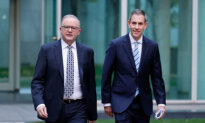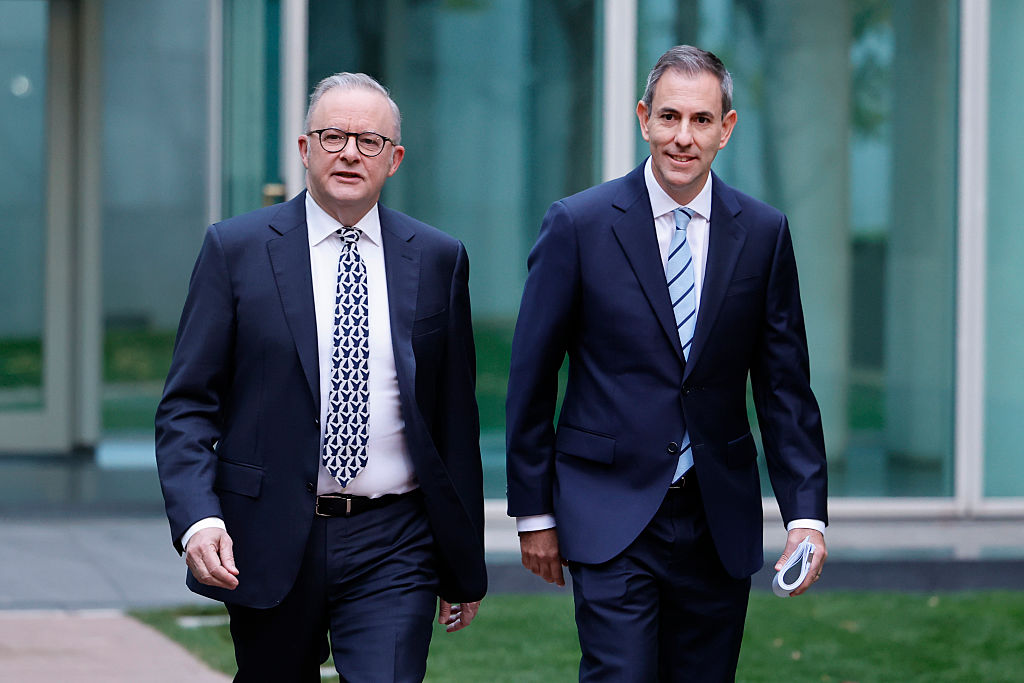

From restaurants, hairdressers, and roofers to mechanics, a new online trend is taking off with Australian business owners reacting strongly to the Labor government’s new taxes on wealth creation vehicles.
Last week, Labor overhauled negative gearing on property investments, expanded the capital gains tax, and imposed a new 30 percent tax on discretionary trusts—a legal tool often used by small businesses to help split income and lower their tax obligations.
Yet small business owners have flooded social media with AI generated images of Prime Minister Anthony Albanese alongside the business owners, often with the caption: “Meet my new 47 percent co-founder”—fearing all the additional taxes imposed will mean losing half of everything they earn.
Entrepreneur and former television personality Maddi Wright, who runs three businesses—undergarments, NDIS, and comics—is one concerned operator.
“You don’t pay yourself for months, sometimes years,” she said, noting sacrifices like missing out on family time and sleep, alongside taking big financial risks.
“You don’t pay your own super, until you might be able to afford to. You put your home on the line. You miss school carnivals, bath times and birthday parties. You sleep 3-4 hours a night for months at a time. Your body breaks down, and sometimes your mind,” Wright said.
“You sign up for all of it because one day, maybe, you might build something worth something,” she added.
“I’m all for paying fair tax. I pay plenty of it. But there’s a difference between fair, and discouraging the very people we need building things in this country.”
Besides the 30 percent company tax, business owners are liable for calculating and making sure they pay on time GST, payroll tax, fringe benefits tax, and capital gains tax (CGT) if they sell their business.
This is on top of making sure wage and superannuation obligations are met—or they risk fines—as well as any regulatory obligations and paying overheads like rent, electricity, and water bills.
The owners of north Queensland pub, El Arish Tavern, outlined all the struggles they have to deal with.
“While we handled the early mornings, late nights, staff dramas, beer deliveries, broken keg couplers, TAB complaints, power bills, insurance, music licences, cleaning the toilets and listening to old mate explain how he ‘nearly won the pokies,’ it appears Canberra now believes they deserve nearly half as well,” said the tongue-in-cheek post by Alex and Tory Muzik.
“At this rate we’re considering updating the front sign to ‘El Arish Tavern—Proudly Co-Owned by the Australian Government.’
“Without publicans there’s no cold beer, no pub raffles, no meat trays, and nowhere for blokes to argue about footy.”
A Larger Tax on Business Sales, Trusts
Under Labor’s proposed change to CGT, owners who sell their business will be liable for a larger tax.
Previously there was a 50 percent discount on CGT, which is applied to the profit a person makes on a sale.
But from July 1, 2027, the discount will be removed and a new 30 percent flat tax will apply, plus any inflation-adjusted gain.
Changes to capital gains tax have been touted by Labor as beneficial to the housing market because it could translate to investors buying up fewer homes if they think they’ll get fewer tax concessions.
Another major change is the imposition of a 30 percent minimum tax on any income that goes into a discretionary trust from 2028. The move has been framed as targeting the “top earning 10 percent of families.”
Treasury also acknowledges 350,000 active small businesses use trusts with 40 percent (140,000) not expected to pay any additional tax under the new laws (pdf). The government has also given more time for small businesses to restructure their operations.
Yet Desh Priyadarshan of a property investment social media page says the #47PercentPartner meme is about a wider problem.
“Because over 840,000 discretionary trusts sit behind ordinary businesses … small businesses employ more than 5 million Australians.
“These are the people taking risks, employing staff and building the economy.”
Sydney’s Pho Hien Restaurant also turned to humour, posing with an AI image of the prime minister with a wad of $100 notes in his pocket.
“Meet our new silent business partner,” the post read. “Will happily take our hard-earned money, appear in photos, but won’t help roll spring rolls during the dinner rush.”
Brisbane-based Rich Pour Espresso Bar outlined the 16 years of challenges she’s overcome with their coffee trucks.
“We couldn’t be happier with all that … poor performance over the past 16 years of learning through … poor profitabilities, health pandemics, two floods, two tax audits (lol) … lack of life balance, surviving parenthood, and trying to build a life that allows a degree of balance, all just to share 47 percent with the master …” they wrote.
Budget ‘Punishes Productivity’: HR Firm
While the meme blitzing the internet has been the source of engagement on social media pages that usually don’t attract the same volume of clicks, one business expert says the federal budget’s underlying message dampened the spirit of entrepreneurialism.
“When the government takes too much from productive businesses, investment slows, expansion stops and entrepreneurs start looking elsewhere,” wrote Byron Van Gisborne, CEO of Lioncrest People, a global workforce recruitment company.
“Australia was built on people willing to take risks and build things from nothing,” he wrote on LinkedIn.
“If we continue punishing productivity and success, we’ll drive away exactly the people creating jobs and opportunity.”
Labor Defends Budget
Speaking to ABC Radio National on May 18, Environment Minister Murray Watt defended the government’s new budget.
“We didn’t design these budget measures so that we could get some sort of short-term hit in the polls,” he said.
“What we’re doing it to achieve is to boost the number of young Australians who can get a foothold in the housing market.
“We expect that the measures we’ve undertaken will allow 75,000 more Australians to buy a home.” The budget papers estimate 75,000 new home owners will enter the market over the next 10 years.
Speaking to media shortly after the meme started taking off online, Prime Minister Anthony Albanese reiterated the government was in a consultation phase.
“What I say is, we support the sector. There are a range of incentives that we have in the budget indeed to give them an advantage,” he told journalists.
“We’re a government that wants to see innovation, there was substantial increased funding for innovation … for research … including a substantial amount of additional funds going to the CSIRO for example.”
 Friends Read Free
Copy
Facebook
Tweet
Friends Read Free
Copy
Facebook
Tweet