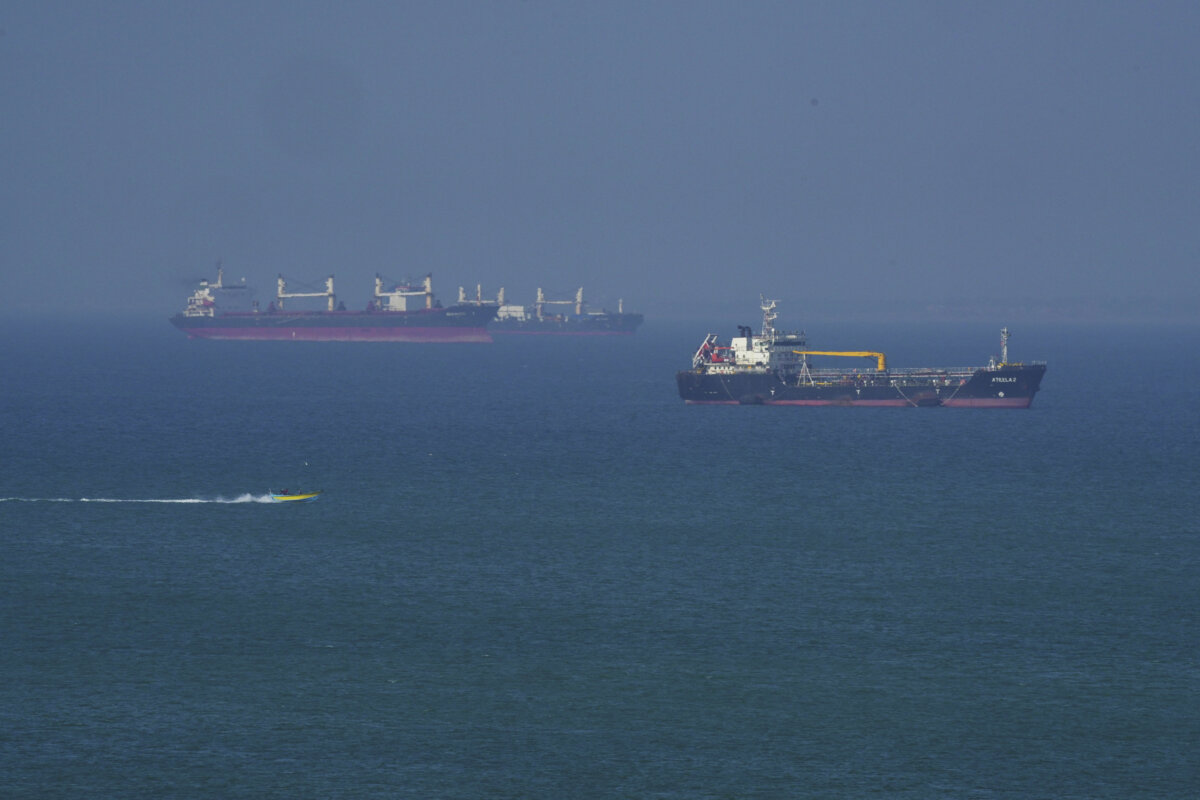

U.S. military officials on Monday said that 84 ships were diverted to and from Iranian ports as the United States continues to enforce a blockade against Iran.
In a post on X, the U.S. Central Command (CENTCOM) said that another four ships were disabled by the military during the blockade, which has lasted more than a month.
CENTCOM a day earlier said in a post that it redirected 81 commercial vessels, meaning three ships were diverted in the past 24 hours.
The blockade was announced by the Trump administration days after a ceasefire between Iran and the United States was confirmed following weeks of fighting that began with U.S.–Israeli strikes on Iran on Feb. 28.
It comes as there appears to have been little to no progress made between Tehran and Washington on a possible peace deal, with President Donald Trump on Sunday warning that Iran must act quickly. In a Truth Social post, the president suggested that U.S. strikes against the country could resume and “there won’t be anything left.”
Trump last week told reporters that he rejected a proposal from Iran to end hostilities and said that the ceasefire is on “life support.” Trump has said the United States wants a major rollback of Iran’s nuclear activities, while Tehran has insisted it has a right to enrich uranium.
Iran is still blocking the transit of ships through the Strait of Hormuz, a vital waterway through which a fifth of the world’s oil passed before the war, amid the U.S. blockade. Trump and Chinese leader Xi Jinping, who concluded talks on May 15, agreed that the strait needs to be reopened.
Late last week, Iranian Foreign Minister Abbas Araghchi said contradictory messages from the United States have “made us reluctant about the real intentions of Americans.”
“We are in doubt about their seriousness,” he told reporters in New Delhi, adding that negotiations would move forward if Washington was ready for a “fair and balanced deal.”
On Sunday, a drone strike sparked a fire on the edge of the United Arab Emirates’ sole nuclear power plant on Sunday in what UAE authorities called an “unprovoked terrorist attack.” No one was blamed, and there were no reported injuries or radiological release.
The UAE defense ministry said three drones came over its western border with Saudi Arabia, with the other two intercepted. It was investigating who launched them. Iran and allied Shiite militias in Iraq have launched drone attacks targeting Gulf Arab states in the war.
Saudi Arabia also condemned the attack, and later said it had intercepted three drones that entered from Iraqi airspace.
Over the weekend and on Monday, Iranian officials appeared to suggest they are ready for more fighting.
Iranian President Masoud Pezeshkian said through state-run media that the country “will not sacrifice the country’s dignity for the sake of comfort-seeking and our own worldly desires” amid the conflict.
An Iranian military official, Abolfazl Shekarchi, issued a statement on Sunday that future American strikes on Iran would be met with “crushing and severe blows for that country” and asserted it would trigger a “self-created quagmire” for the Trump administration, the semi-official IRNA news agency reported.
The Associated Press contributed to this report.
 Friends Read Free
Copy
Facebook
Tweet
Friends Read Free
Copy
Facebook
Tweet