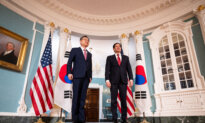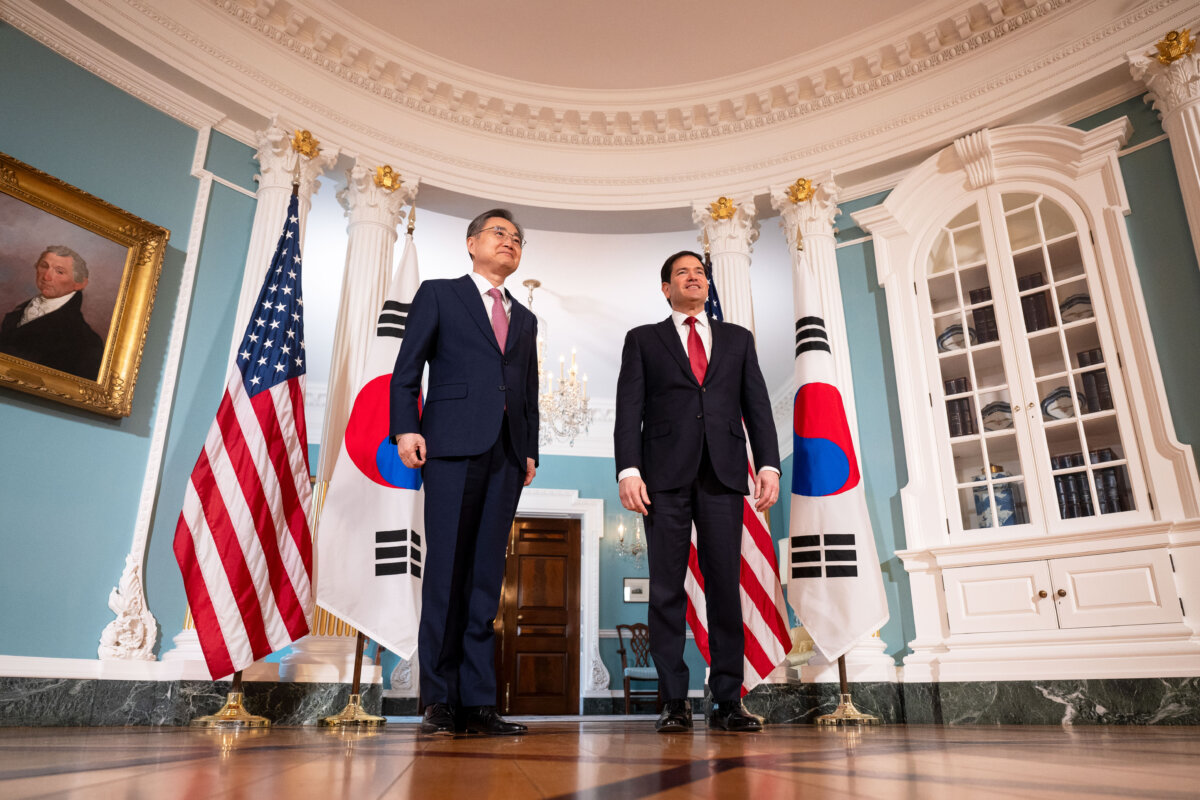

U.S. Secretary of State Marco Rubio and South Korean Foreign Minister Cho Hyun agreed to continue “close coordination” on North Korea’s nuclear weapons issue and maintaining peace on the Korean Peninsula during a phone call on Aug. 24.
The two officials spoke on a range of issues regarding the alliance between the two nations, according to State Department spokesman Tommy Pigott.
“The Secretary noted the need for the two countries to remain in close coordination on matters that are integral to the Alliance,” Pigott said in a statement.
The discussion followed President Donald Trump’s cancellation of joint military exercises earlier in the day. The United States canceled the drill set for September, citing constraints over troop deployments in Iran, South Korea’s marine corps announced Monday.
In a press release about the phone call, South Korea’s foreign ministry said the two exchanged views on relations between their countries, the Korean Peninsula, and global affairs.
“The two ministers confirmed a shared understanding that close communication between South Korea and the United States is more important than ever amidst recent shifts in the international situation,” the ministry said.
The officials also agreed to cooperate on future relations between the two nations by achieving mutually beneficial outcomes on tariffs and investment agreements, shipbuilding, and national security cooperation.
“Minister Cho stated that the South Korean government would do its utmost to ensure that President Trump’s recent message leads to the resumption of North Korea-U.S. dialogue and peace on the Korean Peninsula,” the ministry stated.
Trump announced last week he hoped to meet with North Korean leader Kim Jong Un later in the year as the regime’s expanding nuclear weapons program continues to raise concerns in the region.
Rubio also discussed the situation in the Middle East, including with Iran, and U.S. efforts to restore peace and stability in the region, according to the foreign ministry.
Cho emphasized South Korea’s commitment to making a substantive contribution to restoring free passage in the Strait of Hormuz.
The two top diplomats are expected to meet in person in the near future to continue talks on the key issues, according to the foreign ministry.
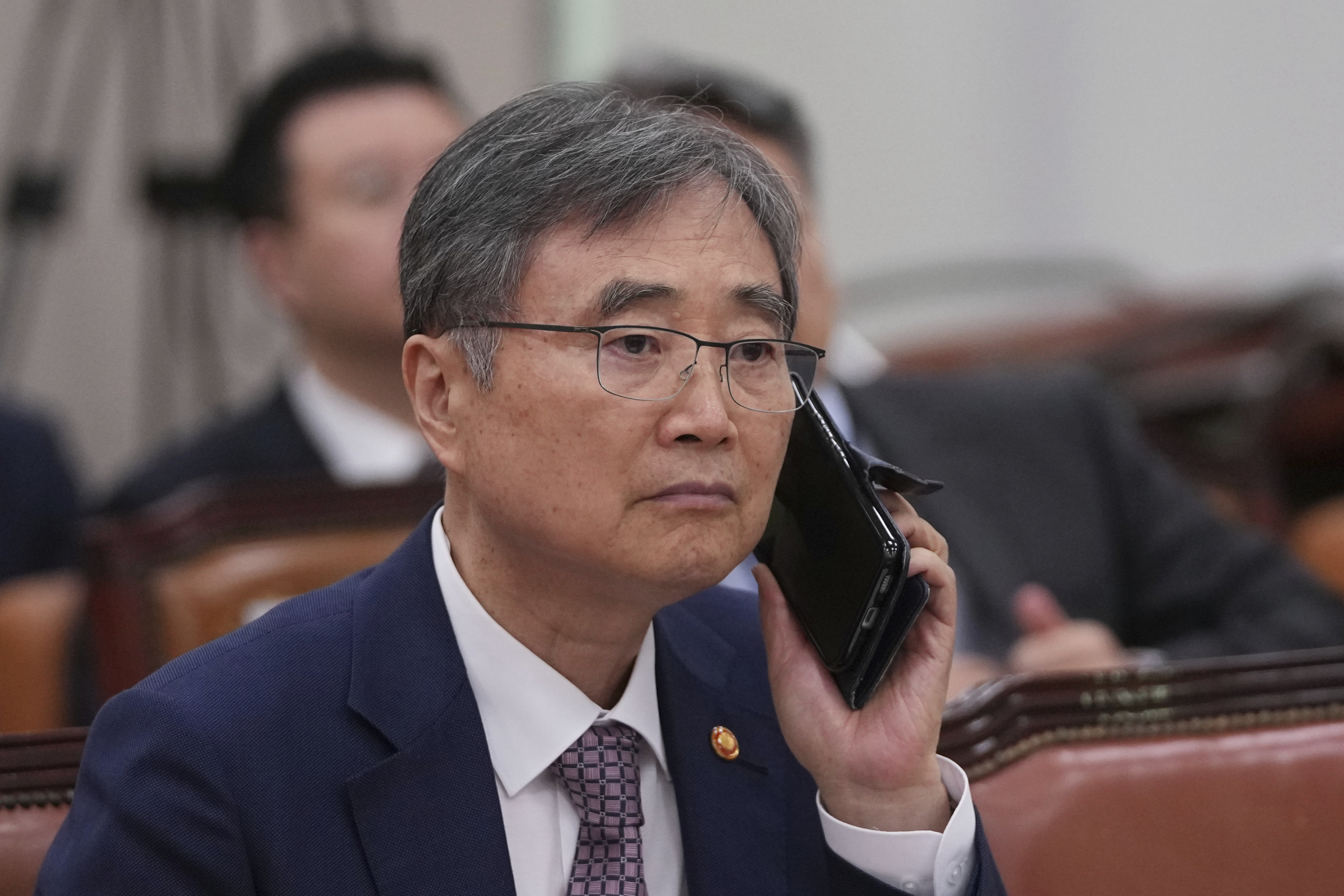 South Korean Foreign Minister Cho Hyun holds his mobile phone before a session of the Foreign Affairs and Unification Committee at the National Assembly in Seoul, South Korea, on Sept. 8, 2025. (Lee Jin-man/AP Photo)
South Korean President Lee Jae Myung said Trump’s Truth Social announcement last week about meeting with Kim gave him hope for peace in the region, as it felt like the decision was aimed at overcoming hostility to create peace on the Korean Peninsula.
“I hope this decision by President Trump will lead to the establishment of a stable peace regime on the Korean Peninsula, through building trust between the North and the U.S. and resuming dialogue,” Lee posted on X Aug. 19. “I will do my utmost to fulfill the role of a peacemaker in promoting and contributing to such peacemaker activities by President Trump.”
North Korea reacted aggressively to the military drills despite the shortened length by firing about 10 short-range ballistic missiles toward the Sea of Japan.
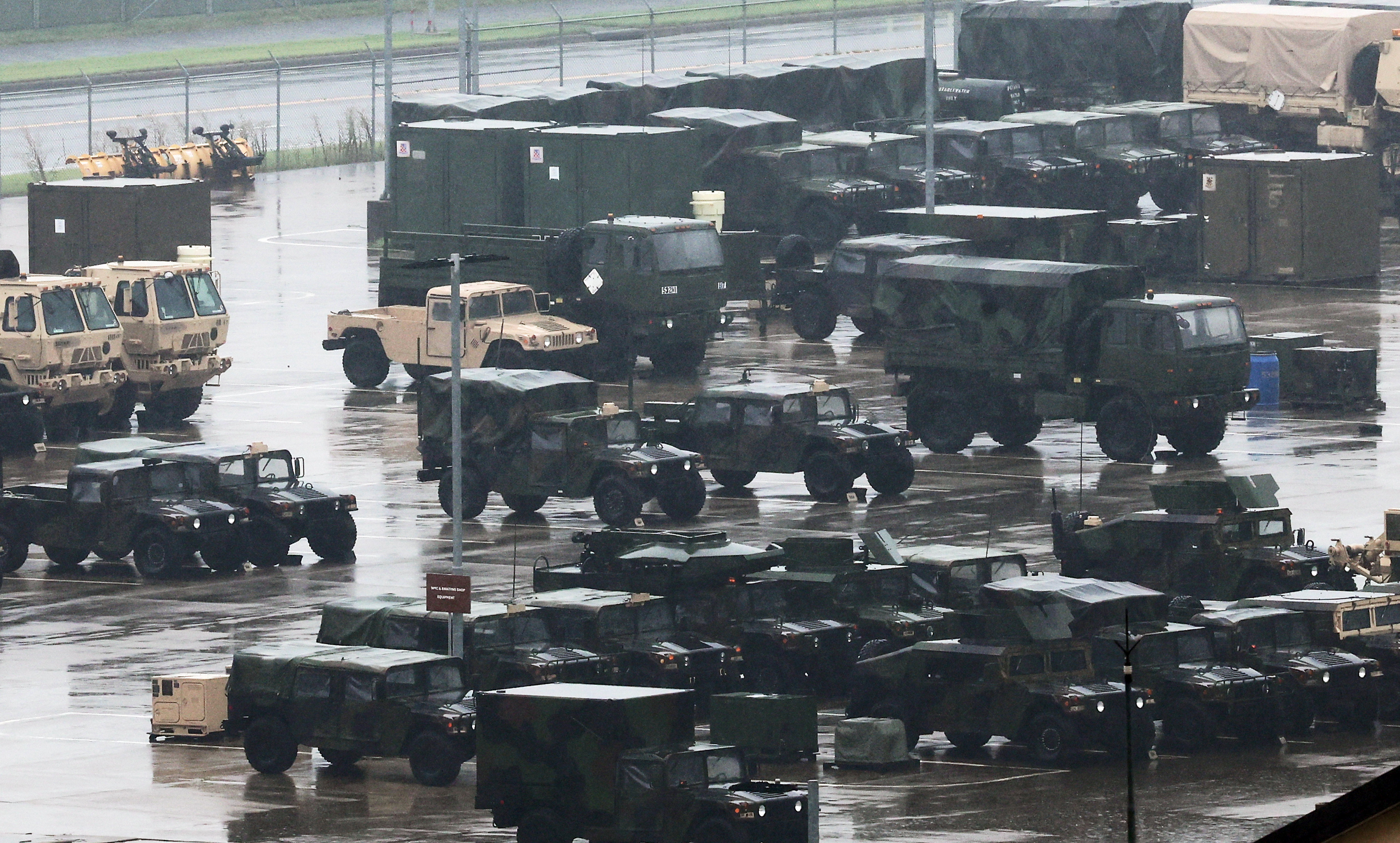 U.S. military vehicles are parked at Camp Humphreys in Pyeongtaek, South Korea, on Aug. 21, 2026. (Hong Ki-won/Yonhap via AP)
As developments between the United States and South Korea unfolded last week, Chinese Foreign Minister Wang Yi met with Lee in Seoul on Aug. 20, seeking to strengthen ties with the country.
A Chinese foreign ministry spokesperson said China hoped South Korea would “pursue a friendly policy toward China” and make progress on a “strategic cooperative partnership.”
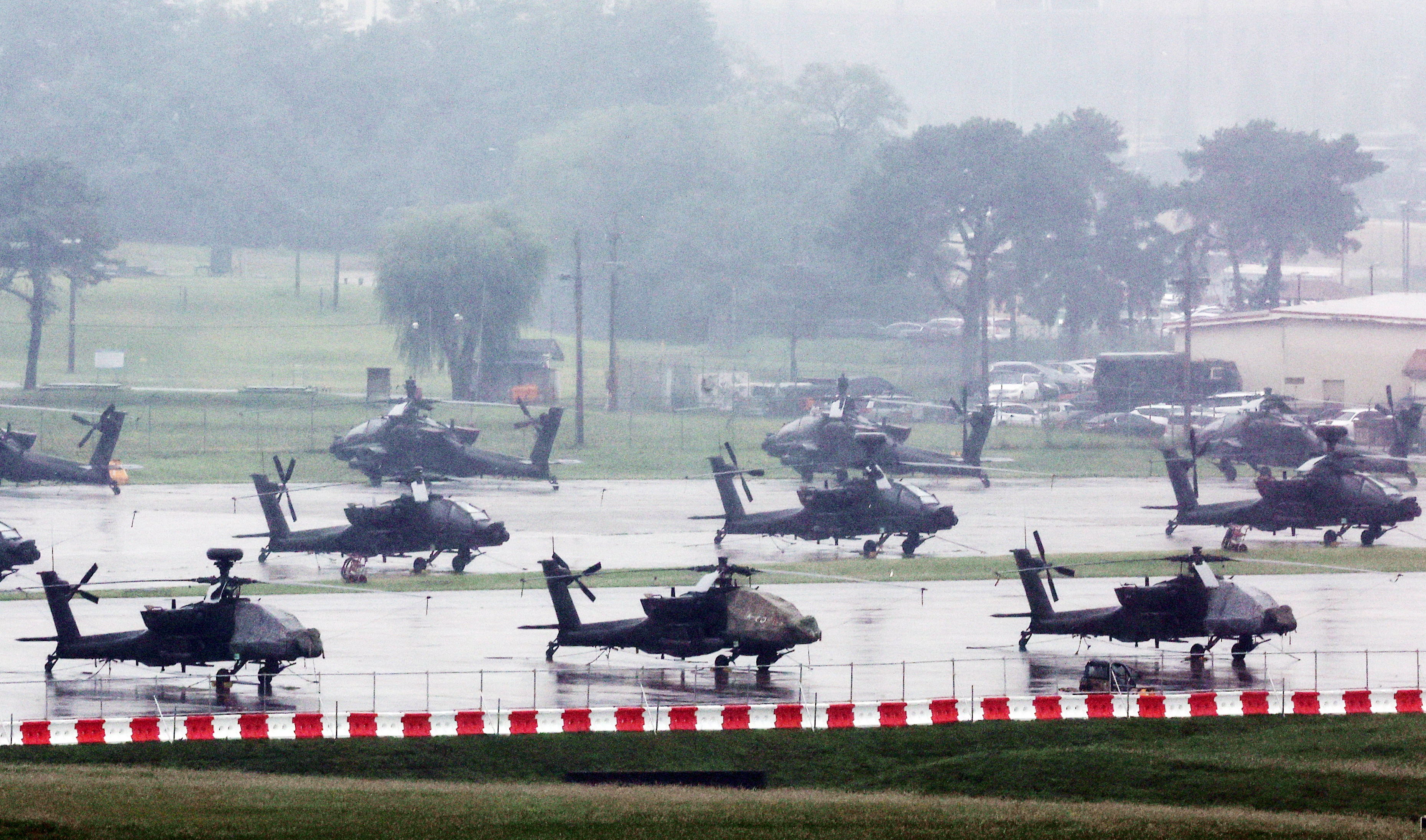 U.S. Apache helicopters are parked at Camp Humphreys in Pyeongtaek, South Korea, on Aug. 21, 2026. (Hong Ki-won/Yonhap via AP)
On Aug. 21, the State Department approved a possible military sale to Korea of AIM-9X Sidewinder missiles and equipment for an estimated $125 million after determining the sale was important for political stability in the Indo-Pacific.
The contractor will be RTX Corporation, located in Arlington, Virginia. The sale would include 103 tactical missiles and 10 Sidewinder tactical guidance units. Other items included are training support, weapon system support, training aids and devices, spare parts, government and contractor engineering, and other related support.
 Friends Read Free
Copy
Facebook
Tweet
Friends Read Free
Copy
Facebook
Tweet