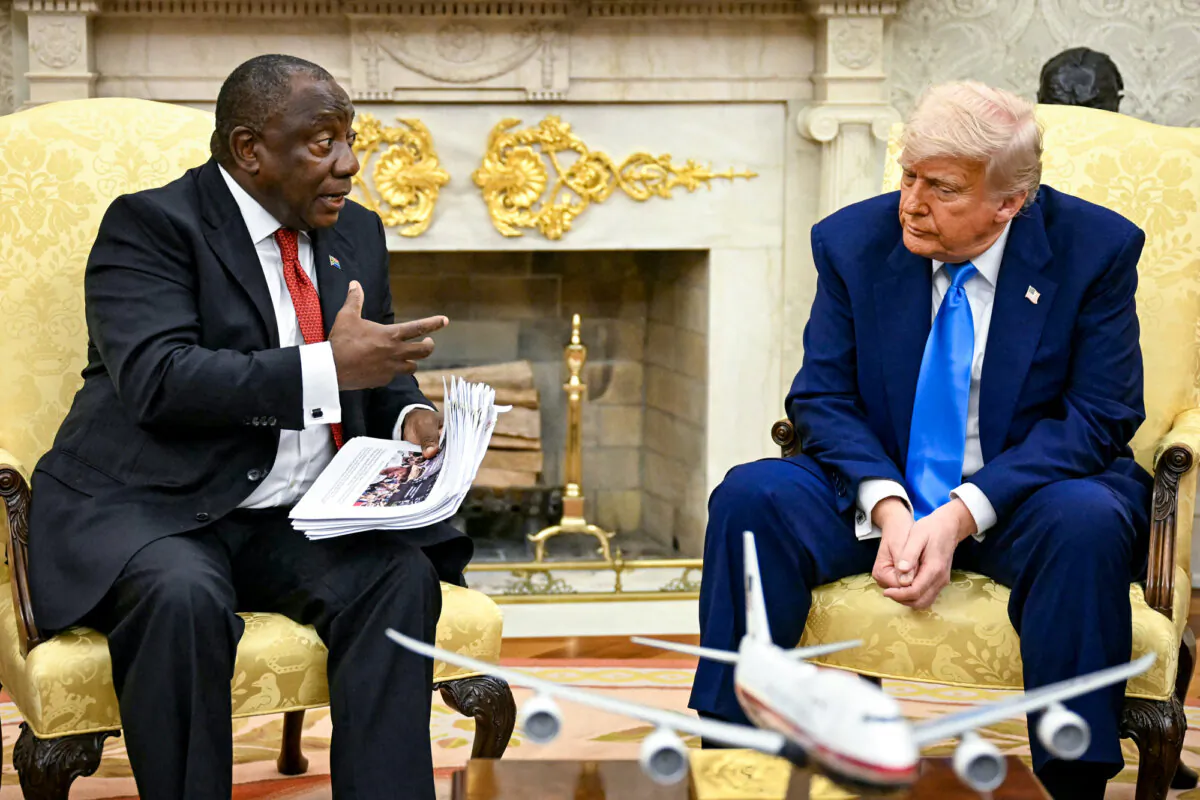

JOHANNESBURG—African countries that were targeted in President Donald Trump’s latest effort to gain better economic deals for the United States say they have a lot to offer the world’s largest economy but that they need more time to negotiate new trade agreements with Washington.
The U.S. leader sent almost identical letters to 21 countries on July 7 and July 9 using his Truth Social platform, saying higher tariffs on their exports to the United States will begin on Aug. 1, unless they “move things along.”
He singled out South Africa, the continent’s biggest economy and Washington’s largest African trade partner, and three of North Africa’s major economies: oil-rich Libya and Algeria, and Tunisia, a big supplier of olive oil to the United States.
South Africa, Algeria, and Libya will soon see tariffs of at least 30 percent on their goods and products entering the United States, Trump said, and Tunisia would see a levy of 25 percent charged on its imports to the United States.
Information provided by the Office of the U.S. Trade Representative (USTR) shows that these countries export a variety of goods to the United States, including minerals, automobiles, agricultural produce, electronics, and clothing.
They import U.S. machinery, pharmaceuticals, and refined petroleum.
Trump said the countries he listed had offered “far less” than what’s needed to eliminate “Trade Deficit disparities” that his administration says disadvantage the United States.
A trade deficit occurs when a nation imports more than it exports.
According to the Council on Foreign Relations, in 2024, the United States exported nearly $3.2 trillion in goods and services to the world, while its imports totaled $4.1 trillion, leaving an overall trade deficit of more than $900 billion.
According to Trump, this represents a huge financial loss to the United States.
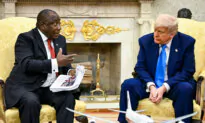
South Africa’s levy will rise to 40 percent should Trump follow through on a threat to impose an additional 10 percent on countries from the BRICS bloc of emerging economies.
South Africa is a BRICS founding member, along with China and Russia, and supports their vision of a “multipolar” world in which U.S. power and influence are reduced—a goal that has raised Trump’s ire.
USTR 2024 numbers reflect the total goods trade between the United States and South Africa of $20.5 billion.
That year, the United States imported goods worth $14.7 billion from South Africa, mainly critical minerals, metals, diamonds, motor vehicles, auto components, and fruit, while South Africa’s U.S. imports—chiefly chemicals, machinery, and pharmaceuticals—stood at $5.8 billion.
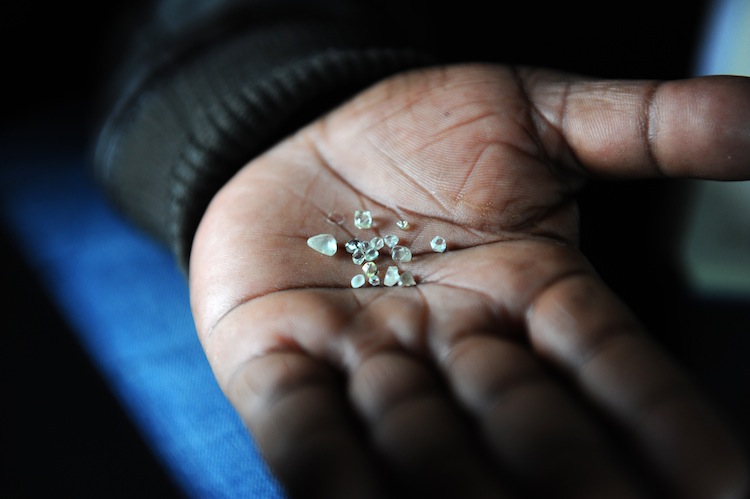 A miner displays diamonds dug out of a disused mine in Komaggas, South Africa, in June 2012. (Alexander Joe/AFP/Getty Images)
This demonstrates a U.S. goods trade deficit with South Africa of $8.8 billion, which Trump wants South African President Cyril Ramaphosa’s administration to correct.
In an interview with The Epoch Times, South Africa’s deputy minister for trade and industry, Zuko Godlimpi, said that is “exactly” what Pretoria’s representatives have proposed in a “Framework Deal” delivered to Washington on May 20.
“I can’t give you exact figures at this stage, but I can tell you that our offers of buying American [liquefied natural gas], and giving the United States access to our mining and digital sectors will be well worth it to the United States,” he said.
In exchange, Godlimpi said, South Africa wants the United States to lower its “blanket levy” of 30 percent to 10 percent, and to scrap duties on Pretoria’s automobile, steel, and aluminum exports to the United States.
“We won’t be able to afford to trade much if they hit us with 30 percent,” he said.
“We’re well aware of the damage the loss of the U.S. market will do to our economy, particularly in the citrus fruit industry and the vehicle and auto components manufacturing sector.
“Many thousands of jobs will be lost and many billions of rands will be lost. But we’ll have to take the initial knock, and we’ll have to find other buyers.”
When asked what cards South Africa holds in trade talks with the United States, Godlimpi pointed out that his country supplies 12 of the 50 minerals identified by Washington as crucial to U.S. national security and the U.S. economy.
“We are the primary supplier of nine of the minerals most needed by the United States,” he said.
According to U.S. government statistics, in 2024, South Africa provided 96 percent of America’s chromium, a metal used extensively in the automobile and defense industries.
According to the International Energy Agency, the United States relies heavily on South Africa for several critical minerals, particularly platinum group metals and chromium.
These minerals are essential for various industries, including the automotive, aerospace, and renewable energy industries, it said.
“South Africa’s dominance in global reserves of these minerals, like platinum and manganese, ensures it’s a key supplier for the United States,” a report issued by the agency in 2023 stated.
Hassan Rabie, Algeria’s minister of communication, told The Epoch Times that he’s confident that talks with the United States will result in “compromises” to benefit Algerians and Americans.
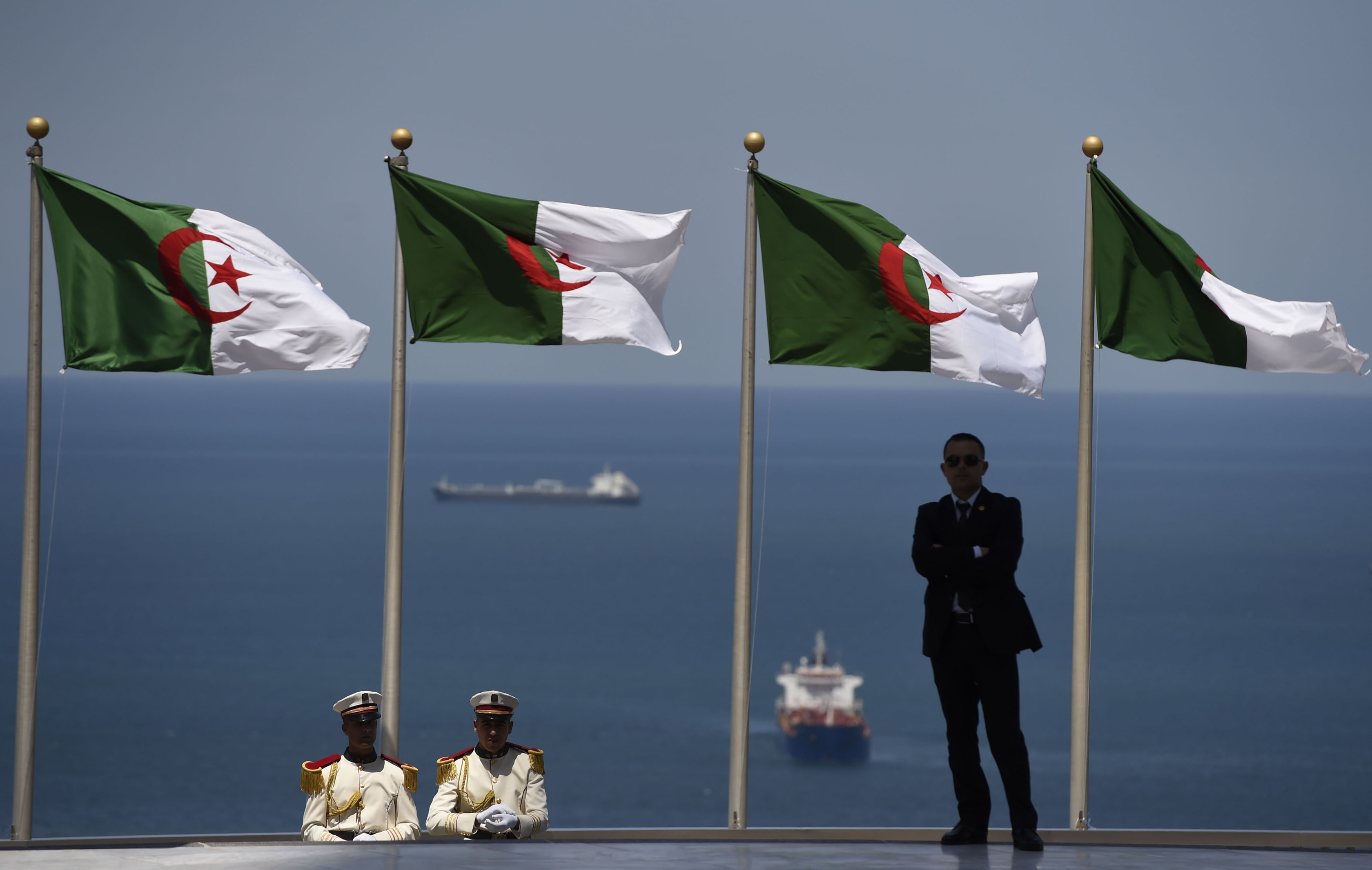 Members of the Algerian Republican Guard and a security official stand guard at the Martyrs’ Memorial in the Algerian capital, Algiers, on June 15, 2015. (Farouk Batiche/AFP/Getty Images)
According to the USTR, the U.S. total goods trade with Algeria was an estimated $3.5 billion in 2024.
The United States exported products worth $1 billion to the North African country that year, including gas turbines, soybean meal, and machinery, according to The Observatory for Economic Complexity.
According to the USTR, U.S. goods imports from Algeria totaled $2.5 billion in 2024, and consisted largely of petroleum and gas, leading to a U.S. trade deficit with Algeria in 2024.
“We are talking about a small deficit here,” Rabie said. “We have a lot to offer the United States, and we can easily clear up any misunderstandings if there are any. We just need more time.”
Algeria has the 10th-largest proven natural gas reserves globally, is the world’s fourth-largest gas exporter, has the world’s third-largest untapped shale gas resources, and ranks 16th in proven oil reserves, according to the U.S. Commerce Department.
“There is great opportunity for partnership between the United States and Algeria in very important economic fields,” Rabie said.
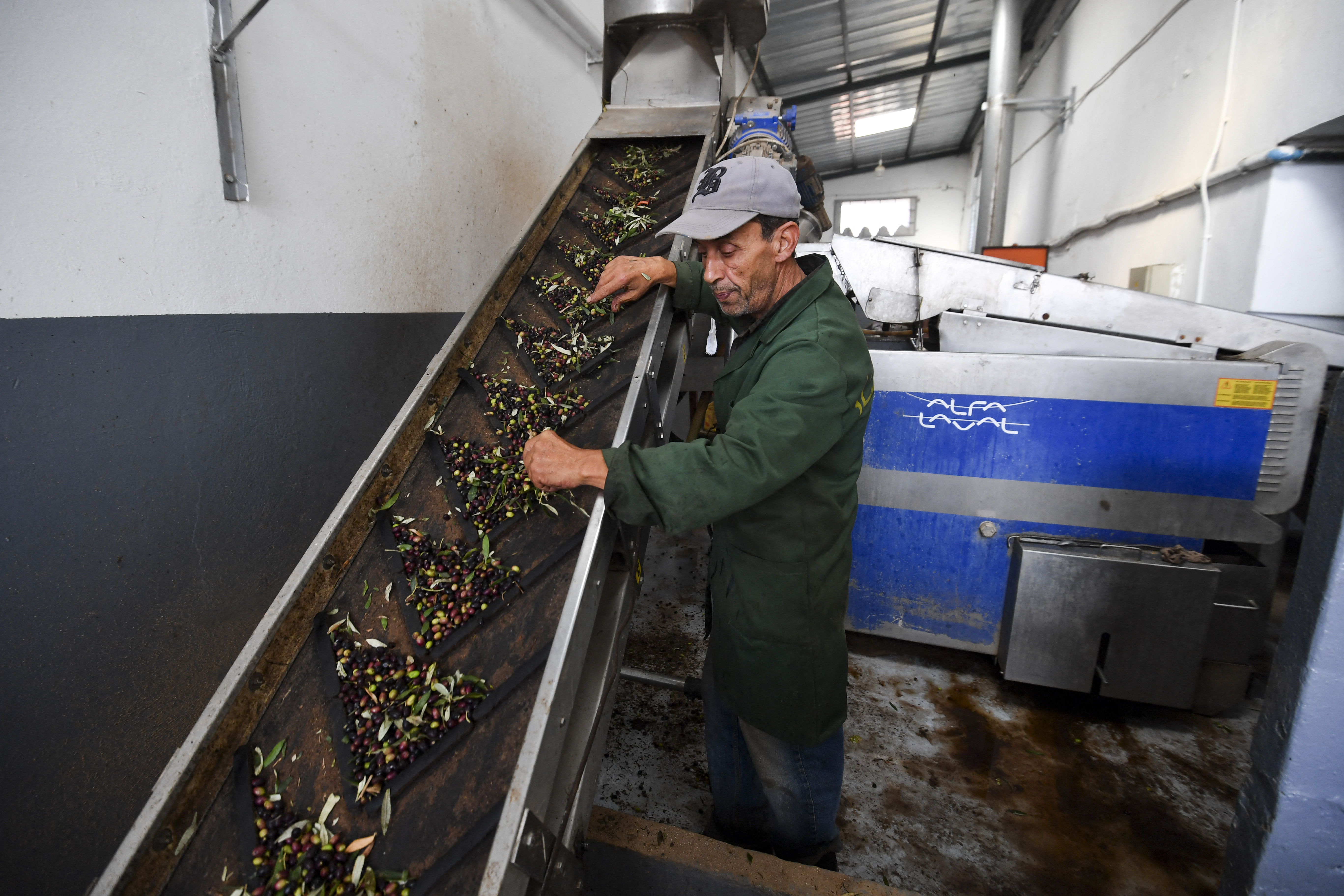 An employee checks olives at an oil press in Cebalat Ben Ammar, near Ariana, Tunisia, on Nov. 18, 2024. (Fethi Belaid/AFP via Getty Images)
Asma Ben Hassen, of Tunisia’s Economic Research Forum, said a tariff of 25 percent on her country’s exports to the United States would cause “severe damage” to an economy that’s already in crisis.
“Our primary export to the United States is olive oil, which they could, of course, easily source elsewhere if talks don’t go well,” she told The Epoch Times. “If that happens, it’s our smaller farmers and exporters that will be most threatened.”
In 2024, the USTR said total U.S. trade in goods with Tunisia was approximately $1.6 billion. U.S. goods exports to Tunisia were $503.6 million, while U.S. goods imports from Tunisia reached about $1.1 billion, resulting in a U.S. goods trade deficit with Tunisia of $619.6 million.
Marouane Ben Jemaa, president of the Tunisian-American Chamber of Commerce and Industry, told The Epoch Times that talks between Tunisian officials and Trump’s representatives to try to reduce the tariff to 10 percent are ongoing.
“I can’t comment on why President Trump decided to send out his latest letter,” he said. “But as far as I know, dialogue between Tunisia and the Trump administration has been good, and I believe a solution can be found.”
 Friends Read Free
Copy
Facebook
Tweet
Friends Read Free
Copy
Facebook
Tweet