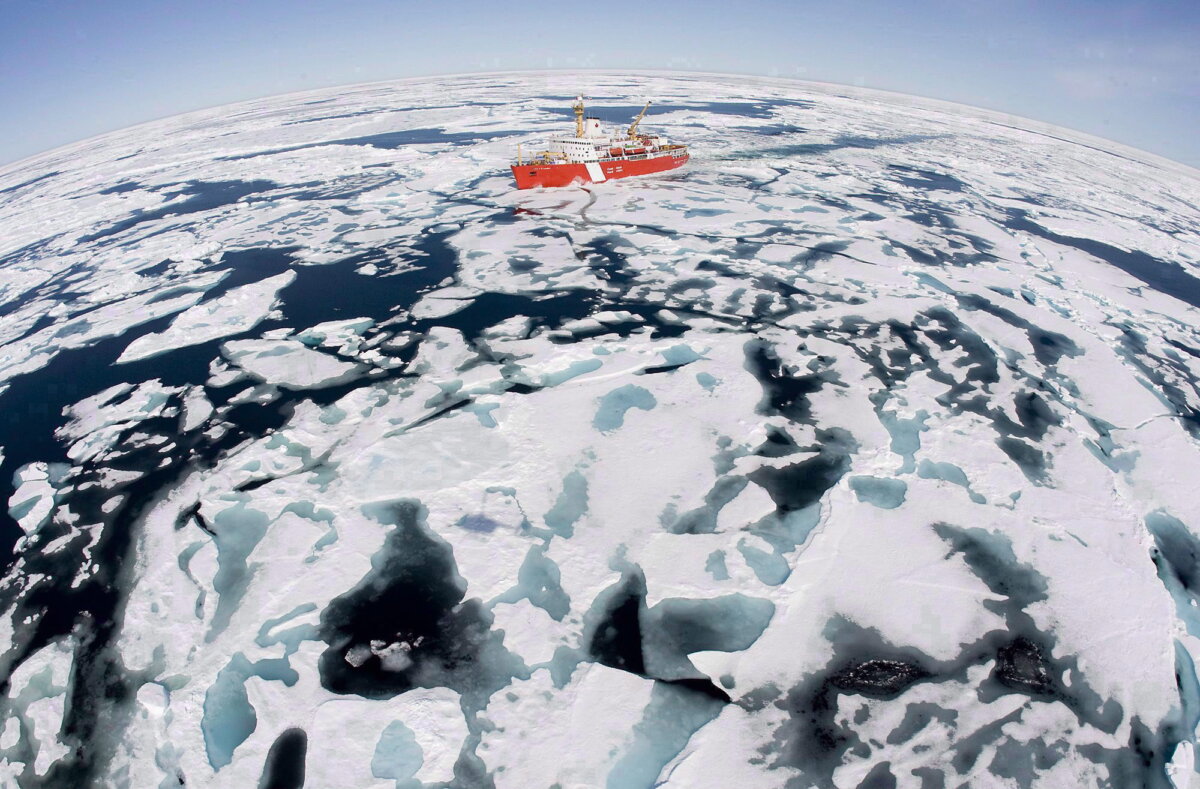

The Arctic’s growing importance has reached the point that acquiring Greenland has become a key demand for the second Trump administration amid concerns about Russian and Chinese ambitions in the region, drawing protestations from other allies who urge continued Danish sovereignty over the autonomous territory.
When it comes to Canada’s defence of the Arctic, its capabilities for the roughly 4-million-square-kilometre expanse of Arctic territory falls far short when compared to both adversarial countries and its ally the United States. However, some analysts warn that Canada may be falling behind even middle-power Arctic nations, if the sheer size of its Arctic territory is taken into account.
Canada’s Arctic Presence
Canada currently maintains approximately 300 to 350 Canadian Armed Forces (CAF) personnel in the Arctic, along with some 1,700 Canadian Rangers, a lightly armed militia patrol force.
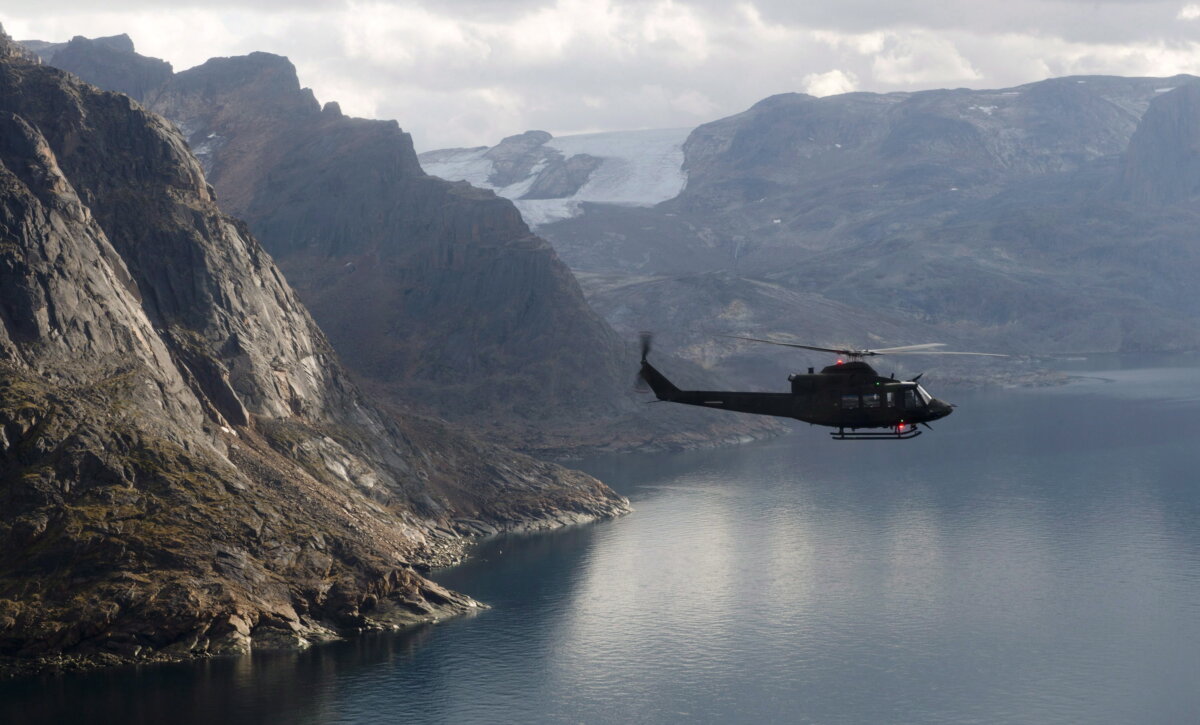
Canada’s military also operates a small fleet of medium icebreakers, six Arctic and offshore patrol vessels, as well as a rotating fleet of Auroras, Twin Otters and Chinook helicopters, among others. CF-18 fighter jets from Cold Lake, Alta. and Bagotville, Que., are available for deployment to forward operating locations in Inuvik and Yellowknife, N.W.T., as well as in Iqaluit, Nunavut.
Pierre Leblanc, a retired colonel with the Canadian military and former commander of the CAF Northern Area, now known as the Joint Task Force North, said Canada has a relatively small force for such a vast territory.
“When you’re looking at a map of the three territories, you can take a map of Europe, put it on top of the territories, and there’s still room to spare. That’s how big the Canadian Arctic is,” Leblanc told the Epoch Times. “Having, let’s say, six ice breakers and three Arctic Offshore Patrol vessels to do the protection of Europe? People would laugh at you.”
Leblanc said typically only two or three offshore patrol vessels function at the same time, in conjunction with Coast Guard icebreakers that perform their duties during the shipping season, which varies by region in the Arctic but generally extends from late June to October.
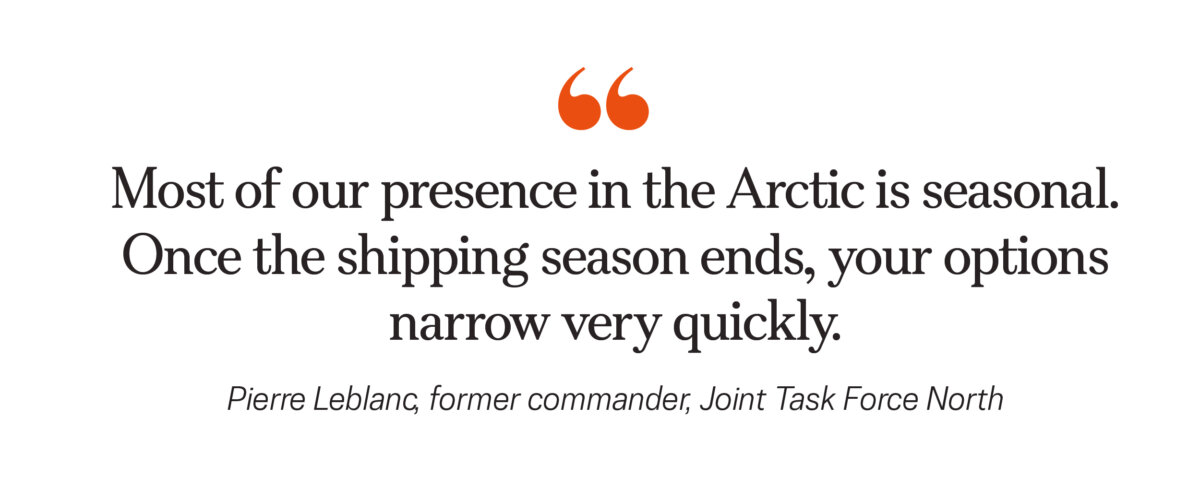
“Most of our presence in the Arctic is seasonal. Once the shipping season ends, your options narrow very quickly,” Leblanc said.
 Rob Huebert, a political science professor and one of Canada’s leading Arctic scholars also says that Canada’s Arctic presence remains very limited.
“In terms of overall regular forces, it’s a small footprint,” Huebert told The Epoch Times. “In terms of people on the ground, and in terms of the scale of what we have up there, it’s very limited.”
University of Calgary military historian David Bercuson says the Rangers are useful for Canada’s overall defence, but they do not have the same fighting capability as regular CAF members.
“They’re not trained for combat or anything like that,” he told The Epoch Times. “They’re observers. It’s better than nothing, but that’s what they are.”
Beyond its small military presence and limited air and naval capability, Canada also has a sparse network of infrastructure, such as a training base in Resolute Bay and a signals intelligence station at the northernmost point of the Canadian Arctic. Canada also maintains 47 radar sites as part of continental defence commitments under the North American Aerospace Defense Command (NORAD).
There are also private facilities such as the Arctic Training Centre in Whitehorse designed for testing and validating defence technologies, including drones, for cold-weather, arctic, and sub-arctic temperatures.
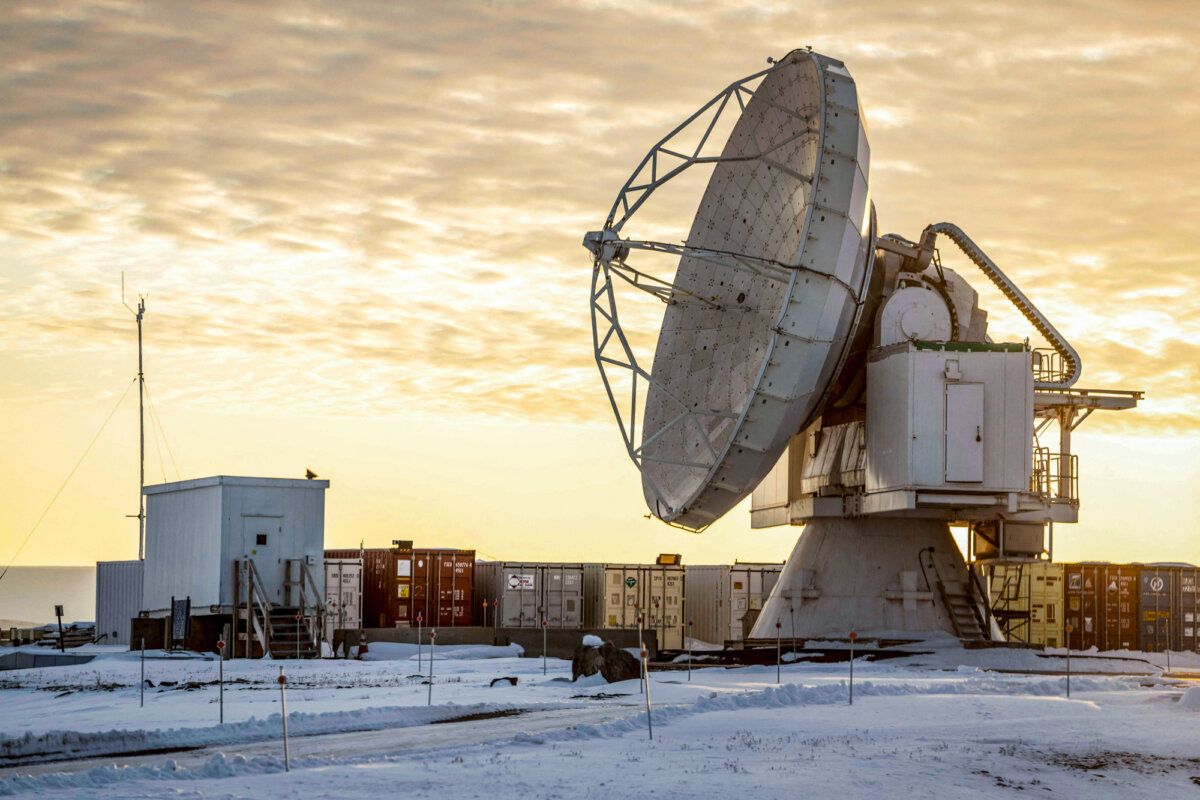 Pituffik Space Base, formerly known as Thule Air Base, a U.S. Space Force base located on the northwest coast in Greenland, on Oct. 4, 2023. (Thomas Traasdahl/Ritzau Scanpix/AFP via Getty Images)
Comparing Peer Nations
While many European NATO members pivoted more toward hard power and increased military spending after Russia’s 2022 invasion of Ukraine, experts interviewed by the Epoch Times said Canada has been late in doing so, with military spending hovering at roughly 1.3 percent of GDP in recent years. Prime Minister Mark Carney committed last summer to reach 2 percent by early this year,.
The 2 percent benchmark is part of Canada’s broader goal to hit 5 percent by 2035 as pushed by the United States, with 3.5 percent allocated for core defence spending and the remaining 1.5 percent earmarked for related security and infrastructure spending. A review on progress toward this goal is scheduled for 2029.
Among comparable NATO allies, Norway hit 2.2 percent in 2024, Finland 2.4, Sweden 2.3, and Denmark says it is on track to hit 3 percent this year. Iceland has no standing army and engages in minimal military spending.
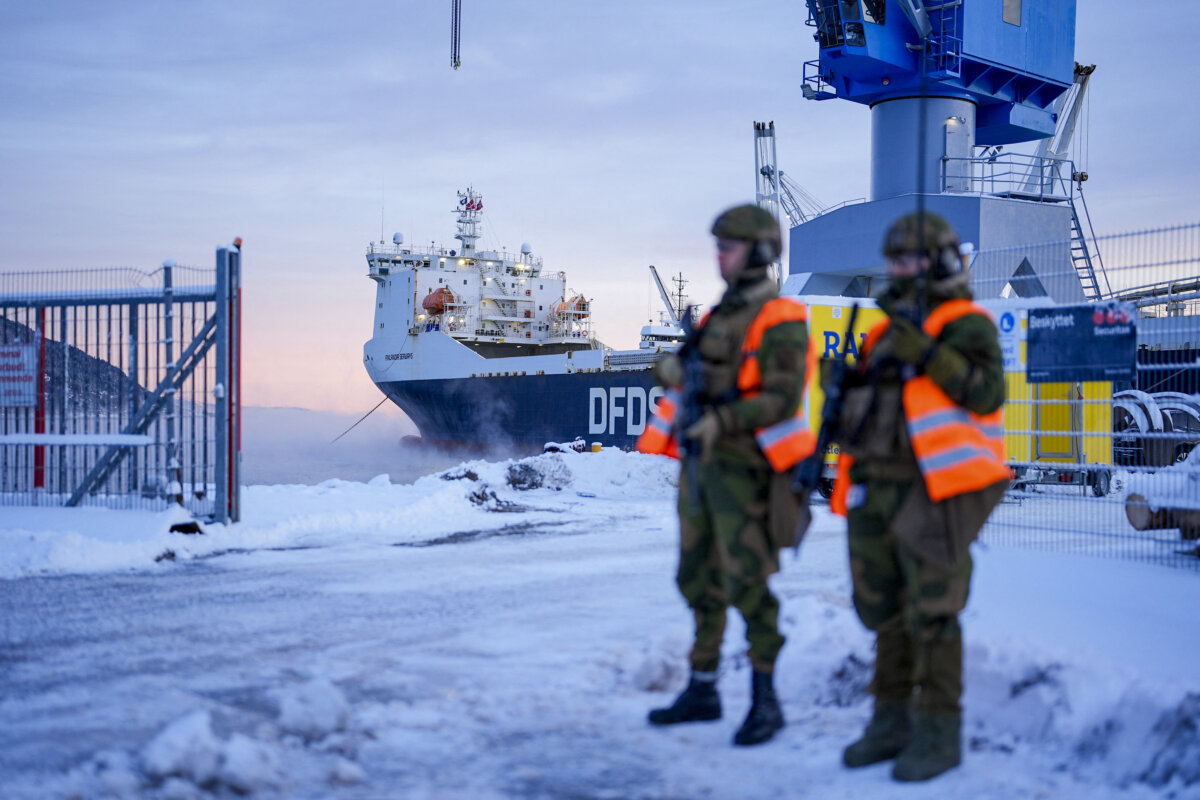
Norway has nearly 8,000 troops that are Arctic-ready, including its Home Guard Units and Brigade Nord, along with consistently organizing NATO training exercises and hosting member militaries. It also has 52 F-35 aircraft.
The Nordic nation has five Boeing P-8A Poseidon maritime patrol aircraft, along with six Arctic-capable diesel-electric submarines, part of a fleet of roughly 60 active ships. In addition, Norway has five Arctic-focused air bases, four army bases in the far north, and three northern, Arctic-focused naval ports.
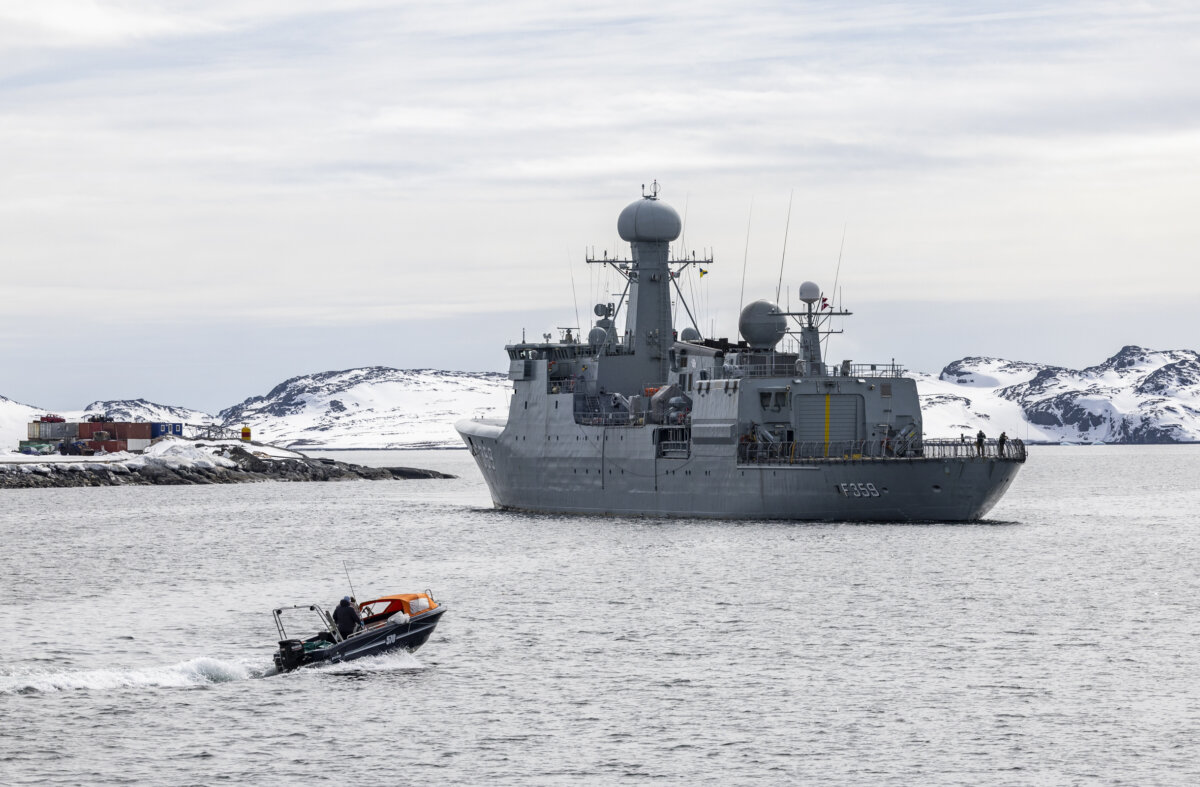 A Royal Danish Navy vessel prepares to dock in the city of Nuuk, Greenland, on May 4, 2025. (John Fredricks/The Epoch Times)
Finland’s Jaegar Brigade is based in Lapland and specializes in Arctic combat training, with about 400 personnel and a training capacity of 1,400 conscripts per year. Its army includes 13,400-22,800 active members, while the navy has 3,150-4,600 estimated personnel and its air force has approximately 3,050 to 3,300 active members. The country can also mobilize up to 280,000 troops in the event of conflict.
Finland has more than 200 active ships, most of which are focused on Baltic sea and non-Arctic operations, and an estimated 62 F-18 fighter jets, as well as several hundred German Leopard battle tanks and a number of fighting vehicles and armoured personnel carriers.
Sweden’s military maintains tens of thousands of active personnel, including bases at Boden, Arvidsjaur, and Kiruna, focused on Arctic and sub-Arctic operations. Stockholm also has an estimated 94 Gripen fighter jets that are non-stealth but able to operate efficiently in frigid conditions, along with a fleet of roughly 60 active ships.
Denmark, meanwhile, has considerably limited Arctic ground forces with some 150 personnel stationed at its Joint Arctic Command headquarters in Greenland and units such as the dog-sled Sirius Patrol which is focused on intelligence, surveillance, and reconnaissance, rather than combat readiness.
Copenhagen is in the process of upgrading its air force to 43 F-35 jets and also operates three Knud Rasmussen-class patrol vessels for Arctic and North Atlantic patrol duties as well as four Thetis-class patrol vessels with heavy machine guns and reinforced hulls to break through ice, including around Greenland. This is part of a larger fleet of around 127 active ships overall.
Danish Prime Minister Mette Frederiksen has emphasized how seriously her country takes the region, recently commenting that “NATO must increase its engagement in the Arctic” and that “defence and security in the Arctic is a matter for the entire alliance.”
China, Russia Risks
Russia is the foremost Arctic power, maintaining a considerably larger number of troops and military assets in the area than any other nation, while also increasingly partnering with China for joint bomber and naval patrols.
Russia’s presence includes more than 40 Arctic bases including airfields, ports, and army bases, multiple brigades of troops, sophisticated air defences, and the biggest fleet of nuclear-powered icebreakers in the world.
China’s Arctic ambitions are also growing, not only via increased joint exercises with Russia but in Arctic exploration and research.
“They’re not studying the seals and the polar bears,” NATO Supreme Commander Europe Gen. Alexus Grynkewich told a Swedish security conference Jan. 11 regarding Russia and China’s actions in the Arctic. “They’re out there doing bathymetric surveys and trying to figure out how they can counter NATO capabilities on and under the sea.”
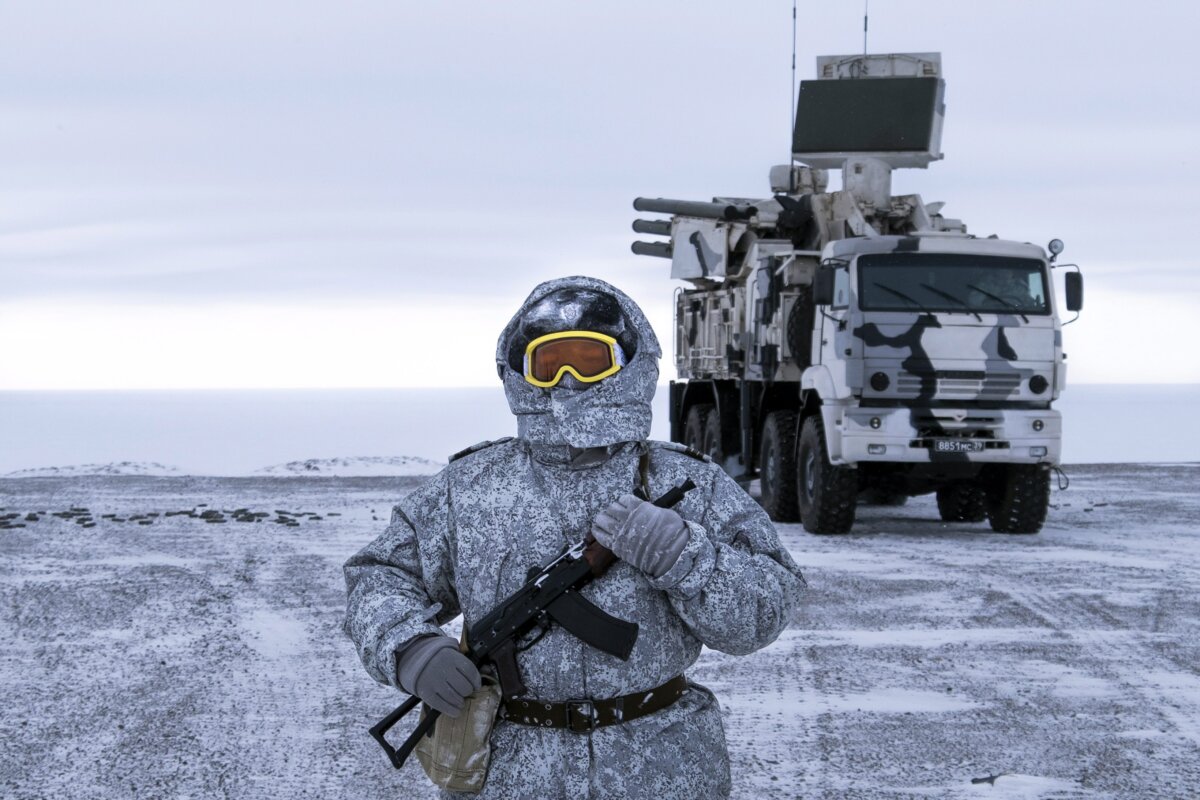 A Russian solder stands guard as on the Kotelny Island, part of the New Siberian Islands archipelago located between the Laptev Sea and the East Siberian Sea, Russia, on April 3, 2019. (AP Photo/Vladimir Isachenkov)
Russia’s Kola Peninsula, situated in the Arctic Circle just over the border from Norway, is home to one of the biggest nuclear arsenals in the world. A Russian strike from Kola is estimated to be able to reach a major American city in just 18 minutes, according to comments made earlier this month by Norway’s defence minister Tore Sandvik.
Prof. Huebert emphasized the gravity of the threat, saying the Russians treat their massive swath of the Arctic as a key part of their territory.
“The Russians treat the North as if it’s downtown Moscow, as far as they’re concerned. And they have a lot of military assets up there, and they have the stuff to protect them,” he said.
Joe Varner, a senior fellow with the Ottawa-based think tank MacDonald-Laurier Institute, said the Chinese threat is also increasing in the Arctic.
“The Arctic is now being tested considerably by the Russians and even the Chinese,” Varner said in an interview. “They’ve got research stations in Iceland, Svalbard, Norway, and in Sweden … those research stations are dual-use.”
US Capability
Russia has the largest Arctic military footprint, but the United States remains a dominant military power. Washington has a substantial, geographically concentrated Arctic presence focused mainly in Alaska that is oriented around air defence and power projection.
This includes more than 20,000 active-duty members of the U.S. military stationed in Alaska and two fifth-generation fighter wings of an estimated 24 F-22s and 54 F-35s, nuclear submarines that regularly operate under-ice, ballistic missile defence at Fort Greely, Alaska, and a full range of radar and sensor sites operated as part of NORAD.
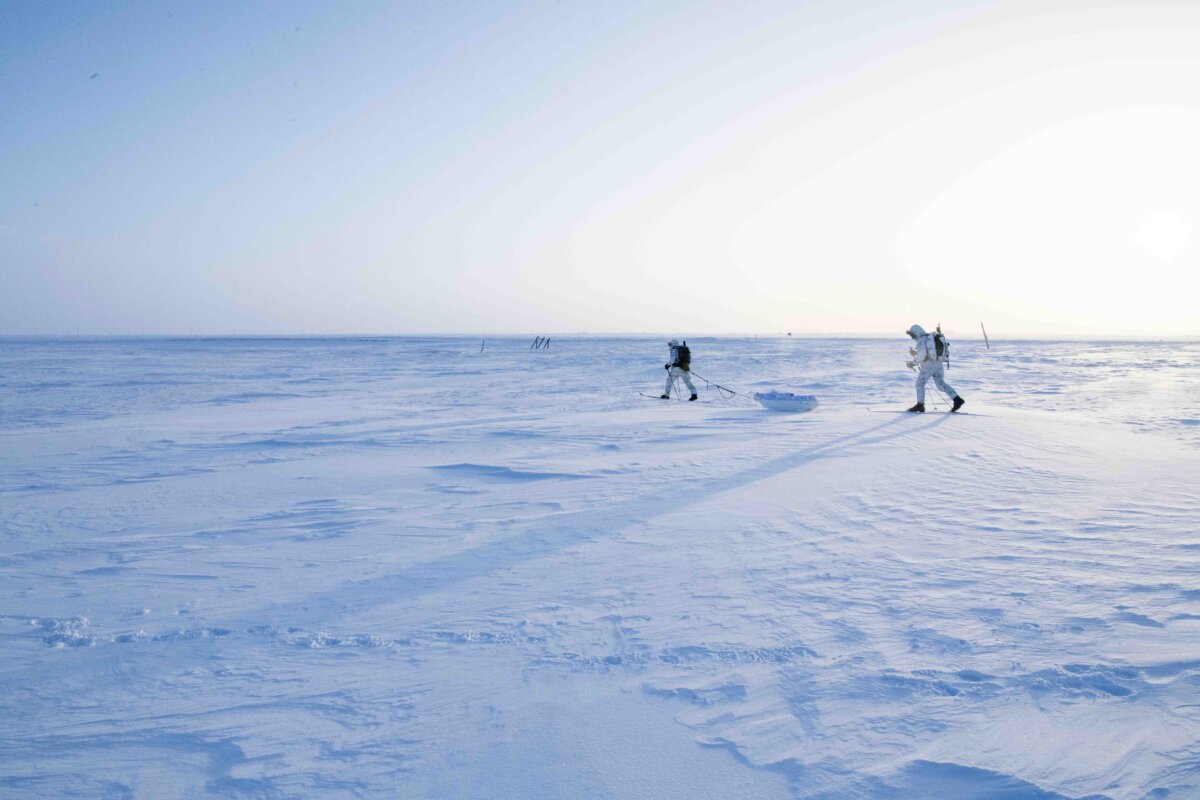 U.S. Navy SEALs conduct arctic long-range ski training to build their skills in the extreme arctic environment. (U.S. Navy/Chief Mass Communication Specialist Jeff Atherton)
Outside Alaska, the United States also has a permanent station of some 200 personnel at the Pituffik Space Base (formerly Thule Air Base) in Greenland, which is a vital site for space surveillance and advance missile warning.
Ultimately, Canada’s Arctic defence is tied to and reliant on its alliance with the United States and participation in NORAD and NATO.
“If we don’t defend it, I think the United States … will be forced to do so,” Huebert said.
Arctic Response
Ottawa has recently pledged to boost Canada’s presence in the Arctic in several ways, including a promise to create an Arctic Economic and Security Corridor put forward in last November’s Budget 2025.
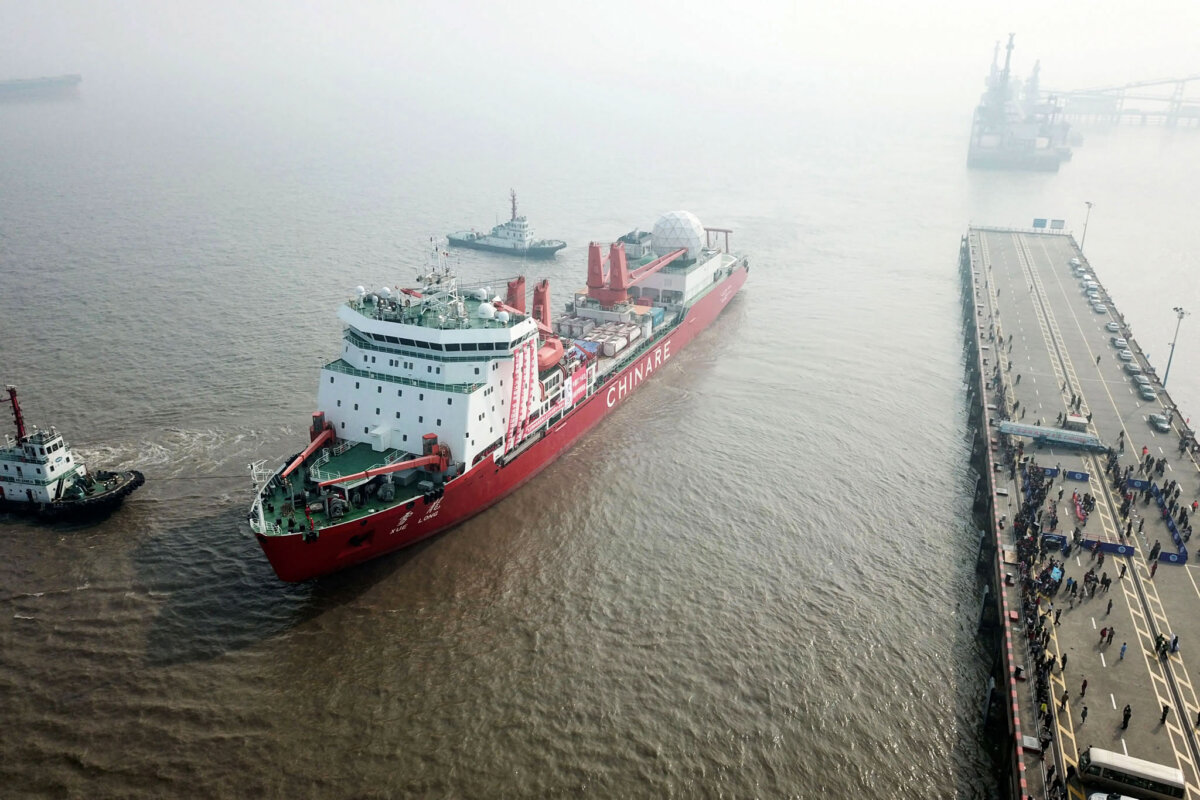 Chinese icebreaker Xuelong sets off from a port in Shanghai on Nov. 8, 2017. (STR/AFP via Getty Images)
Specifically, it allocates $1 billion toward an Arctic Infrastructure Fund starting this fiscal year that will be focused on building seaports, airports, and roadways for dual civilian-military use throughout the north.
Carney has also said his government plans on expanding the military’s year-round footprint in the Arctic, allocating $420 million to strengthen operations in the region and establishing Iqaluit, Inuvik, and Yellowknife as Northern Operational Support Hubs.
In partnership with Australia, Ottawa has also pledged $6 billion to develop an advanced Over-the-Horizon Radar system as part of NORAD’s modernization plan.
The Opposition Conservatives are pushing for more commitment regarding Canada’s Arctic presence, with Tory Leader Pierre Poilievre asking for a “permanent Canadian military presence in the Arctic with CFB Iqaluit, a new Arctic naval base, and upgrade Inuvik to full base status for fighters and tankers.”
Poilievre also said Canada needs four new heavy icebreakers, construction of more Airborne Warning and Control Systems, fast-tracking “upgrades to submarines, helicopters, and northern support hubs” and strengthening “boots-on-the-ground presence by doubling the Canadian Rangers and creating a new Army Reserve unit in Whitehorse.”
Retired Col. LeBlanc said he has discussed a proposal with senior officials at the Department of National Defence and other stakeholders for turning Canada’s base at Resolute Bay into a central Arctic logistics and security hub.
“In the Arctic, the real challenge isn’t fighting—it’s logistics. If you can’t move, fuel, or sustain forces, nothing else matters,” he said.
Canada’s base at Resolute Bay, which sits at the centre of the Arctic Archipelago, currently has a forward operating location for the CAF, an Arctic warfare centre, a Natural Resources Canada outpost and a community policing station, along with environmental research facilities. Its runway is unpaved and it has no deep water port or large-scale military capability.
Leblanc’s proposal pitches a public-private partnership upgrade of Resolute that would turn it into a significant base for fighter jets, tankers, drones and long-range patrol capability, along with building a jetty, growing fuel storage capacity, and linking it to NORAD air defences.
Leblanc told The Epoch Times there has been interest in the project but that its likely cost of a “few billion dollars” has led to hesitation.
Weak Points
Understandably, Scandinavian NATO members are more focused on the Arctic because the bulk of their populated landmass is much closer to it and the threat from Russia is more immediate, according to experts. Norway’s northernmost counties and Finland’s Lapland region, for example, are right next to Russia and the Barents Sea, bringing up inevitable and direct security concerns.
“Norwegians have faced coastal attacks since the 12th century,” think tank scholar Varner says. “The Russians have the bulk of their military power in the Arctic up at Kola, which you know affects its concern for Norway, Finland, and Sweden.”
Arctic training and deployments are highly integrated into Scandinavian militaries and NATO relies on these nations to provide significant air, ground, and sea capability in the Arctic theatre as well as training grounds for NATO troops to achieve Arctic readiness.
In Canada’s case, only a fraction of the nation’s military resources are deployed in the Arctic. While all CAF members undergo basic cold-weather training for survival and combat, only a small number of combat units and rotational detachments receive specialized winter warfare and Arctic warfare training, compared to tens of thousands in many Scandinavian nations mentioned above.
In addition to the approximately 350 CAF members stationed in the Arctic, there are additional units of reservists and regular force members who regularly train for winter warfare.
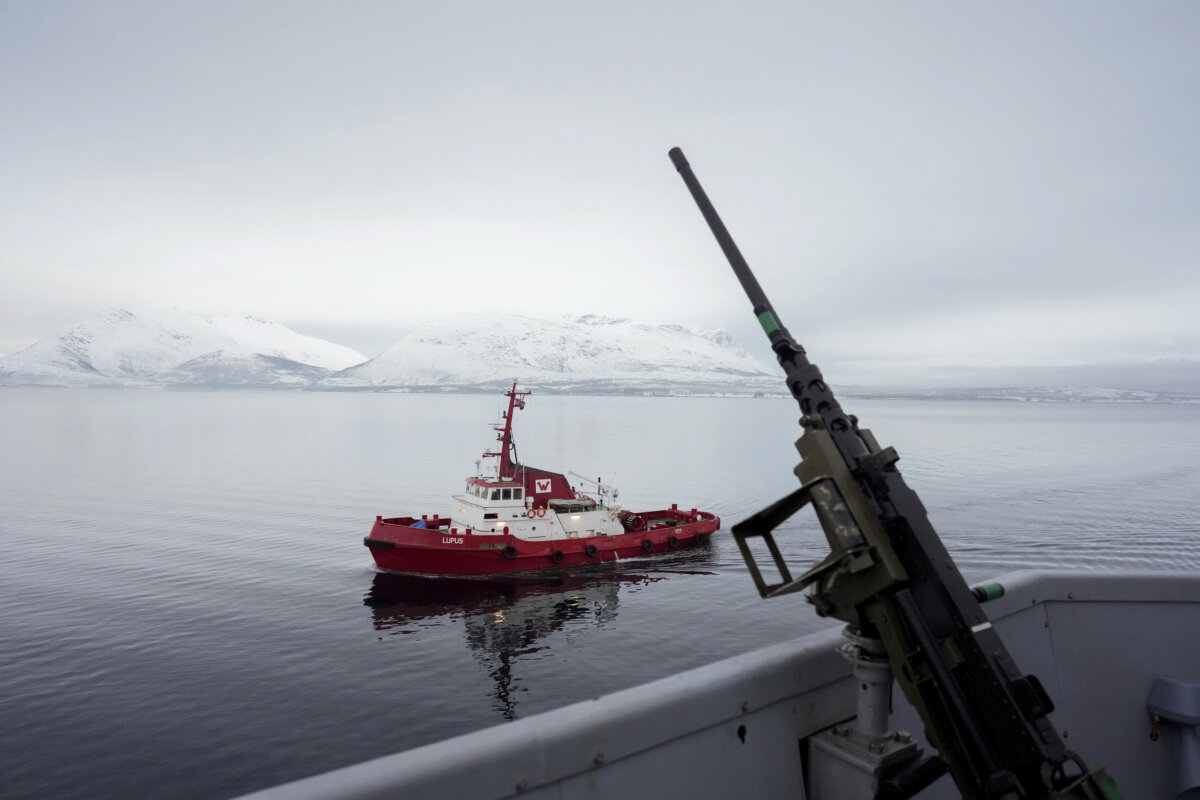 A tugboat sails alongside the French navy frigate Normandie before it docks during a patrol in a Norwegian fjord, north of the Arctic circle, on March 8, 2024. (AP Photo/Thibault Camus)
One key example where experts say Canada has lagged behind comparable NATO member states is on the upgrading of its fighter jets and other delays in the procurement of key defence assets, along with ongoing delays in finishing long-promised projects such as the Nanasivik naval refuelling base which was announced in 2007 and is still not fully operational.
“After the Russians invaded Ukraine back in 2014 you see each and every one of the Nordic countries pivoting from a focus of what could be characterized as soft security … to getting hard security,” Prof. Huebert said, noting that Denmark, for example, went from a plan to scrap its fighter fleet to now being in the process of acquiring new F-35s.
Canada’s plan to buy 88 U.S.-made F-35s was put under review by Ottawa in March 2025. The contract has only been finalized and payment made for the first 16 of the jets, which are slated to become fully operational in the early 2030s.
Procurement of the remaining 72 jets is still being finalized. Ottawa said it is also considering alternatives such as the Swedish Saab Gripen fighter jet. No public timeline on concluding the review has been announced.
“We are continuing the agony of talking about what type of fighter aircraft we should replace,” Huebert said, noting the delays go back to the administration of former Prime Minister Jean Chrétien in 2002. “It’s abysmal.”
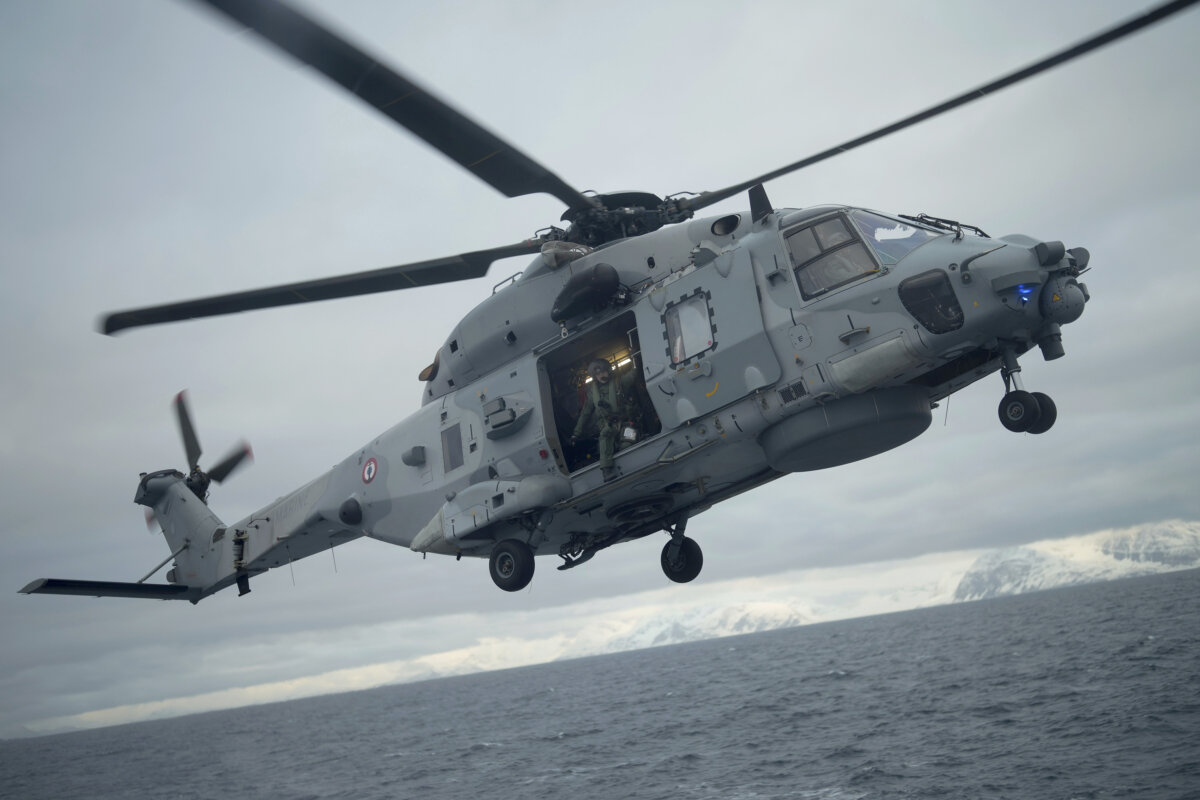 A French sailor is seen at the door of a helicopter as it takes off from the French navy frigate Normandie during a patrol in a Norwegian fjord, north of the Arctic circle, on March 7, 2024. (AP Photo/Thibault Camus)
Prof. Bercuson says that while Canada does deploy fighter aircraft north when required, those aircraft are based far to the south, leaving Canada scrambling in the event of an act of aggression.
Retired Col. Leblanc also emphasized another Canadian weakness: lack of under-ice awareness, explaining that Russian submarines can operate beneath the ice and could potentially launch missiles undetected and then escape back to Russian territory.
“Presence isn’t just people and ships—it’s knowing what’s happening. Right now, our situational awareness in the Arctic is limited,” Leblanc said, adding that Canada simply doesn’t know much of what Russia may be doing under the ice.
Canada has four Victoria-class submarines that are not stationed in the Arctic but could operate there if needed. Ottawa is currently in a procurement process to obtain 12 new conventionally powered submarines that could take part in extended operations including potential under-ice capability.
Leblanc said the threat of enemy submarines and glide vehicles as well as hypersonic cruise missiles and ballistic missiles is something that requires close cooperation among allies.
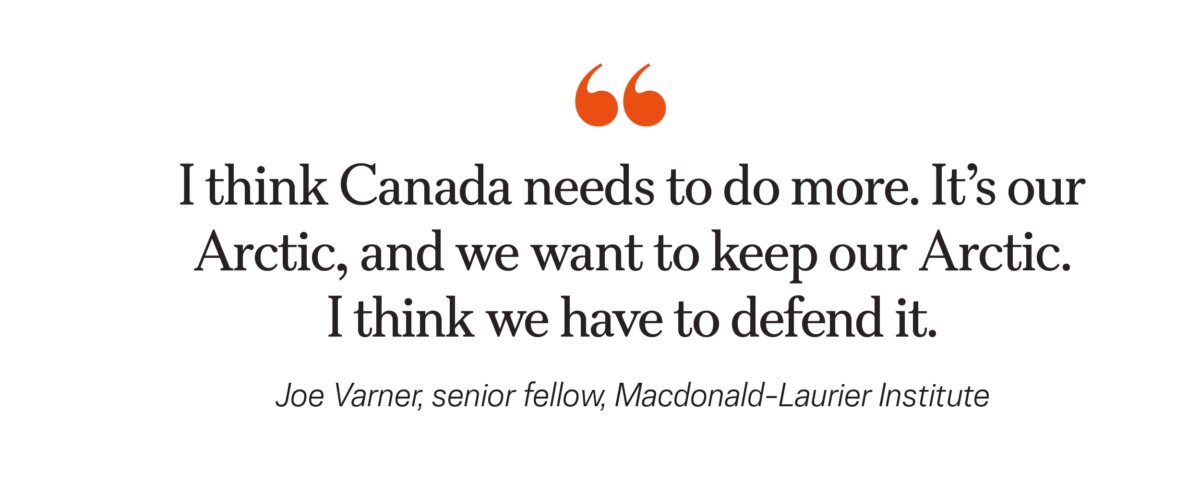
Varner says Canada’s defence of the Artic will be key to maintaining its sovereignty over the region.
“I think Canada needs to do more,” he said. “It’s our Arctic, and we want to keep our Arctic. I think we have to defend it.”
 Friends Read Free
Copy
Facebook
Tweet
Friends Read Free
Copy
Facebook
Tweet