
Cobalt Blue is positive about the prospects of Australia developing its own critical mineral supply chains outside of China and Africa.
The company runs the Broken Hill Cobalt Project in western New South Wales and hopes to send extracted and partially refined ore to a proposed refinery in Kwinana, Western Australia.
There it will be further refined into battery-grade cobalt sulphate for global export. The mineral is in high demand globally for use in rechargeable batteries for EV vehicles and military technologies.
“The global cobalt supply is heavily concentrated, with China controlling around 85 percent of refined capacity,” said Heath Porteous, Cobalt’s exploration manager, during a sitting with the House Standing Committee on Primary Industries on May 18.
He explains the Democratic Republic of Congo accounts for over 70 percent of global supply.
“Cobalt Blue are pursuing an integrated critical mineral strategy in Australia, spanning resource development out of the Broken Hill Cobalt Project, and moving towards downstream refining capability through our proposed Kwinana Cobalt Refinery in Western Australia,” Porteous said.
It is still early stages with both projects undergoing preliminary feasibility studies.
Cobalt Blue actually started in 2016, but paused the project after the Democratic Republic of Congo flooded global markets with cobalt forcing prices to drop. The country has since implemented a quota on exports causing prices to surge again.
“So, with that trigger, the [Cobalt Blue] board has directed our technical team to advance a [small scale] preliminary feasibility study,” Porteous said, adding that this stage is anticipated to be completed by the end of the year.
“From that perspective, it has the opportunity to potentially deliver a life of mine somewhere in the order of around 12 to 15 years, subject to the outcomes of this particular study.”
Porteous said his company deliberately designed the project to maximise domestic value-adding.
“Early on we identified that we needed to take the products through to as far as we possibly could in terms of the value chain,” he said.
“What typically happens in base metal projects, you might see a company will produce a concentrate and that concentrate will be sent overseas for further processing.”
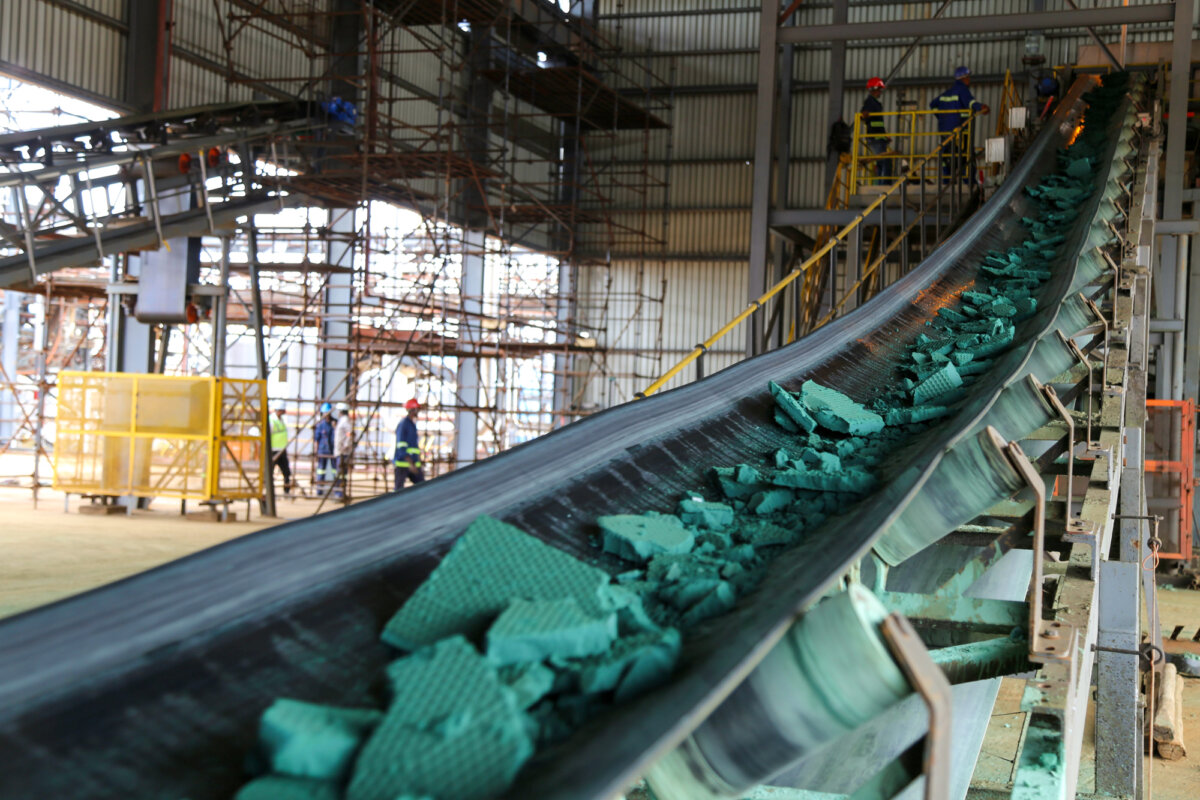
Instead, Cobalt Blue plans to refine its product domestically into cobalt sulphate, which can be used in lithium-ion batteries for EVs and storage systems.
“It will be railed across to Kwinana for further processing,” Porteous said.
The proposed Kwinana refinery will also be able to produce cobalt metal.
Porteous said the government could try to support “enablement” policies to make fly-in-fly-out work easier like housing and childcare.
“We have an opportunity to support an existing township. Any policies that could enable that would be particularly welcome.”
Other critical mineral miners have expressed concern about local challenges.
Australian Strategic Minerals (ASM) says it has spent 20 years trying to get its Dubbo project online, supposed to produce rare earths, zirconium, niobium, and hafnium.
“Delays, duplication, and uncertainty across planning and environmental approvals can materially impact investment decisions and project timelines,” said Annaliese Eames, chief legal and external officer, in comments to the House Standing Committee on Primary Industries.
ASM also has a refining facility in South Korea, where miners have access to major automaking customers keen to buy minerals for EVs, as well as the right talent and expertise on the ground—a problem Australia currently faces.
“I think what’s of real concern to us is the diminishing numbers of enrolments across STEM subjects, and specifically mining engineering, geology, things like that,” Eames said.It’s an issue Porteous also raised.
“I think at a fundamental level, there’s been a bit of a decline in investment in geoscience,” he told the committee.”My experience more recently has been that most universities, or a significant portion of our universities, have either shut down their earth science departments or have severely curtailed those offerings.”
 Friends Read Free
Copy
Facebook
Tweet
Friends Read Free
Copy
Facebook
Tweet