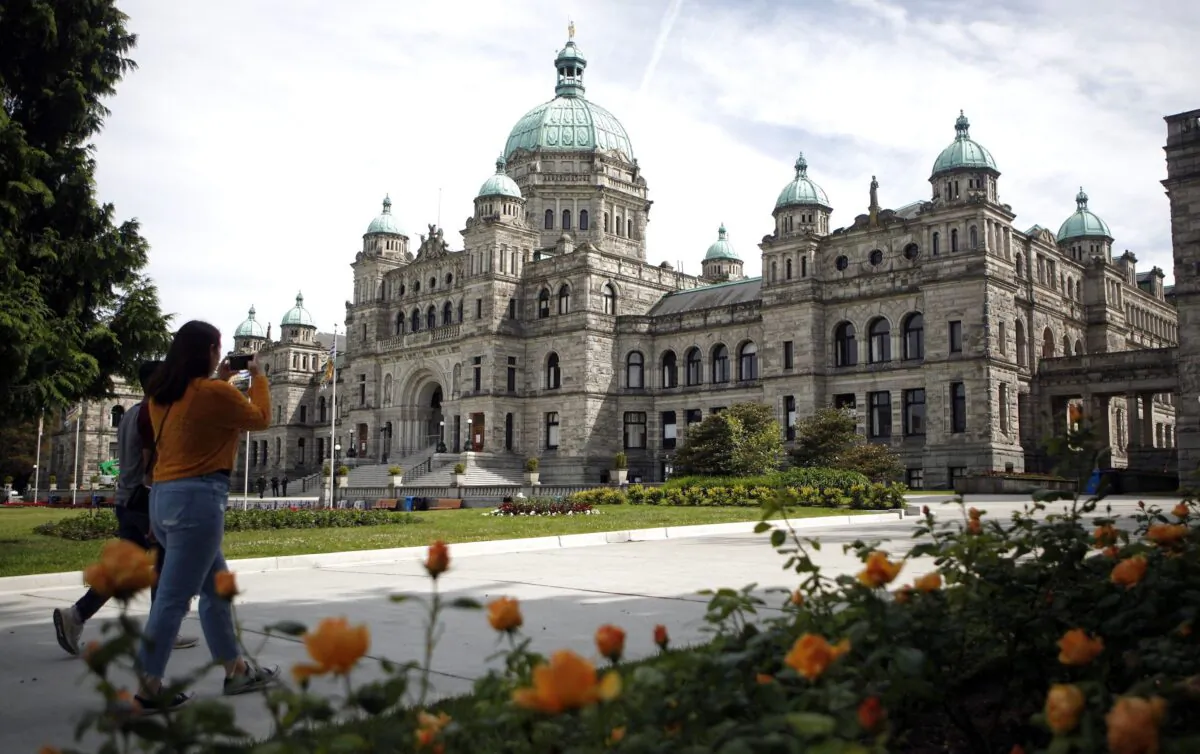

Government spending in B.C. has reached its highest level on record after adjusting for inflation, totalling $13,711 per person in 2025, according to a new study.
The study, released on Jan. 6 by the Fraser Institute, examined British Columbia’s per-person government spending by premiers from 1965 to 2025. It found that the highest spending level over the 61-year period came under Premier David Eby in 2025, with a projected increase of about 3.4 percent since former Premier John Horgan left office in 2022.
The study used data based on provincial fiscal years, which run from April 1 to March 31, and adjusted the figures for population changes and inflation.
“Prolonged government spending comes at a real cost for British Columbians, who inevitably foot the bill as taxpayers,” said Tegan Hill, acting director of B.C. policy and co-author of the report.
“The goal of the study is to provide historical analysis of this key measure of government fiscal policy so British Columbians can easily understand current spending by the provincial government in a broader context.”
Former Premier David Barrett, who served from 1972 to 1975, had the highest average annual increase in per-person spending at 14.6 percent, according to the study. He is followed by former Premier Rita Johnston, whose average annual increase in per-person spending was 6.1 percent, even though she held office for less than one fiscal year in 1991.
Former Premier W.A.C. Bennett ranked third, with an average annual increase of 6 percent, while Horgan came fourth at 5.2 percent. Meanwhile, average annual per-person spending decreased under three premiers: Michael Harcourt, Glen Clark, and Ujjal Dosanjh, by 0.5 percent, 1 percent, and 2.6 percent respectively.
Under current Premier Eby, per-person spending has grown by an average of 1.1 percent annually, the study says.
In its most recent quarterly report, released in November 2025, the province projected an operating deficit of $11.2 billion for 2025-26, about $300 million more than the projections made in this fiscal year’s budget.
In an earlier report from September, the province had projected a deficit of $11.6 billion, citing the elimination of the consumer carbon tax and the ongoing trade dispute between Canada and the United States as contributing factors.
In its most recent fiscal outlook, the province said government expenses are expected to rise due to higher refundable tax credits and increased net spending by service delivery agencies. Total expenses are projected to reach $94.96 billion, up $48 million from the 2025 budget.
“B.C. is not alone in dealing with higher costs and uncertainty in the economy,” Finance Minister Brenda Bailey said in a Nov. 27 release.
“Our focus is on continuing to make strategic investments to grow our economy, while charting the path to balance with thoughtful, targeted decisions about reducing government inefficiencies,” she said.
 Friends Read Free
Copy
Facebook
Tweet
Friends Read Free
Copy
Facebook
Tweet