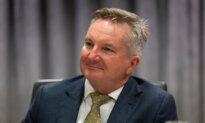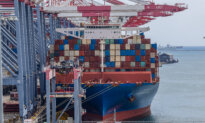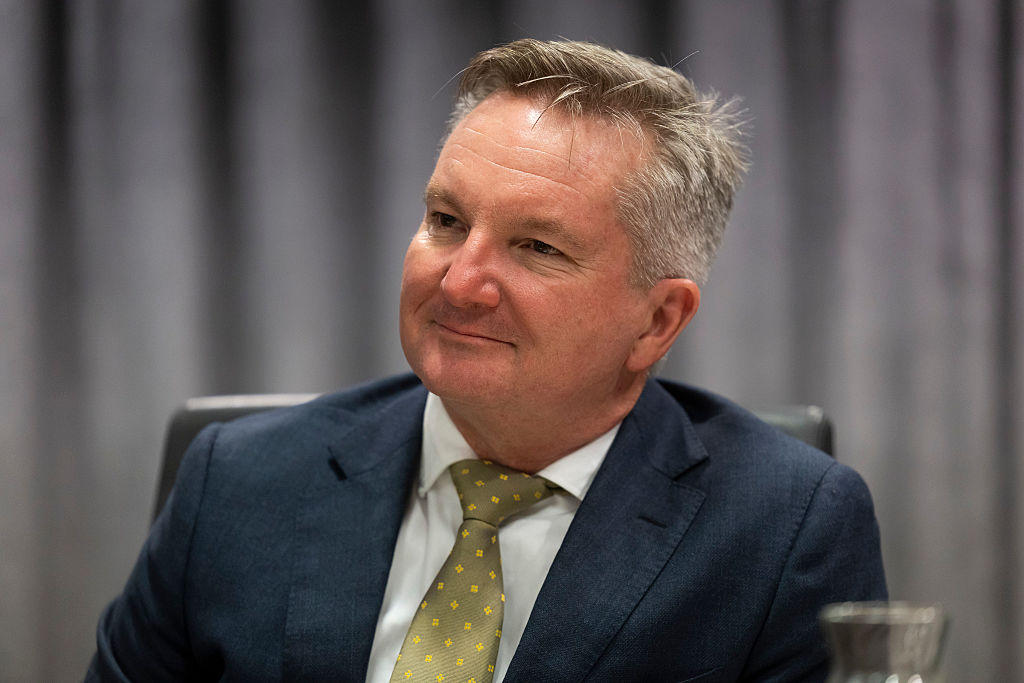

Energy Minister Chris Bowen has announced that 57 fuel tankers are currently on their way to Australia amid growing concerns about fuel shortages.
According to the minister, the shipments—carrying crude oil, diesel, jet fuel and petrol—are “about standard for this time of year.” He also revealed that 4.1 billion litres of fuel have been locked in by Australian companies for delivery over the next four weeks.
At the same time, Bowen provided an update on the country’s fuel reserves, saying Australia currently holds 38 days of petrol, 28 days of jet fuel, and 31 days of diesel.
The minister noted that the figures have remained largely unchanged over the past month, while describing this situation as a “good thing.”
“That shows that while fuel is getting out the door at record rates across Australia, fuel is also coming in the door at Australia’s import terminals,” he said.
“And it’s also going out the door at Australia’s two refineries, so they’re working full pelt to ensure that supply is kept up for Australians.”
When asked whether Labor would commit to lifting fuel reserves to 90 days, as proposed in 2020, Bowen did not give a direct answer but said the government would “look at what can sensibly be done” after getting through the current fuel crisis.
“But I do point out that 90 days held in Australia would be a cost of $20 billion (US$14 billion) over four years. The Liberal Party complains about public spending being too high. That’s a very significant cost,” he said.
Uncertainty Remains
Bowen acknowledged that the government is currently unsure about how the fuel situation will play out in coming weeks.
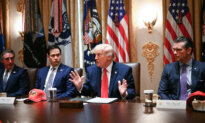
The minister also remained cautious about U.S. President Donald Trump’s decision to launch a naval blockade of the Strait of Hormuz after negotiations between the United States and Iran broke down.
According to the United States Central Command, vessels of all nations will be banned from entering or departing Iranian ports and coastal areas, including those on the Arabian Gulf and Gulf of Oman, from April 13 (U.S. time).
When asked whether the development could bring about positive changes for Australia, Bowen said the Labor government had not taken account of Trump’s decision in its fuel strategy and warned that “we couldn’t get ahead of ourselves.”
“We haven’t worked on any particular scenario which involves the opening of the Strait of Hormuz. As I said last week on my press conference–by that I mean, we are not counting on that in terms of scenario planning,” he said.
“What we’re doing is continuing to work on the basis that this uncertainty and constraint on supply will continue. Obviously, we hope it doesn’t, but we work in terms of prudent planning on the basis that it will.”
Fuel Shortages Persist Across Australia
Despite the steady pipeline of imports, fuel shortages still remain across the country.
Government figures show that 205 service stations—around 2.6 per cent of the total—are currently without diesel. New South Wales is the hardest hit, with 109 stations affected, followed by Queensland (36) and Victoria (34).
Unleaded petrol shortages are also evident, particularly in Western Australia, South Australia and Queensland.
 Friends Read Free
Copy
Facebook
Tweet
Friends Read Free
Copy
Facebook
Tweet