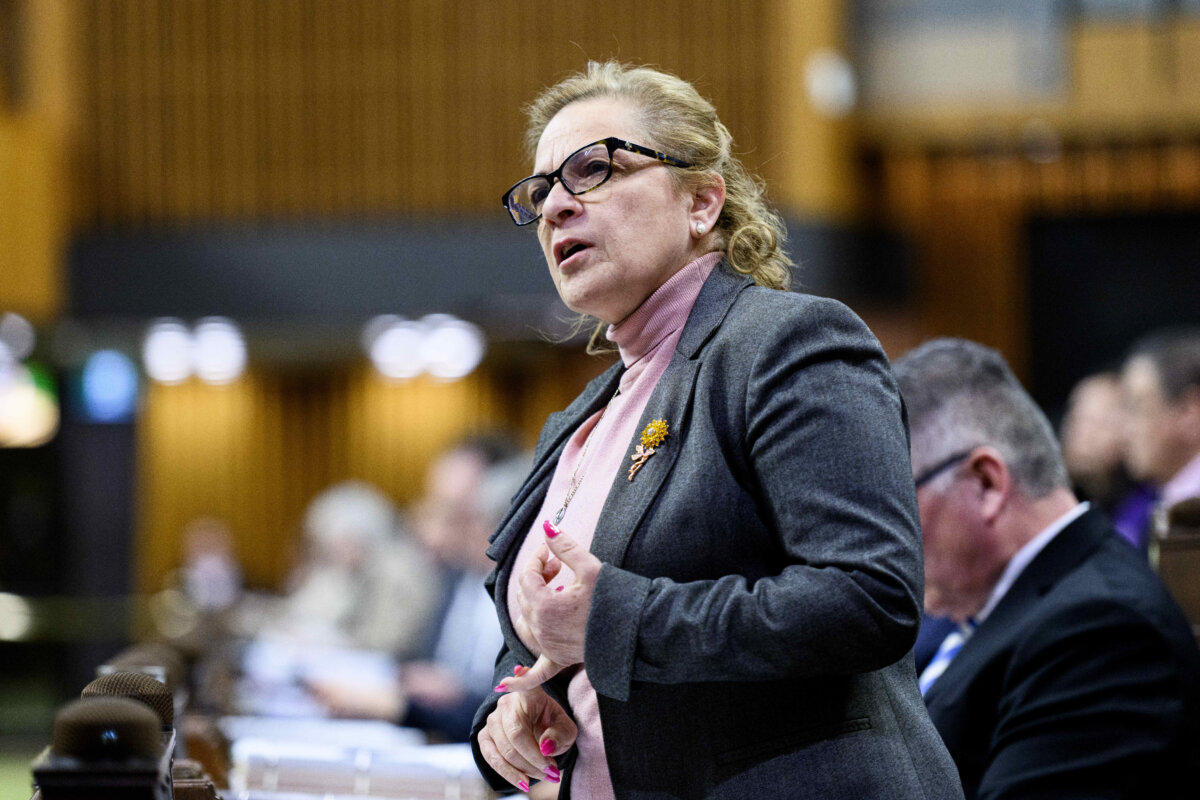

The federal government has soft-launched an immigration program that will see 33,000 temporary foreign workers become permanent residents in Canada over the next two years, Immigration Minister Lena Diab confirmed.
The program, first announced in November 2025 as part of Ottawa’s 2026–2028 Immigration Levels Plan, seeks to “accelerate” the transition of up to 33,000 work permit holders already in Canada to permanent residency in 2026 and 2027, to tackle labour shortages in in-demand sectors.
Government officials have not provided updates on the “one-time initiative” since its announcement. Diab told Toronto Star in an interview published March 6 that the measure is one way to reduce the temporary resident population, noting that more than half of the 395,000 people who became permanent residents in 2025 had previously held temporary permits.
“We have launched it already,” the minister said, adding that details on application and approval numbers are not yet available. “But we will in the month of April be able to provide more clarity and more detail on them,” she added.
Diab’s comment echoed the three-year immigration levels plan, announced alongside Budget 2025 on Nov. 4, which states that reducing temporary resident admissions is part of Ottawa’s goal to “reduce the total number of temporary residents to less than five per cent of Canada’s population by the end of 2027.”
Specifically, the three-year plan pledges to shrink new temporary resident admissions from 673,650 in 2025 to 385,000 in 2026, and 370,000 in 2027 and 2028.
Temporary Residents Whose Visas Have Expired
Diab said the initiative to move up to 33,000 temporary foreign workers into permanent residency also aims to address growing concerns about migrants losing legal status.
The issue of temporary residents remaining in Canada after their visas have expired has sparked heated debates between the Liberal government and the Opposition Conservatives since last June. Concerns centre on whether Ottawa can track and remove people who no longer have legal right to stay in the country.
Data from Immigration, Refugees and Citizenship Canada (IRCC) in January indicated that nearly 1.9 million temporary visas, including work and student permits, will expire in 2026. In November 2025, the department said more than 2.5 million temporary resident visas expired between Jan. 1 and July 31 of that year, in response to a September question from Tory MP Pat Kelly, who asked how many temporary resident visas had expired in 2025 up to that point.
In an interview with The Canadian Press published late January, Diab said her department will start tracking the exit of temporary visa holders. During House of Commons debates last June, she told Parliament that temporary migrants are expected to leave on their own when their visas expired and that removals are not within the purview of IRCC.
The minister reiterated her stance in the recent Toronto Star interview.
“If you do not apply for an extension, we expect you to honour that commitment and leave. What we are also saying is even if you did apply for extension, it may be granted or it may be rejected,” she said.
Additional Permanent Residents
Diab said her immigration priorities will follow those set in the mandate letter from Prime Minister Mark Carney, which, as stated in Budget 2025 includes keeping new permanent resident admissions at less than 1 percent of the Canadian population beyond 2027.
Budget 2025 outlined that the government’s 2026–28 Immigration Levels Plan will “return immigration to sustainable levels by stabilising” new permanent resident admission targets at 380,000 per year for the three years, which is down from 395,000 in 2025.
Notably, figures released by IRCC in the “Supplementary Information for the 2026–2028 Immigration Levels Plan” on Nov. 5 indicated that 148,000 additional permanent residents will be added to official targets over the next two years through “one-time initiatives.”
The 148,000 figure includes the 33,000 slots allocated to work permit holders and approximately 115,000 refugees who are “already on a pathway to permanent residence and in alignment with their protected status under domestic and international law.”
Including the “one-time initiatives,” Canada would admit just under 1.3 million new permanent residents over the next three years based on its annual target of 380,000.
Meanwhile, the federal government announced on Feb. 18 that it is expanding the Express Entry immigration program to allow more skilled foreign workers to qualify for fast-tracked permanent residency. The new categories include military recruits, aircraft pilots and mechanics, among others, who will receive priority in their applications.
Paul Rowan Brian contributed to this report.
 Friends Read Free
Copy
Facebook
Tweet
Friends Read Free
Copy
Facebook
Tweet