The case of the Canadian NATO intern recently charged with espionage in Belgium, who also held government posts in Canada, is the latest instance of a potential security threat first flagged by foreign authorities.
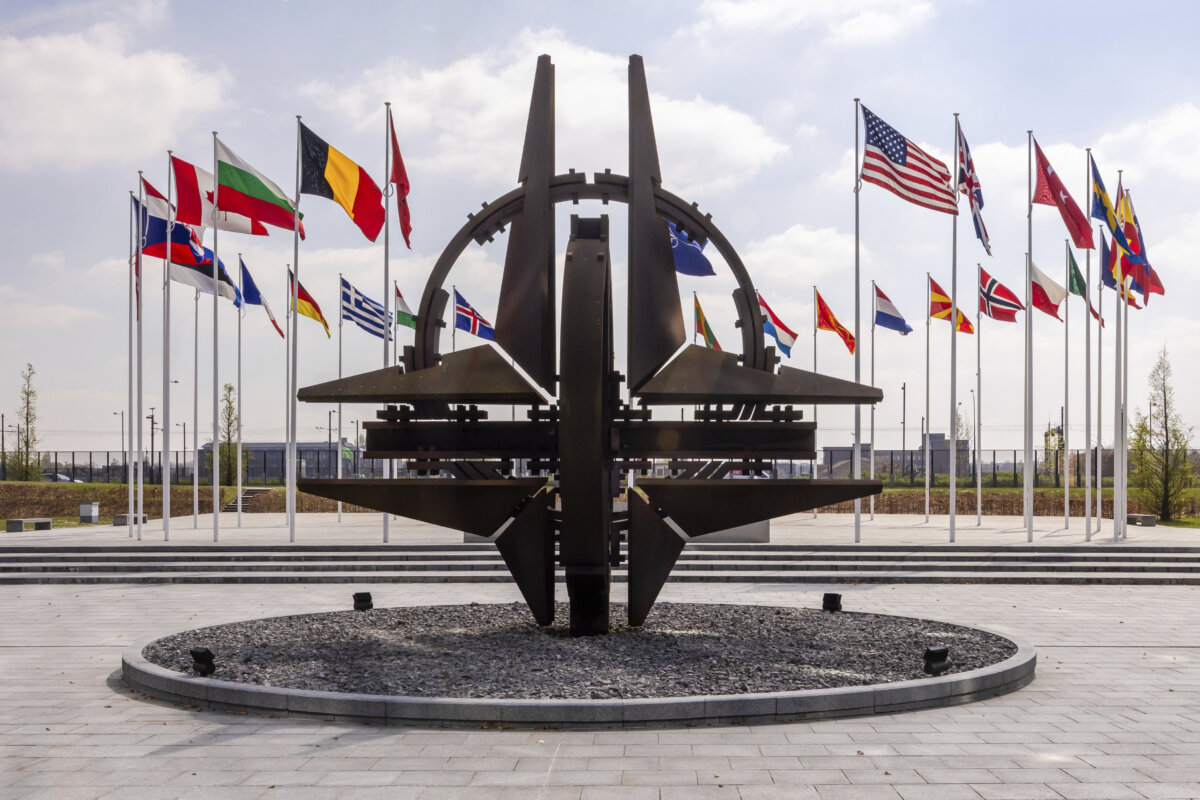
The Belgian prosecutor’s office has accused the suspect of belonging to a criminal organization and carrying out espionage activities for an unspecified “third country” while interning at NATO’s Supreme Headquarters Allied Powers Europe (SHAPE) military headquarters in Mons, Belgium.
The office noted that the suspect was arrested on July 24 following searches at her home and place of work done with the support of the Computer Crime Unit (CCU) and forensic and scientific police units after her conduct had been reported to NATO officials and then turned over to Belgium’s General Intelligence and Security Service
The prosecutor’s office didn’t specify which nation the suspect is accused of spying for, but it mentions that that she is a Canadian national of Chinese origin.
None of the allegations against the suspect have been tested in court.
Profile
Although the prosecutor’s office hasn’t released the name of the suspect, online records appear to indicate that she has previously worked for several Canadian government departments and agencies. These include the Canadian Space Agency, Statistics Canada, and the National Research Council of Canada (NRC).
A LinkedIn profile appearing to belong to the suspect accessed July 30 notes she is fluent in English, Mandarin, and French, and includes a self-description as “aggressively Asian” along with flag icons of China and Canada.
Her work history describes her as a systems engineer with a background in computer science, systems engineering, and economics, and says she attended Oxford University as well as the University of Ottawa and University of Montreal.
The profile goes on to list several years of work experience in the economic research division of the World Trade Organization in Geneva in Switzerland, along with work as a systems engineer at the Canadian Space Agency working with “satellite operations.”
It also lists four years working as an economist for Statistics Canada in Ottawa and a position as a data scientist with NRC’s Digital Technologies Research Centre in 2017.
Social media posts show the apparent suspect posting to find housing in Mons ahead of her NATO internship starting last summer, along with a similar search in 2023 in Geneva just prior to starting her internship at the World Trade Organization.
According to court material, the suspect challenged a 2023 Public Service Commission finding which ruled that she had committed fraud during the application process for a position at the Canada Border Services Agency in 2019 by turning in two applications under different versions of her name and different email addresses.
The suspect’s federal court challenge was dismissed in the summer of 2024.
Global Affairs Canada, the National Research Council of Canada, Statistics Canada and the Canadian Space Agency were contacted for comment on the charges laid against the suspect.
Global Affairs Canada did not respond by publication time. The other three agencies issued identical statements, saying they could not confirm the suspect’s identity in order to protect the integrity of the investigation, but were taking the matter “very seriously.”
“We will continue to collaborate domestically and with our international partners to protect national security and preserve the integrity of the investigative process,” StatCan spokesperson Carter Mann wrote in a July 31 statement to The Epoch Times.
Vetting Process
It is unclear what level of security clearance the suspect had at each Canadian government organization or while at NATO.
The website for NATO’s SHAPE program, where the suspect worked, says its six-month internship accepts 35 interns each year. It notes that applicants must first obtain a security clearance from their national authority before NATO conducts its own vetting process and makes a final decision on admission to the program.
According to NATO, obtaining a security clearance in a member nation can take anywhere from eight weeks to 18 months.
Public Safety Minister Gary Anandasangaree said he won’t “speculate” on the case but added that the federal government will “get to the bottom of what happened.”
“Canadian law enforcement and Canadian authorities are continuously monitoring and will monitor the impact of the work this individual has done, if they have done any work in Canada,” Anandasangaree said July 27.
Scott McGregor, a former Canadian Armed Forces intelligence operator and intelligence adviser to the RCMP, says security risks can often go unnoticed in Canada because Canada’s intelligence apparatus is “deeply fragmented.”
“Multiple agencies operate under different mandates, security-clearance systems, and information-sharing protocols, making the timely exchange of classified intelligence unnecessarily difficult,” McGregor told The Epoch Times.
“The problem is compounded by the fact that many law-enforcement agencies work almost exclusively at the Protected level and often lack the training, access, and systems required to handle or integrate higher-level intelligence effectively.”
Dennis Molinaro, an author and former national security analyst and policy adviser to the federal government, said this case shows that Canada “failed miserably and an allied agency had to deal with the fallout.”
“Ottawa granted the clearance — Global Affairs confirms Canada makes the final call on Canadians going into NATO. Belgium made the arrest,” he said in a social media post.
“The intern position doesn’t have to be the soft underbelly if the operating environment is hardened, and this shows again that it isn’t in Canada. And again, it’s allies catching it.”
Mehmet Tohti, executive director of the Uyghur Rights Advocacy Project, said he wonders if the woman would have been arrested on the same charges in Canada.
“So far, Canada has not made a single arrest or laid any charges for alleged espionage on behalf of China. Instead, we sent the two scientists from the Winnipeg lab to China rather than arresting them,” Tohti said in a social media post.
“I hope all federal offices, especially MPs offices will consider implementing comprehensive security screening and appropriate security clearances before making hiring decisions.”
Past Cases
There have been a number of cases in which foreign agencies flagged security concerns related to Canada, prompting Canadian authorities to take action afterwards.
The case of former Canadian navy officer Jeffrey Delisle, found guilty of spying for Russia in 2012, was first flagged by the FBI to Canadian authorities.
As well, McGregor noted that the case of former senior RCMP officer Cameron Ortis, who was found guilty of leaking secrets in 2023, was brought to the attention of Canadian authorities by Americans.
He also pointed out that the cases of Chinese regime-backed fentanyl and money laundering operations in B.C., which later became subject of a public inquiry, were first flagged by U.S. authorities.
In 2019, a U.S. court found Vincent Ramos, CEO of the Canada-based Phantom Secure, guilty of running a criminal enterprise facilitating secure communication devices for drug traffickers.
In 2014, Chinese national Su Bin was arrested in Richmond, B.C., on a U.S. extradition request. He pleaded guilty to attempting to steal American military secrets in 2016 in a California court.
In late 2018, Canada arrested Huawei executive Meng Wanzhou on a U.S. extradition request alleging she engaged in fraud.
McGregor said there is a pattern of Canadian authorities often appearing “reactive” on intelligence and security matters.
“When the FBI must help advance cases involving figures such as Bin Su or Meng Wanzhou, it raises serious questions about whether Canada has the institutional coordination, legal tools, and operational will needed to confront transnational organized crime and state-linked threats on its own,” he said.
Referring to similar past cases, Molinaro said such episodes may lead to allies losing trust in Canada.
“Canada issues the credential, allies absorb the consequence. Allies are going to stop trusting Canada,” he said in a post.
 Friends Read Free
Copy
Facebook
Tweet
Friends Read Free
Copy
Facebook
Tweet