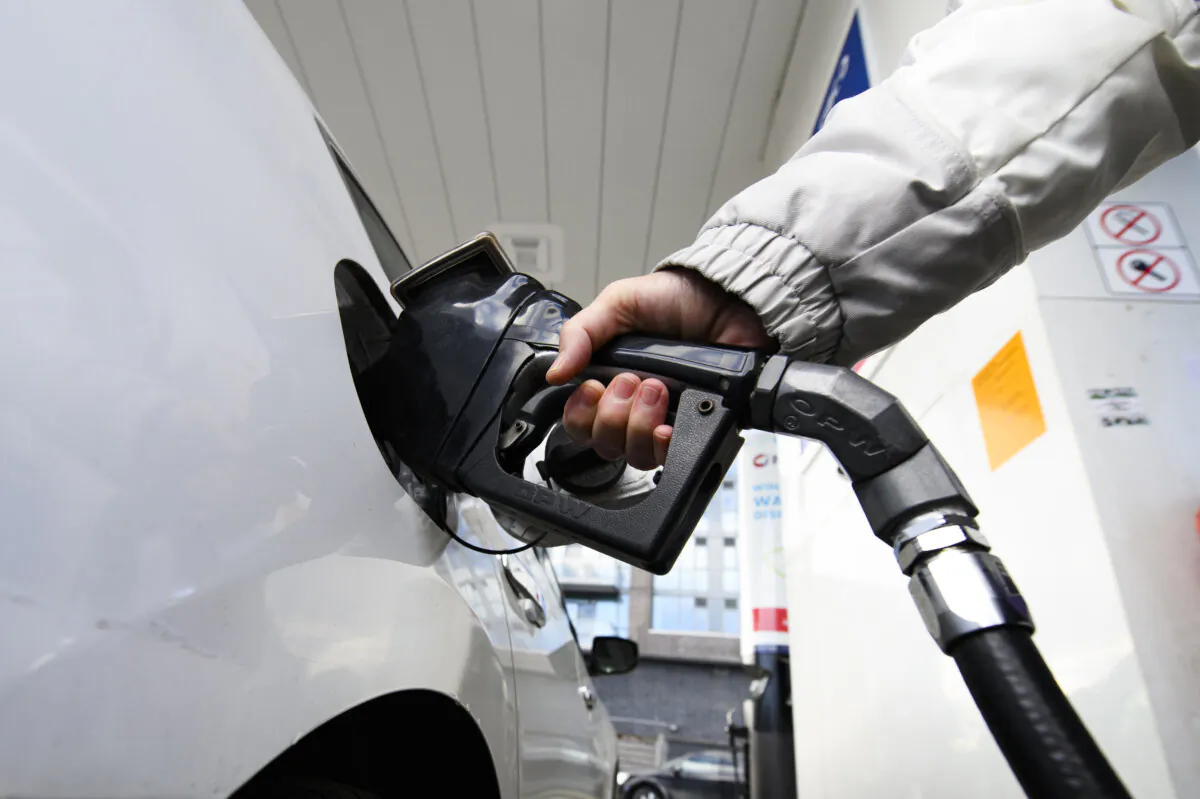

Canadians want the federal government to cut fuel taxes to address rising gas prices amid the war in Iran, a recent poll has found.
The poll, conducted by Nanos Research, indicated that 39 percent of Canadians rank reducing fuel-related taxes as their top choice for Ottawa’s response to rising gasoline prices. The sentiment was strongest in Atlantic Canada (55 percent), while B.C. was least likely (28 percent) to support such a measure.
A total of 1,099 Canadian adults took part in the survey from March 31 to April 4. The research, commissioned by Bloomberg News and released April 9, noted that increasing “investment in long-term energy alternatives” was the second choice, favoured by 22 percent of respondents.
Other options—including providing temporary financial relief such as rebates or credits for drivers, expanding incentives for the purchase of electric or hybrid vehicles, and providing incentives for public transit use—tied for third at 9.4 percent each.
Eight percent of respondents said the governing Liberals do not need to take any action, while 2.8 percent were unsure.
The findings came amid soaring global oil prices driven by the war in Iran. West Texas Intermediate (WTI) crude oil was trading at US$65 a barrel before the start of the war, reaching a peak of US$110 on April 7, before dropping to US$95.50 on April 10, as the world watches how the fragile truce between the United States and Iran unfolds.
Canadians have felt the effects at the pump, with the average gasoline price in the country rising 50 cents over the past month to a high of $1.91 a litre on April 7, according to Natural Resources Canada. In Vancouver, gas prices have been above $2 a litre for weeks, and are now at $2.08 as of April 10.
On April 2, Conservative Leader Pierre Poilievre called on the federal government to remove all taxes on gasoline and diesel for the remainder of the year.
He said during a press conference that temporarily removing the GST and excise tax would save Canadians 25 cents per litre, amounting to about $1,200 a year for the average family of four.
Poilievre noted that the excise tax adds 10 cents to each litre of gasoline in Canada, while the Clean Fuel Standard tax adds an additional seven cents.
On April 7, Prime Minister Mark Carney told reporters at a press conference that Ottawa is paying close attention to fuel prices and looking at ways to mitigate the impact of increases on consumers, though he did not specify what measures would be taken.
The Liberal government had implemented a 25 percent boost to the GST credit this February to help low- and modest-income Canadians with the cost of living. The measure was expedited through Parliament with support from the Conservatives.
According to the Nanos poll, Canadians are changing their activities in response to the higher gas price. More than a third (35.5 percent) of respondents said they are driving less nowadays, while nearly 16 percent are cutting back on other household spending.
Matthew Horwood and Noé Chartier contributed to this report.
 Friends Read Free
Copy
Facebook
Tweet
Friends Read Free
Copy
Facebook
Tweet