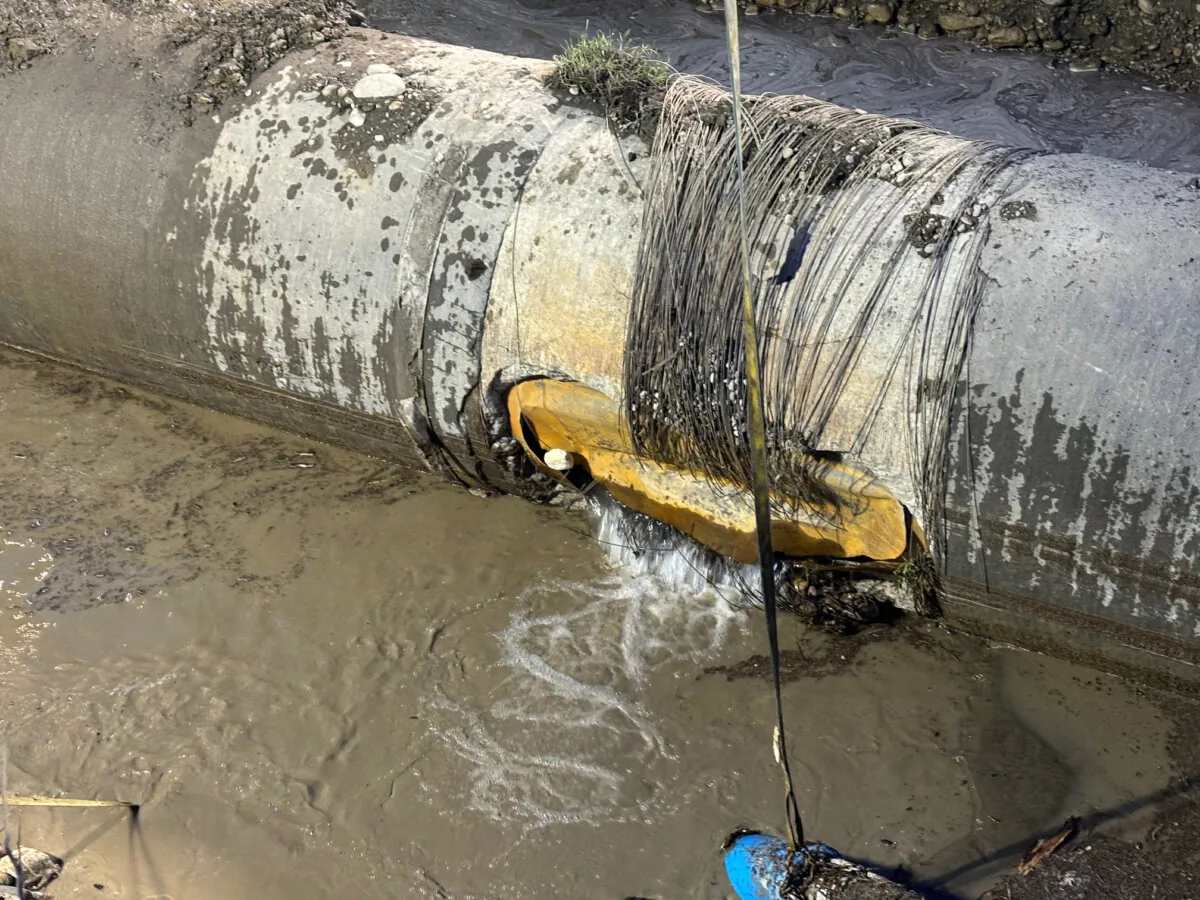

Calgary has been placed under water restrictions after the city’s largest feeder main, which also ruptured last year, broke again on Dec. 30, causing flash floods and temporarily reducing water supply.
The city was placed under Stage 4 water restrictions on Dec. 31 following a rupture along the Bearspaw South Feeder Main, the same feeder that burst in early June last year and prompted restrictions across the city and surrounding municipalities. The water main broke on 16 Avenue Northwest, east of Sarcee Trail, around 8 p.m. on Dec. 30, causing flooding that required police and firefighters to rescue 13 people from their vehicles.
The city’s water team had stopped the flow and located the break by the following morning, with further assessments underway, officials said during a Dec. 31 press conference.
“I want to take a moment to recognize that this event, given our recent history, may cause stress for a lot of Calgarians,” said Susan Henry, the chief of the Calgary Emergency Management Agency.
“Today, our teams are working around the clock to protect Calgarians, to protect our water system, to keep it safe and flowing, and to restore services as quickly as we can.”
Stage 4 water restrictions prohibit large outdoor water use, including for rinks or snow-making. Indoor facilities such as pools, rinks, and recreation facilities have also been asked to implement their water reduction plans.
Officials are also asking Calgarians and residents of the nearby communities of Strathmore, Airdrie, Chestermere, and Tsuu T’ina Nation to voluntarily limit indoor water use by keeping showers under three minutes, flushing toilets only when necessary, and running dishwashers and laundry machines only when full.
Director of Calgary Water Services Nancy MacKay said during the Dec. 31 press conference that while those voluntary water conservation measures may “sound like small things, they make a huge difference for us during this time.”
“We are relying on less water to meet the demands of the entire city and the surrounding region and communities,” she said, adding that the pipe burst was caused by a rapid drop in pressure.
She said that after drawing on lessons from last year’s feeder main rupture, crews have been able to make “emergency adjustments” to direct water from the Glenmore Water Treatment Plant, the smaller of Calgary’s two water plants, throughout the city. She noted that Calgary relies on the Bearspaw South Feeder Main to transport the majority of its water from the Bearspaw Water Treatment Plant.
The city and Alberta Health Services have also issued a boil water advisory for residents and businesses in parts of the northwest communities of Parkdale, Montgomery, and Point McKay, recommending that all tap water be boiled due to potential water quality impacts from the main break.
The advisory, which will be in place until further notice, applies to water used for consumption, brushing teeth, and cleaning raw foods, but it is not required for bathing or laundering. The city is deploying water wagons to the communities affected by the boil water advisory, Henry said.
Calgary Mayor Jeromy Farkas, who took office in October, said city council is committed to addressing the aging infrastructure of the feeder main.
“It’s extremely frustrating to see this happen to our city again,” he said during the Dec. 31 press conference.
“We are taking the needed action to ensure that our city administration is held accountable and that we are accelerating as fast as humanly possible the ultimate buildout and replacement of this pipe.”
 Friends Read Free
Copy
Facebook
Tweet
Friends Read Free
Copy
Facebook
Tweet