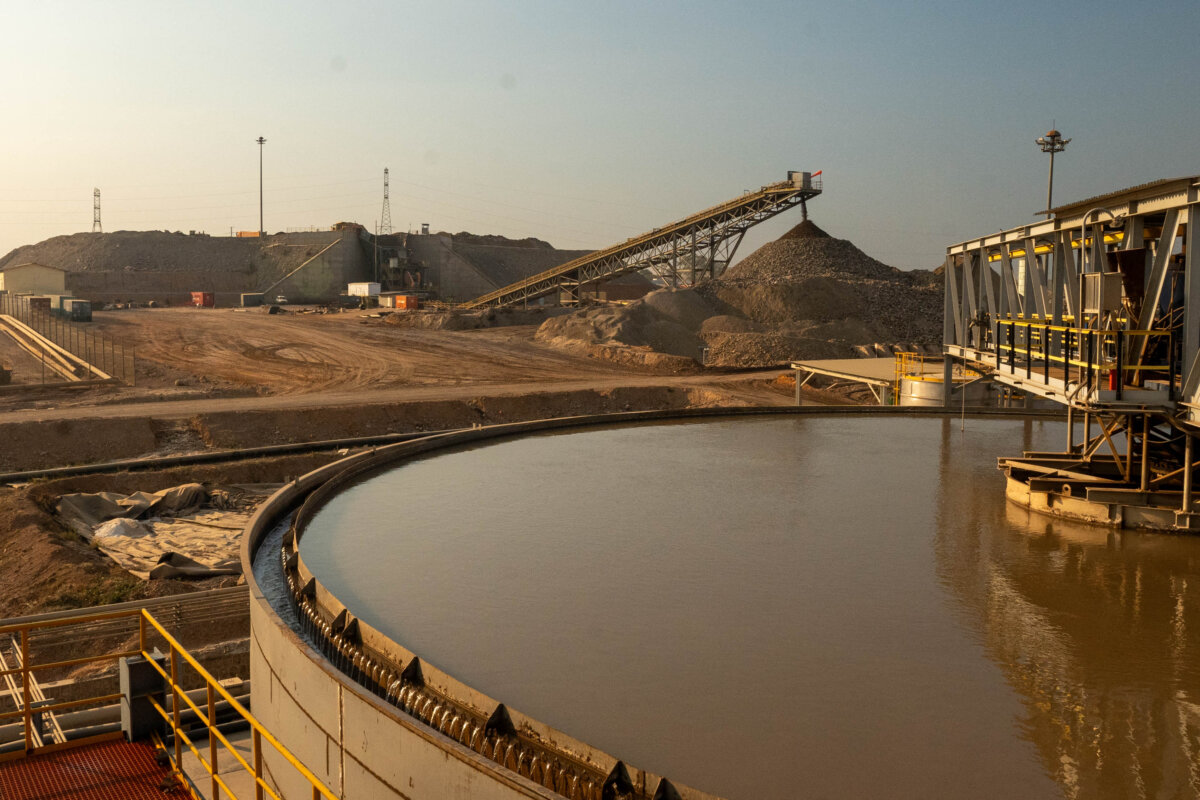

JOHANNESBURG—China is spending billions of dollars to buy copper and the rights to mine and process the metal—one of the world’s most important critical minerals—especially in Africa, where it has a strong presence.
Beijing is making these moves, according to mining experts, as part of its preparation for more direct competition for Africa’s minerals from the United States.
U.S. President Donald Trump’s latest action, a 50 percent tariff on copper imports set to become effective on Aug. 1, is aimed at boosting domestic mining and smelting.
China dominates critical mineral extraction in Africa, being the leading buyer of and investor in the materials. It also controls their processing and refining, according to the Africa Policy Research Institute.
But Beijing’s dominance is increasingly threatened by competition for minerals and metals from other powers, analysts say, primarily the United States.
Trump has promised to break China’s tight hold on global mineral supply chains, including by signing bilateral minerals deals with resource-rich countries.
The U.S. Chamber of Commerce describes copper as “critical” to the U.S. economy, with extensive applications in defense, infrastructure, and emerging technologies.
“It is a vital component in military equipment—including communications systems, weapons, and vehicles—that is essential to operational readiness and effectiveness,” the chamber said in a briefing note in April.
“Additionally, copper is essential to the ongoing electrification of more parts of the U.S. economy through such technologies as electric vehicles and renewable energy systems, which are playing a valuable role in reducing dependence on foreign energy sources and enhancing energy security.”
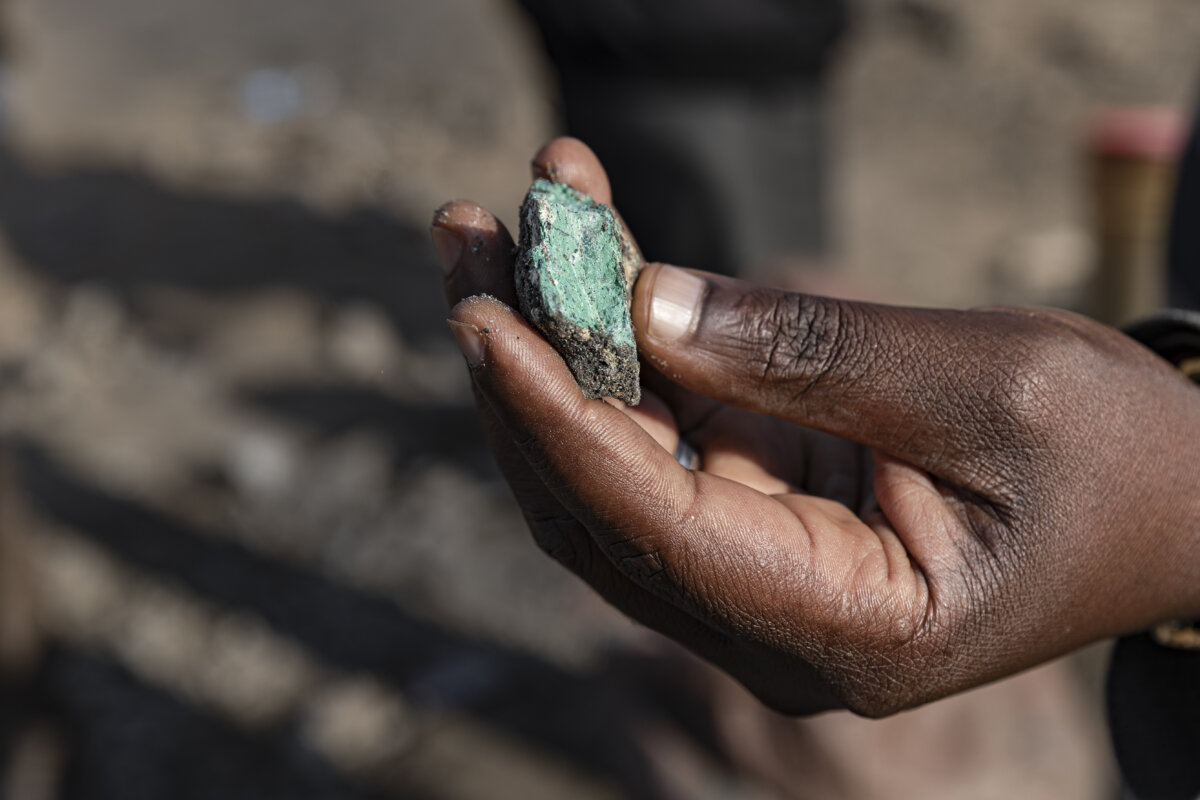 A laborer displays a copper stone at an artisanal mining site in Kolwezi, Democratic Republic of Congo, on May 26, 2025. (Michel Lunanga/Getty Images)
Bernard Swanepoel, chairman of the African Exploration Mining and Finance Corporation, told The Epoch Times, “Judging from how often he mentions it, copper is central to Trump’s ambitions.”
He pointed to the Washington-backed Lobito Corridor Project.
The U.S. government is funding a railway stretching through Africa’s copper belt, from the Democratic Republic of Congo (DRC) through Zambia and to the Port of Lobito in Angola, from which it will export minerals back home.
Cobus van Staden of the China-Global South Project told The Epoch Times that Beijing is “worried” about U.S. investments in DRC and Zambia, two of the world’s biggest copper producers.
The White House is hoping to soon sign a deal for wider access to DRC’s resources, including copper, as a consequence of the United States’ role in brokering peace in the Great Lakes region.
The DRC is the second-largest copper producer in the world, with an output of 3.3 million metric tons in 2024, according to Statista, which collates global statistics online.
China controls large parts of the DRC’s copper sector, mineral experts said.
The United States currently gets 94 percent of its copper from just three countries: Chile, Peru, and Canada. But it is seeking to diversify its sources, according to Mining Technology, a global authority on minerals and metals.
After the peace agreement was signed by the DRC and neighboring Rwanda on June 27, Trump said, “We’re getting, for the United States, a lot of the mineral rights from the Congo as part of it.”
U.S. economic affairs think tank ING said the country imported about 850,000 metric tons of copper, excluding scrap, worth $17 billion in 2024.
This, it said, accounted for about half of U.S. domestic consumption.
Experts told The Epoch Times that China feels threatened in the DRC in particular, as the central African country is the biggest single supplier of copper to Beijing.
“Almost 40 percent of China’s copper currently comes from DRC, up from 10 percent in 2020, so from this we can see just how dramatically China has switched focus to DRC,” Swanepoel said.
He told The Epoch Times that up until now, China has concentrated on securing ownership and majority stakes in DRC mines, but is now planning to refine copper on-site.
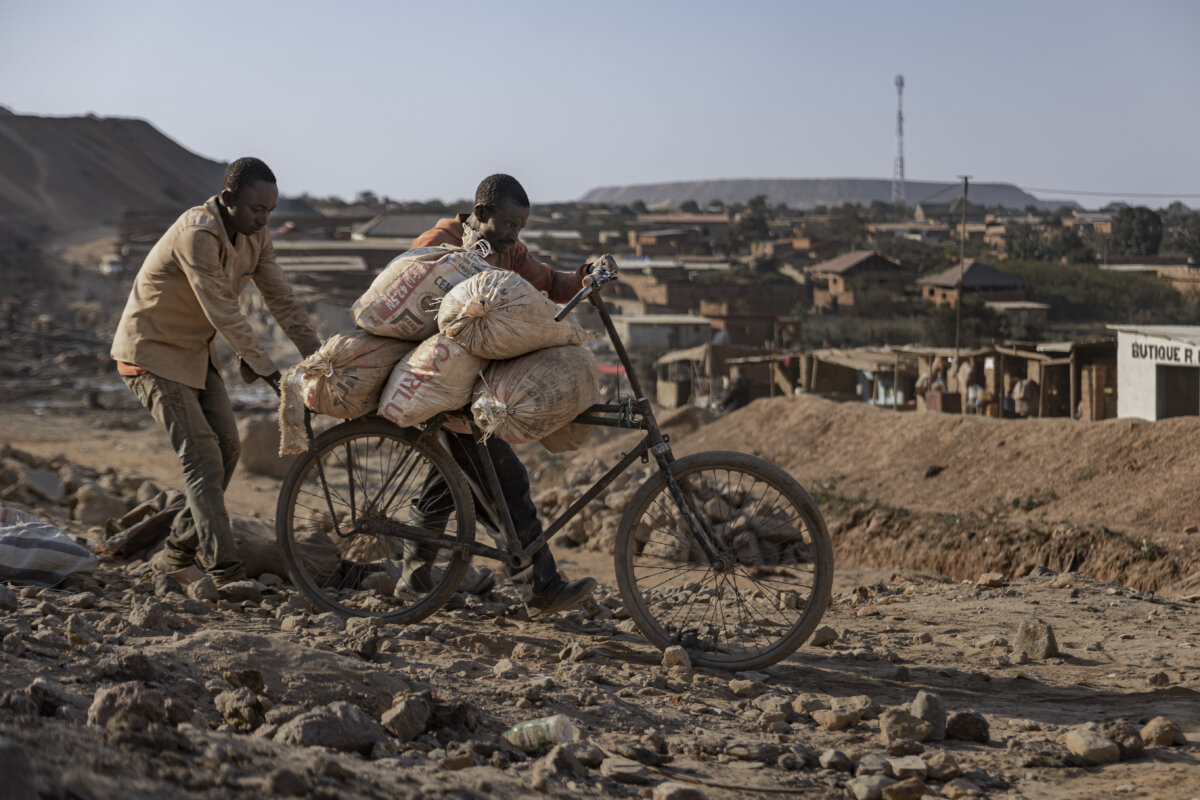 A father and his son push a bicycle loaded with sacks of cobalt and copper along a dirt road near an artisanal mining site in Kolwezi, Democratic Republic of Congo, on May 25, 2025. (Michel Lunanga/Getty Images)
“This is another indication that it wants to mitigate against the effects of American investments in the region,” Swanepoel said.
On July 3, Chinese firm Dowstone Technology announced an investment of $165 million in a new copper smelter in the DRC.
Mining Technology said Chinese imports of copper from the DRC surged in 2024 by 71 percent year on year to almost 1.5 million metric tons.
Van Staden said Chinese groups control between 70 percent and 80 percent of the DRC’s mines.
“Beijing is not taking kindly to moves by the United States into Africa, which it considers to be its territory, and this is particularly true when it comes to natural resources,” he said.
“There is, however, a gap for the United States because many Africans aren’t happy with China’s presence. There are allegations of bad treatment of locals by Chinese mine managers and other factors, including corruption, that have sullied China’s reputation.”
The DRC and Zambia, ranked the eighth-largest copper producer in the world, make up 6 percent of global output, and China is investing heavily in extractive industries in both, said Rian Coetzee, head of metals and mining at South Africa’s Industrial Development Corporation.
“China is also putting money into South African and Namibian copper fields, because they’re also big producers,” he told The Epoch Times.
China is Africa’s biggest trading partner and is increasingly competing with the United States for access to rare earth elements and critical minerals.
Minerals such as cobalt, copper, and manganese, and rare earth elements, especially neodymium, praseodymium, terbium, and dysprosium, are used to make powerful magnets needed in electric motors, wind turbines, and electronics.
They also act as catalysts in industrial processes, including petroleum refining.
“Of all the minerals and metals, copper is the one that’s most integral to the global economy,” Gary Lane of the Southern African Institute of Mining and Metallurgy said.
“Copper is needed in most industrial sectors, and especially in motor vehicle manufacturing and for electrification.”
Lane said the world’s energy transition will not happen without copper.
“Even traditional ways to provide electricity, such as coal-fired power plants, need a lot of copper because it’s an excellent conductor,” he said. “Anything that needs electricity needs copper.”
Lane said demand for copper is going to be “stratospheric” for at least 25 years.
“The Trump administration is planning a huge expansion of America’s power grid, and for this, it’s going to need plenty of copper,” he said.
“China is, of course, always looking to make its grid bigger. So it looks at America’s planned moves into DRC, and other places, and says: ‘Wait a minute. We’d better counter this, otherwise our plans are in trouble.’”
Coetzee said China began increasing its copper interests significantly in March, after Trump ordered an investigation into U.S. imports of the metal.
He said he expects Trump’s 50 percent tariff on all copper imports to trigger an “even bigger rush on copper, before prices become astronomical.”
Coetzee said copper prices increased by almost 40 percent already this year, as countries, especially China, began stockpiling before Trump’s expected levies.
“We saw copper hit a record of almost $5.70 per pound soon after Trump’s comments [on July 8],” Coetzee said.
Marvellous Ngundu, researcher at the Institute for Security Studies in Pretoria, South Africa, told The Epoch Times that should copper supplies wane, or should China gain control of most of the world’s copper, other countries would justifiably see that as a “grave threat.”
“Total dependence on one country for anything is bad,” he said. “If China decides to use its copper as leverage in whatever dispute arises, then manufacturing simply ceases in other parts of the world because so many things can’t be made without copper.”
Ngundu said China is being “very aggressive” in southern Africa’s copper belt.
Zambia’s minister of mines and minerals, Paul Chongo Kabuswe, told The Epoch Times that China has pledged to invest $5 billion in his country’s copper industry by 2031.
“China is putting $800 million in just one of our mines,” he said. “China wants us to increase production a lot.”
Kabuswe noted that the Zambian government is also talking with the Trump administration about more U.S. investment in the country.
“Just because we have Chinese interest here doesn’t mean we don’t want United States companies here,” he said.
In Botswana, Chinese group MMG Limited has invested almost $2 billion to buy the Khoemacau Mine, promising an additional $700 million aimed at doubling its output.
 Friends Read Free
Copy
Facebook
Tweet
Friends Read Free
Copy
Facebook
Tweet