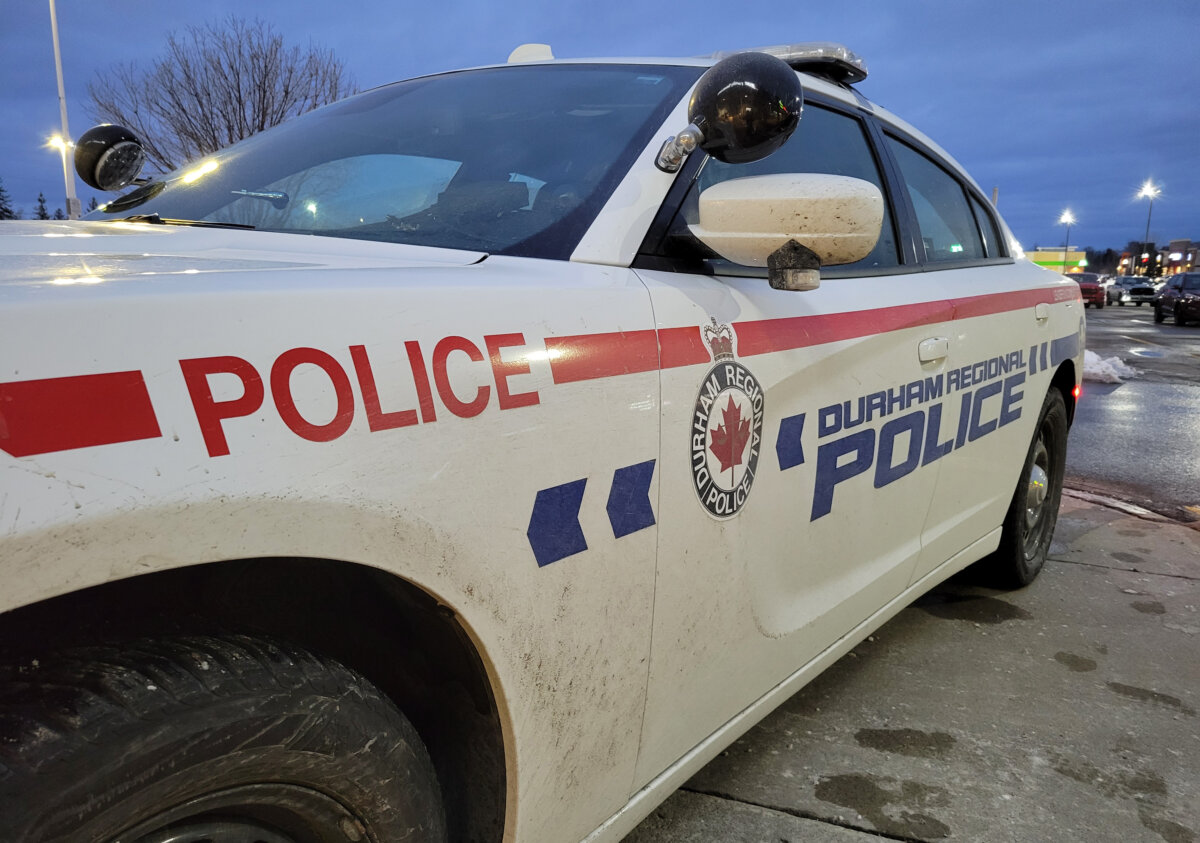

A trend of what police describe as “criminal tourism,” which sees people entering Canada posing as tourists to commit crime, has cost residents of a southern Ontario municipality more than $2.6 million in losses.
The Durham Regional Police Service (DRPS) announced June 5 that it has uncovered more than 200 incidents tied to its investigations into “criminal tourism” networks that led to 46 arrests and more than 1,440 charges laid in the region alone.
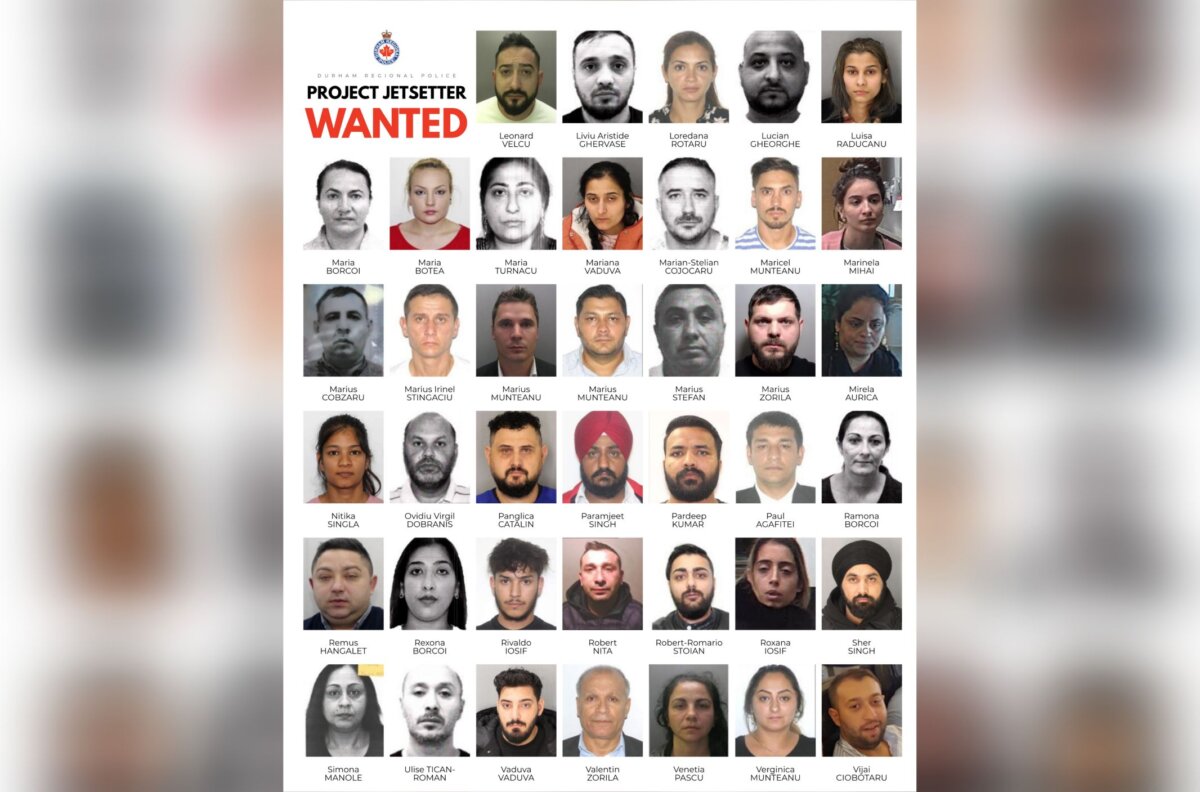
Dubbed Project Jetsetter, the investigations, which span seven years beginning in 2019, involved individuals that are part of organized groups coming to Canada for the purpose of executing “high-profit” crimes, often connected to international criminal networks, according to police. They said in a news release that 164 suspects remain wanted.
During a press conference on the same day, the Durham police shared images of 79 suspects still being sought, but said photos of the other 85 wanted are unavailable.
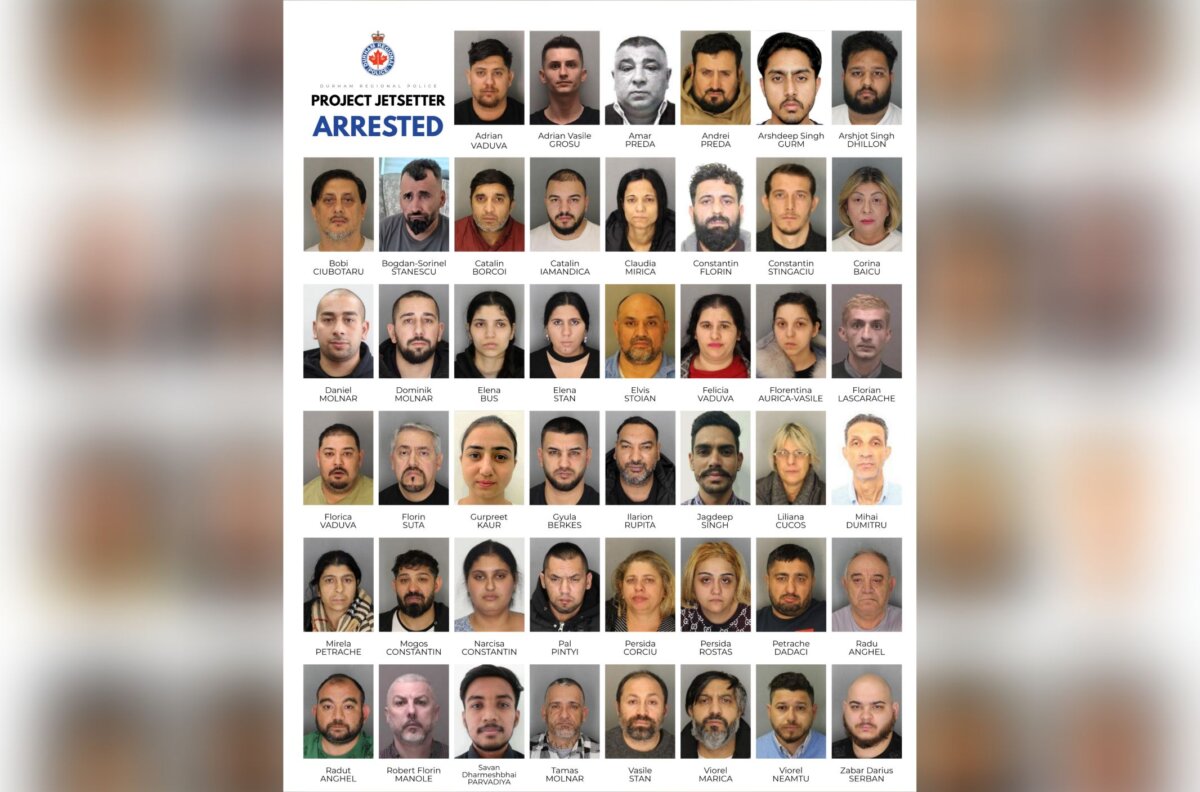
Det. Brad Chapman from the force’s Serious and Organized Crime Section told reporters that the “majority” of the people the DRPS have identified as suspects are from Romania, while a smaller number are from India.
“So they travel quite frequently from jurisdiction to jurisdiction. They come here, they commit the criminal offences, and a lot of times they leave the country before we can identify who they are,” Chapman said.
According to DRPS, a broad range of criminal activity, including large-scale retail theft, vehicle purchasing scams, vehicle financing fraud, staged collisions to defraud insurance companies, and the theft and exportation of vehicles and goods, was identified during the investigations.
Chapman cited what investigators called the “dirty oil scam,” in which suspects contact individuals selling their vehicle and then deliberately damage their vehicle during the test drive or viewing to negotiate a lower price.
Another form involves the suspects rolling back the odometer of the vehicles they are selling to increase the resale value to unsuspecting victims, the detective added, noting such vehicles are “never” registered under the suspects’ names, “making it difficult to track them down.”
As for vehicle financing scams, they are committed through the use of fraudulent identities or documentation to obtain the vehicles, which suspects then “transferred to organized crime groups, and then often exported out of the country,” Chapman said.
Targeting Seniors
The DRPS also noted jewelry distraction thefts often targeting seniors have increased “significantly” in the region year-over-year.
“We are seeing a concerning rise in seniors being targeted while gardening on their own property,” the detective said. “These thefts are up 268 percent compared to this time last year, increasing to 125 incidents—34 from last year.”
DRPS Chief Peter Moreira, speaking alongside Chapman, said police saw “concerning patterns” of the criminal activities as they are “structured, repeatable, and deliberate,” designed to “exploit trust” of vulnerable victims.
“In some cases, victims may not even be aware they’ve been targeted. For example, suspects may approach a senior asking for directions, and then offer a hug or gift, such as a necklace, while removing the victim’s real gold jewelry and replacing it with a fake,” Moreira said.
In addition, police identified a group through another investigation where suspects utilize distraction techniques in retail settings to obtain bank cards and PIN numbers from seniors, and then rapidly withdraw funds or make fraudulent purchases, Chapman added.
‘Not Unique’ to Region
Chapman said the operational scale of “criminal tourism” is not limited to Durham Region.
“This activity is not unique to our region. We are seeing the same individuals, the same methods, and the same networks operating across the Greater Toronto Area and across Canada,” he said.
“These groups are mobile, coordinated, and in many cases connected to a broader organized crime network that extends beyond our borders.”
Moreira said the scale and complexity of their investigations are further complicated by people abroad who know how to exploit “our systems.”
“People are exploiting and know our systems very, very well before they come and engage in this activity,” the chief said. “These organized groups are putting a ton of research into how to work through all of these gaps that exist, and they’re exploiting it, and they’re being quite effective at it, and this is what’s adding to the complexity of investigating this.”
He said Canada lacks a “robust” system to track individuals leaving the country. This has led to instances where police have identified suspects only to find they had already departed without police knowledge. He said he would raise the issue at the federal level to bring some measures that will help police jurisdictions across the country.
The Durham police chief also said existing legislation related to sentencing for such crimes isn’t enough of a deterrent. “The sentencing here treats this like it’s less serious,” he said, noting the impact of financial loss and the “loss in independence” to the most vulnerable. “This is why we take this seriously, even if perhaps the sentences don’t reflect it.”
Moreira pointed out that criminal networks will likely learn from police tactics used in Project Jetsetter to avoid being arrested in the future.
“These groups are adaptive, they continuously modernize and innovate their tactics and strategies, and they will learn from the methods we used in this investigation,” he said, adding that it’s crucial that law enforcement continue to keep up with emerging trends and methods used by organized criminals.
 Friends Read Free
Copy
Facebook
Tweet
Friends Read Free
Copy
Facebook
Tweet