
The 7.1-magnitude earthquake that struck southern Japan has caused at least 25 deaths, with rising temperatures increasing risks for those stranded without shelter, power, or water.
On July 28, the earthquake rocked Kumamoto Prefecture in Japan’s southern main island of Kyushu.
In the immediate aftermath, roughly 300,000 people were sent to evacuation centers, and the military deployed hundreds of soldiers for rescue operations as aftershocks continued to strike the area.
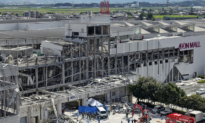
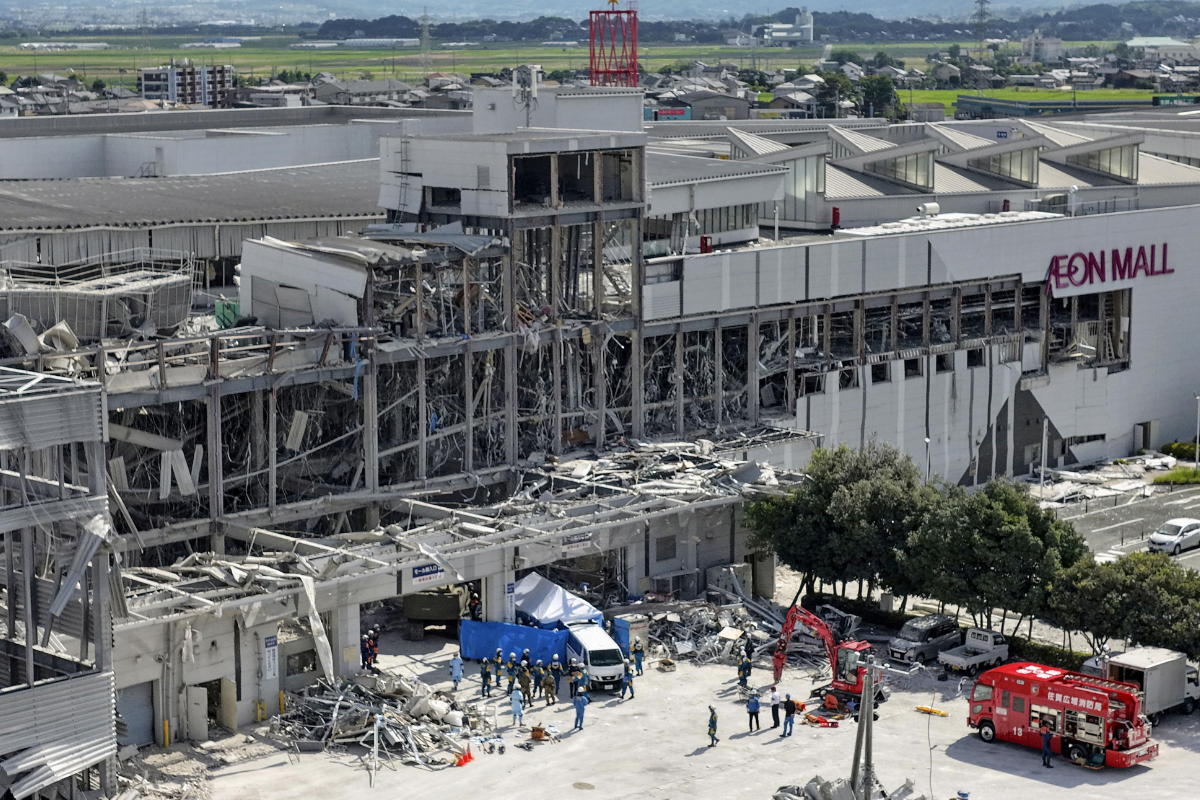
The quake caused major structural damage to Nippon Paper Industries’ paper mill and a partial collapse of Aeon’s shopping mall, where a gas explosion also occurred.
The mall was full of people at the time of the earthquake, with 3,000 customers evacuated to a parking lot before the explosion happened. The explosion occurred in another part of the building, where some staff members were still working.
The local government said the majority of deaths occurred at the paper mill and mall.
Officials said they were investigating the deaths of nine other people in the prefecture to ascertain if those fatalities were caused by the earthquake.
Japanese Prime Minister Sanae Takaichi said in an X post on July 28 that her government was “fully committed to restoring infrastructure such as electricity in areas affected by power outages and water shortages,” and that the Self-Defense Force—Japan’s military—was conducting water supply operations.
Several parts of the prefecture have been affected, including the town of Hikawa, which was among the hardest-hit areas in Kumamoto. Many residents are without power or water.
Some residents have opted to stay in their cars in the town hall parking lot, where authorities are handing out packaged instant rice and water.
In the small port city of Yatsushiro, houses were toppled, streets split open, and residents experienced water and electricity outages.
Immediately after the quake, the military brought water tanks to schools and community centers across Yatsushiro.
Running water and power are still out, but Kyushu Electric Power has said it aims to restore electricity by Friday evening.
Summer Heat
The impact of Japan’s summer climate is being compounded by the loss of critical utilities.
“Because of the summer heat, the lack of water is especially difficult,” Akio Matsushita, a Yatsushiro official helping lead relief efforts in the city of 58,000 residents, said in the city hall.
Matsushita also said he did not know how long it would take to repair the badly-damaged water mains, saying it could take days, weeks, or even months.
With temperatures forecast to reach around 104 degrees Fahrenheit, Kumamoto officials have issued warnings over the risk of heat stroke.
To mitigate the danger, the military is installing around 300 air conditioning units at evacuation centers across the prefecture.
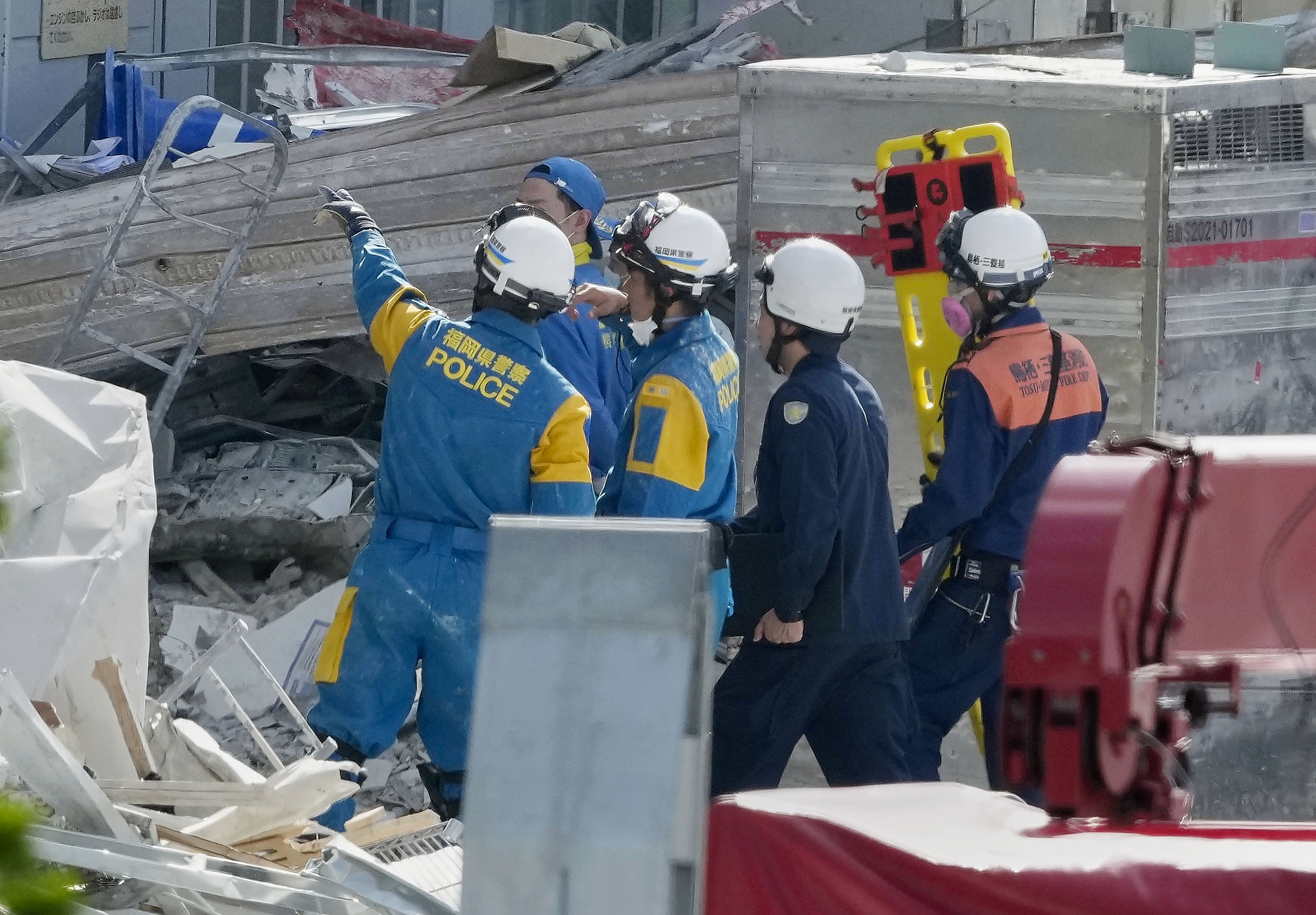 A firefighter carries a stretcher at AEON Mall shopping center, where an explosion occurred following a powerful earthquake, in Kashima, Kumamoto Prefecture, Japan, on July 30, 2026. (Kai Naito/Kyodo News via AP)
“On the ground, extreme heat exceeding [95 degrees Fahrenheit] is intensifying the risk of heatstroke, making it critically important to support evacuees, including by ensuring good conditions in shelters,” Takaichi said in a July 30 X post following her cabinet’s third disaster countermeasures meeting.
“To create environments where air conditioning can be used, we have dispatched power supply vehicles, but it is essential to accelerate the restoration of power and gas infrastructure itself.”
In a general status update, she said that lifelines are still disrupted, with around 95,000 households in Kumamoto Prefecture experiencing water outages, power outages, gas supply suspensions, and communication failures.
Rail routes and roadways also continued to be affected, she said.
Reuters and The Associated Press contributed to this report.
 Friends Read Free
Copy
Facebook
Tweet
Friends Read Free
Copy
Facebook
Tweet