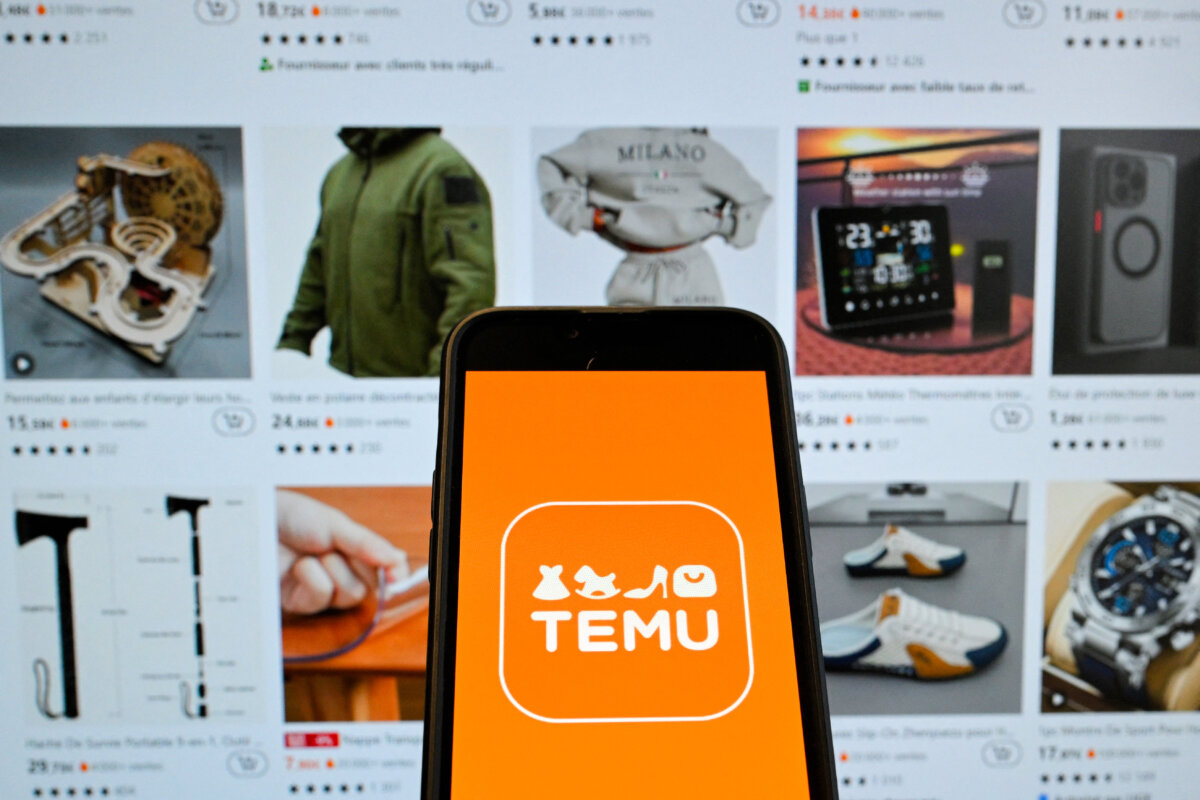

The European Commission (EC) has preliminarily found that Chinese e-commerce platform Temu breached European Union rules by failing to properly assess the risks of illegal products being sold on its marketplace.
The EU’s executive branch stated on July 28 that its analysis of Temu revealed a high risk of EU consumers encountering illegal or noncompliant products.
It found that items such as baby toys and small electronics often fail to meet safety standards under the Digital Services Act (DSA), an EU-wide set of rules that regulate online platforms, including search engines, social media, and e-commerce sites.
The findings are part of the EU’s effort to tighten oversight of digital platforms and their adherence to the DSA regulatory regime. The commission has previously launched investigations into Ali Express, X, and Meta.
Critics of the DSA say the legislation could restrict free speech, although EU officials insist the rules are aimed at improving transparency and user safety online.
Rules for Online Platforms
Temu, alongside Chinese retailer Shein, is one of several firms being investigated under the DSA after being designated a “very large online platform” earlier this year.
Such platforms, with more than 45 million monthly users in the EU, are subject to stricter rules on content moderation, algorithm transparency, and user protection.
Under the DSA, online marketplaces must also comply with trader traceability requirements to ensure that all sellers are properly identified.
The law also bans the use of “dark patterns”—unethical user interface design strategies to manipulate users into unintended actions—imposes rules on advertising, and mandates detailed transparency on how product recommendations are generated.
The commission has previously voiced concerns about the sale of illegal goods such as pharmaceuticals, cosmetics, and toys on Temu. EU officials also raised questions about the platform’s use of gamified features, which they say may be designed to encourage addictive shopping behavior.
Risk Assessment
The commission asked Temu to carry out a risk assessment of its platform last year, and in October 2024, it formally opened proceedings to examine whether the company may have violated DSA rules.
The investigation focused on several areas, including the sale of illegal products, potentially addictive design features, the platform’s recommendation systems, and its compliance with data access obligations for researchers.
The commission stated on July 28 that Temu’s risk assessment was insufficient and relied on broad industry data rather than specific information about the company’s own marketplace operations.
“In our preliminary view, Temu is far from assessing risks for its users at the standards required by the Digital Services Act,” Executive Vice-President for Tech Sovereignty, Security, and Democracy Henna Virkkunen said.
A Temu spokesperson told The Epoch Times that the company would continue to cooperate fully with the commission.
Potential Penalties and Next Steps
The EC’s preliminary findings do not yet constitute a final decision.
Temu now has the opportunity to respond in writing, examine the investigation file, and exercise its right to a defense. The European Board for Digital Services, an advisory group that oversees the DSA application, will also be consulted as part of the next phase of the inquiry.
If the EC’s preliminary assessment is ultimately confirmed, it could lead to fines of up to 6 percent of Temu’s global annual turnover and require the company to take corrective measures.
A period of enhanced supervision could also be imposed to ensure compliance.
Temu, which entered the European market in April, has already gained more than 90 million users across the region, according to EU data.
Reuters contributed to this report.
 Friends Read Free
Copy
Facebook
Tweet
Friends Read Free
Copy
Facebook
Tweet