

SYDNEY—For most Australians, hip-pocket pain is now par for the course since the Iran War started.
Yet for Iranian-Australians like David Archer, it’s a short term cost worth paying to secure peace in the Middle East.
Fuel markets are one of the clearest pressure points since the conflict began.
Disruptions in the Strait of Hormuz, a key shipping route through the Middle East responsible for about 20 percent of global traffic, have tightened supply and pushed up wholesale prices, which in turn, have trickled down to consumers who were paying nearly $3.00 per litre for unleaded before government excise cuts.
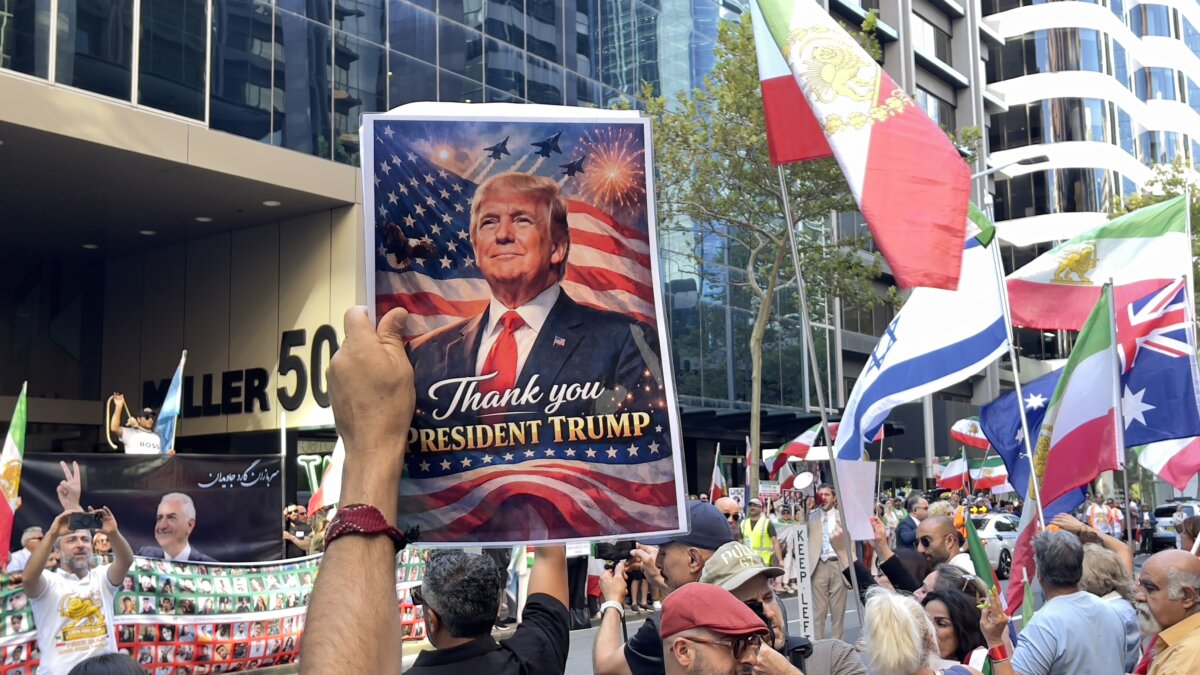
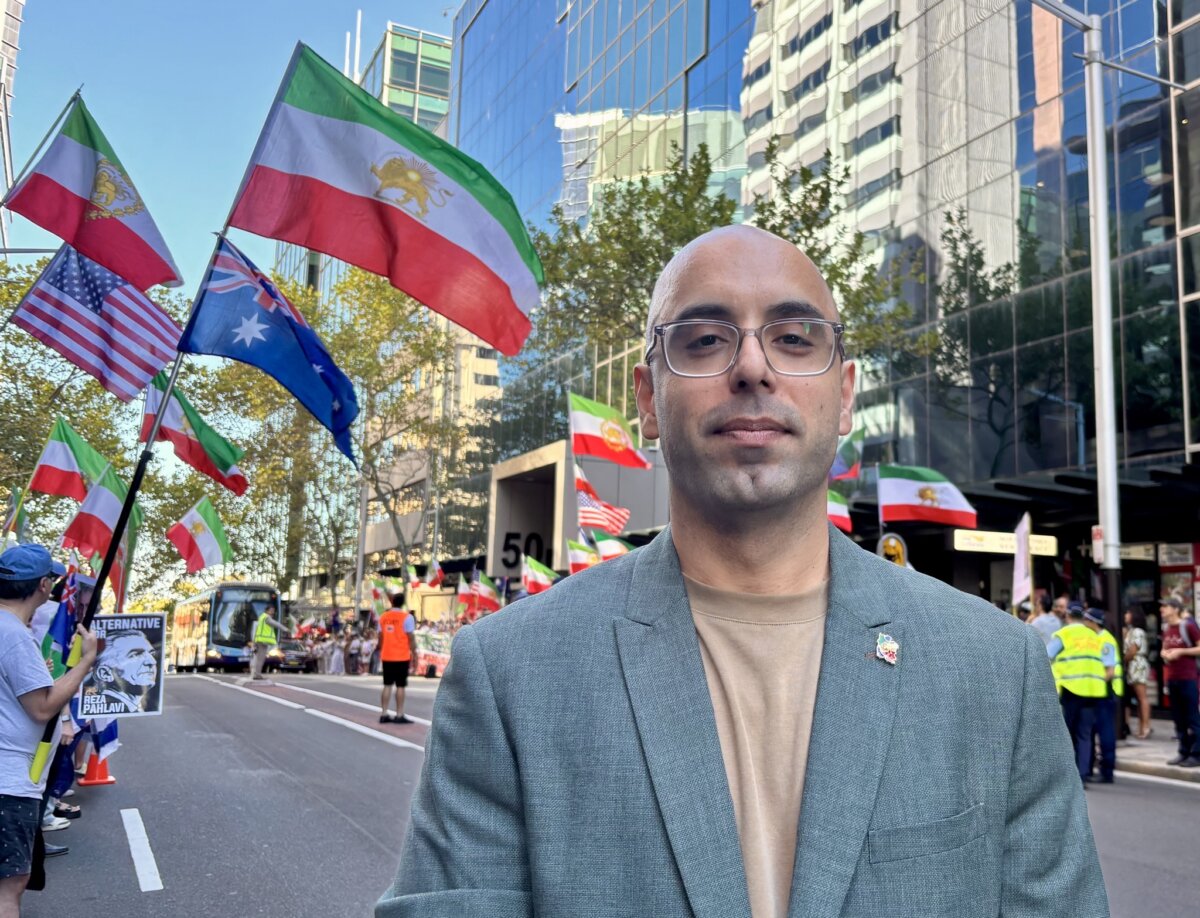
Archer, who gathered alongside Australia’s Iranian diaspora at the weekend outside the U.S. Consulate in Sydney, pushed for more pressure on the Islamic Revolutionary Guard Corps.
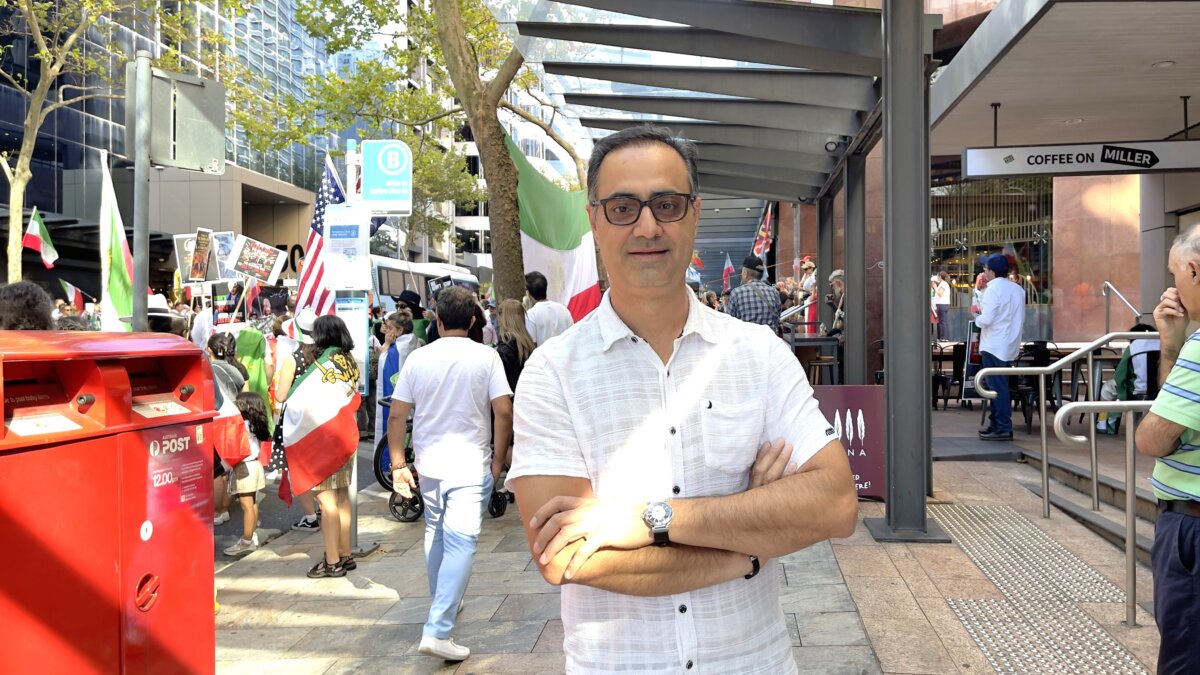
“So, I’m paying through my nose for my petrol, and I’m pretty sure very soon the prices of all commodities … all the staples will go up,” the software consultant told The Epoch Times.
“But this is the price we have to pay. And I believe this is the price the rest of the world have to pay for a short period in order to gain freedom for Iran.
“And then, once we have freedom for Iran, a lot of the unrest in the Middle East will be settled, so everybody will benefit from that.”
Archer says it’s a temporary pain for long-term gain.
“Obviously the staples will go up, but that would be temporary, if you can bear and cop the consequences for a short period, eventually we’ll have a better life for the rest of the world,” he said.
The Iranian regime is considered the primary supporter of terror groups in the region like the Houthis in Yemen, Hezbollah in Lebanon, Hamas in the Gaza Strip, and militia groups in Iraq, Syria, and Bahrain.
It is also a major partner of the Chinese Communist Party (CCP) and considered part of the “Axis of Autocracy” along with Beijing, Moscow, and Pyongyang.
The CCP is Iran’s largest trading partner and has been blamed by the U.S.-China Economic and Security Review Commission for helping the regime avoid Western sanctions via banks and front companies to help facilitate oil sales, where in turn, the money from the sales is funneled into Iranian drone and missile programs.
Calls for Iran Regime Change
Meanwhile, Archer says the Iranian people are waiting Tehran’s leadership to be substantially reformed.
“The regime, because of the propaganda, has got, I don’t know, five to 10 percent supporters, but most of the people are just waiting for the high officials of the regime to be killed by Americans or Israelis,” he said.
“They’re just living in limbo. They don’t know exactly what to do. The economy is collapsing, obviously, and it’s getting worse and worse.
“The executions have started. So a lot of people who want the regime gone are [in] fear because they don’t want a deal to be signed with the Iranian regime. They want regime change.”
World Should Back US Action: Academic
Marjan Haghighi is health researcher and former academic at the University of Sydney, and she says governments should back U.S. efforts against the regime.
“The Islamic regime can bully other countries anytime they want by closing the Hormuz because of the geography of the Strait of Hormuz,” she told The Epoch Times.
“But if people, like other countries, help America to put an end to the Islamic regime, then the peace is going to come, for the whole war is not just about Iran and Iranian people, it’s about the whole world.”
U.S. President Donald Trump has repeatedly pushed democratic nations to send military assets to secure commercial traffic in the Strait of Hormuz. A call which has gone largely unheeded.
Haghighi says the IRGC has spent years building a “missile city”, investing in bombs and nuclear development.
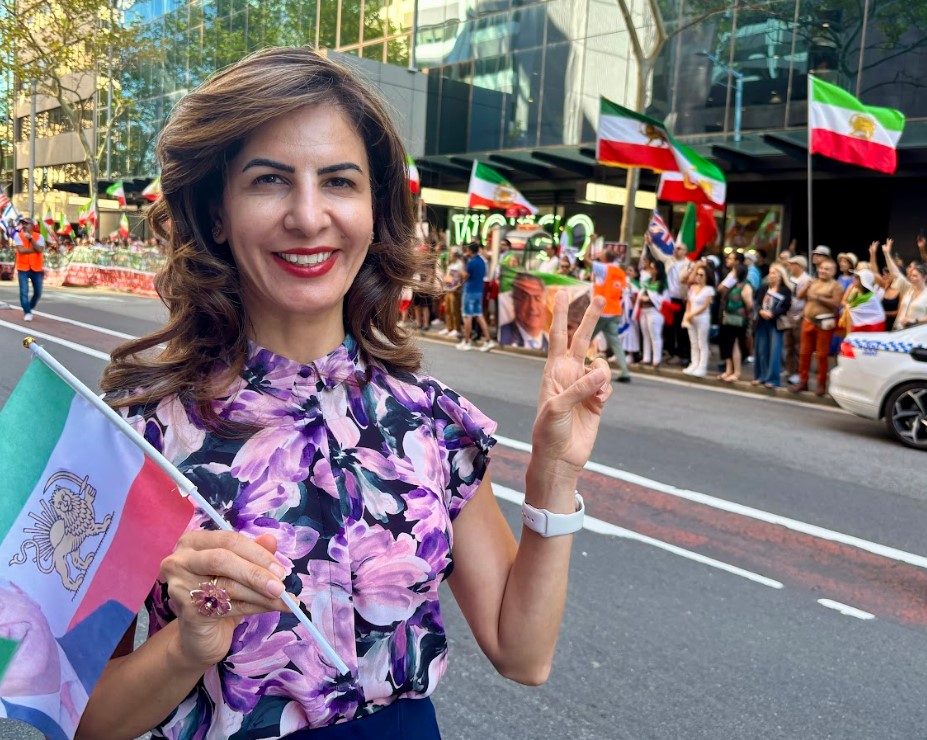
Iranians in Australia have received threats against speaking out, Haghighi says.
“We feel threatened here, and we know that our family and beloved in Iran are under so much occupation they cannot talk freely,” she said.
Foreign Interference Warnings Ignored: Lecturer
University of Queensland lecturer Reza Arab, who travelled from Brisbane to be part of the event, says the local diaspora had attempted to warn the Australian government of the dangers of the IRGC locally.
Arab is an advisor to the Iran Prosperity Project, an initiative that outlines a prospective future for Iran without the current regime.
“They didn’t pay any attention to the Iranian community voices,” he told The Epoch Times.
“And then we had incidents, terrorist incidents, orchestrated by the IRGC,” Arab said in reference to the two anti-Semitic attacks backed by the IRGC. “After that, the Albanese government designated the IRGC as a terrorist organisation and expelled the regime’s ambassador.
“We have been warning them since that that’s not the end. It is systemic. The threat of the IRGC is beyond some incidents of terrorist nature.”
‘We Must Do Something’
Shadi, who did not want to give her surname due to concerns of reprisal, says the death toll from the IRGC is believed to be higher than the 40,000.
“Many Iranians fear that if the war ends and the regime remains in power, they could be executed for opposing it,” she said.
“People can die, innocent people, but … people, they cannot live life like 47 years that they’ve been living, so something must be changed.”
State of Play in the Straits
After failed talks, the U.S. Navy was ordered to deploy a naval blockade of the entire coastline of Iran aimed at ramping up pressure on the regime.
On April 15, U.S. President Trump took to Truth Social saying he planned to permanently open the Strait of Hormuz and that the previous situation would never happen again.
Meanwhile, the Australian government is calling for a diplomatic approach.
During a visit to Brunei on April 15, Prime Minister Anthony Albanese said he wanted to see talks resume between the United States and Iran.
“Australia wants to see a de-escalation,” he said. “We want to see talks between the United States and Iran resume, and we want to see a resumption of normal economic activity that is so important for the global economy.”
Adam Chiang and Hailey Do contributed to this story.
 Friends Read Free
Copy
Facebook
Tweet
Friends Read Free
Copy
Facebook
Tweet