
Canada’s equalization program is intended to level the playing field so all provinces can offer a comparable level of public services.
While some of the “have” provinces are complaining about unfairness of the program, some economists argue that the “have-not” provinces could be disadvantaged as well by lack of development due to disincentives.
“It creates a slight incentive for lower income provinces to make policy choices that may very well detract from economic growth,” University of Calgary economist Trevor Tombe told The Epoch Times.
Some also note that the system’s design can create incentives for provinces to keep resource service prices artificially low, indirectly boosting their equalization payments to compensate.
Quebec Example
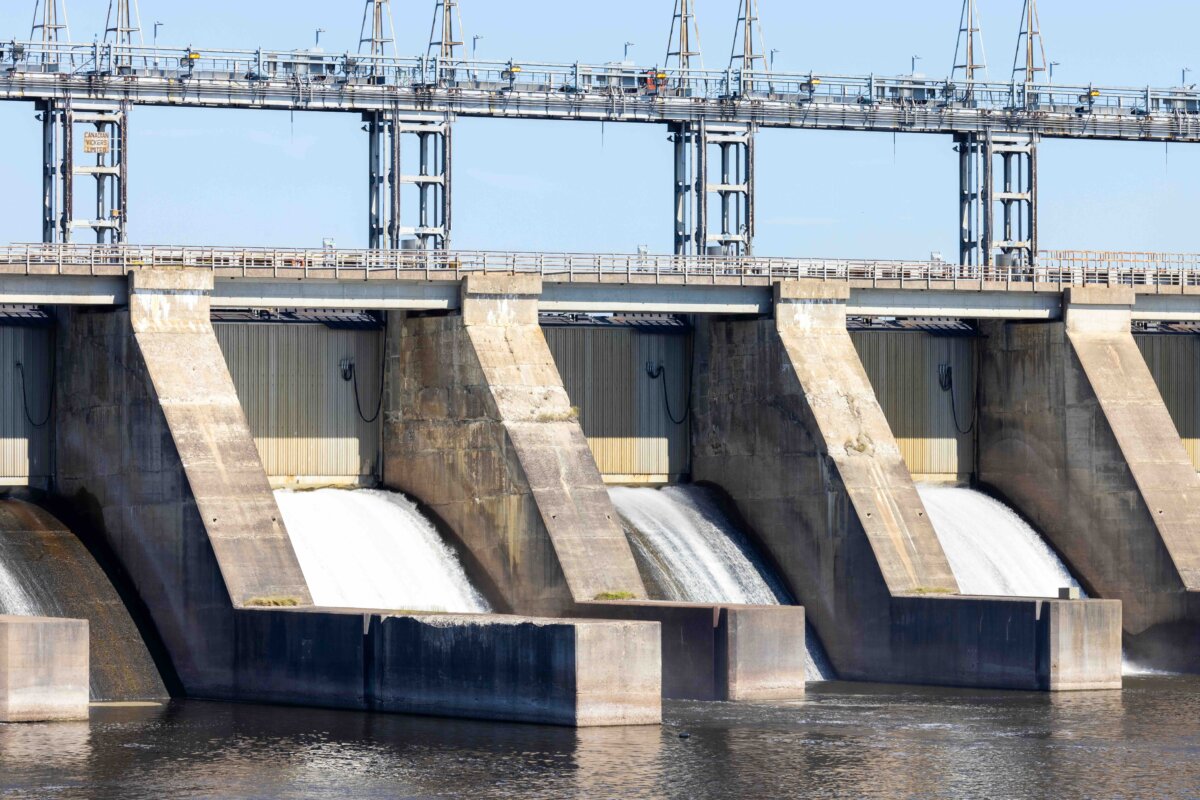
Tombe says he hesitates to provide specific examples as there are many different factors that go into decisions on resource development and provincial economic policies. Still, he points to Hydro-Québec as a case-in-point, noting that the provincially owned Crown corporation charges below-market rates for electricity. This indirectly results in higher equalization payments, since the province’s direct revenues through electricity rates are lower.
“If Quebec raised power prices by just 2 cents per kilowatt hour, for example, it could lose over $4 billion in equalization,” Tombe pointed out in a Dec. 1, 2025, debate featured in Alberta Views magazine.
Renaud Brossard of the Montreal Economic Institute says that the way equalization payments are calculated does create an incentive for situations such as that of Hydro-Québec’s underpricing of electricity.
“There is an incentive for some provinces to get, let’s say, the political benefit of keeping prices low, as well as the government revenue benefit of getting more equalization dollars,” Brossard told The Epoch Times.
Brossard adds that the disincentive to develop resources is even more evident in cases like natural gas development.
Disincentive
This apparent disincentive relates to how resources are assessed in equalization payout.
Specifically, equalization funds are disbursed based on a province’s revenue-raising capacity and according to a hypothetical national average tax rate, but only developed resources are assessed, not resources that could be developed.
Since hydro is considered a resource, this could be interpreted as not fully profiting from a resource in order to keep receiving a significant share of funding from Ottawa.
“The consequence is that revenues earned by Hydro-Québec that are able to be remitted back to the government are lower than they otherwise could be,” Tombe said, adding that therefore Quebec’s “ability to raise revenue, if you will, is lower than it might truly be.”
Brossard also says that a major issue with the equalization program is its potential to depress economic growth in “have-not” provinces.
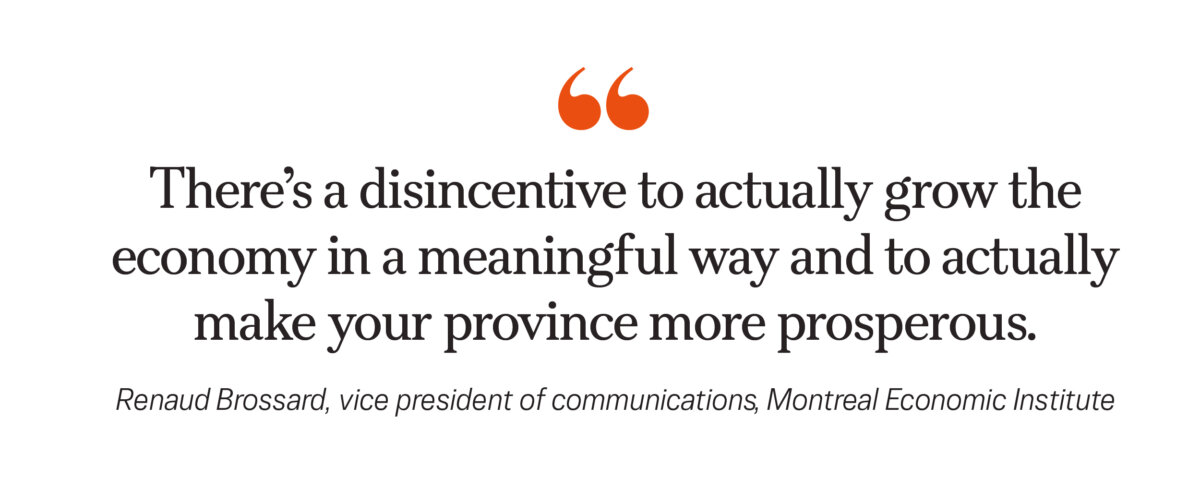
“The most perverse effects of equalization are not felt in the have provinces as much as felt in the have-not provinces, because there’s a disincentive to actually grow the economy in a meaningful way and to actually make your province more prosperous.”
Queen’s University professor emeritus of economics Robin Boadway says that while the equalization system is “not an income redistribution program,” the way natural resource revenues are assessed could influence provincial policy in some of the “have-not” provinces.
“People could argue that that has a potential discouraging effect on provinces to raise revenues from them, to develop their natural resources,” he said.
Natural Gas Development
Quebec’s ongoing prohibition on exploration or production of hydrocarbons including natural gas was put in place in the spring of 2022. This included revocation of all existing licences and closure of operating wells.
The government said the prohibition was enacted in order to protect the environment and reduce carbon emissions. It followed on the heels of several previous laws heavily restricting hydrocarbon development.
The Montreal Economic Institute estimated in 2021 that, over a 25-year period, eliminating the restrictions on hydrocarbons in the province could generate around $15 billion in provincial tax revenue and mining royalties, resulting in $93 billion in overall GDP gain, along with creating 25 years of labour for approximately 9,200 people.
Brossard pointed to several more examples of traditionally “have-not” provinces blocking or underdeveloping resources, including moratoria on fracking in New Brunswick and Nova Scotia, resulting in unrealized revenues.
Specific examples include Nova Scotia’s Deep Panuke Offshore Gas Project, which ceased operations in 2018, and the Sable Offshore Energy Project off the coast of that province, which was shut down by ExxonMobil in 2019 and decommissioned in 2020. Enormous potential resources in Nova Scotia’s Horton Bluff and Frederick Brook formations have not been explored as a result of restrictions.
“There’s a disincentive to actually grow the economy in a meaningful way and to actually make your province more prosperous,” Brossard said of the equalization program.
“When politicians make bad decisions from an economics perspective, the government doesn’t pay the full cost, but the population pays the full cost, … and I think that’s really what’s key here.”
‘Haves’ Versus ‘Have-Nots’
The equalization program, managed by the federal government and funded through general revenues, provides payments to provinces with below-average fiscal capacity, based on how much revenue they could raise if they taxed at the national average rate.
Debate about the program has been ongoing since the program inception in the 1950s and inclusion in the Constitution in the 1980s because of trends in “haves” versus “have-nots,” Boadway notes.
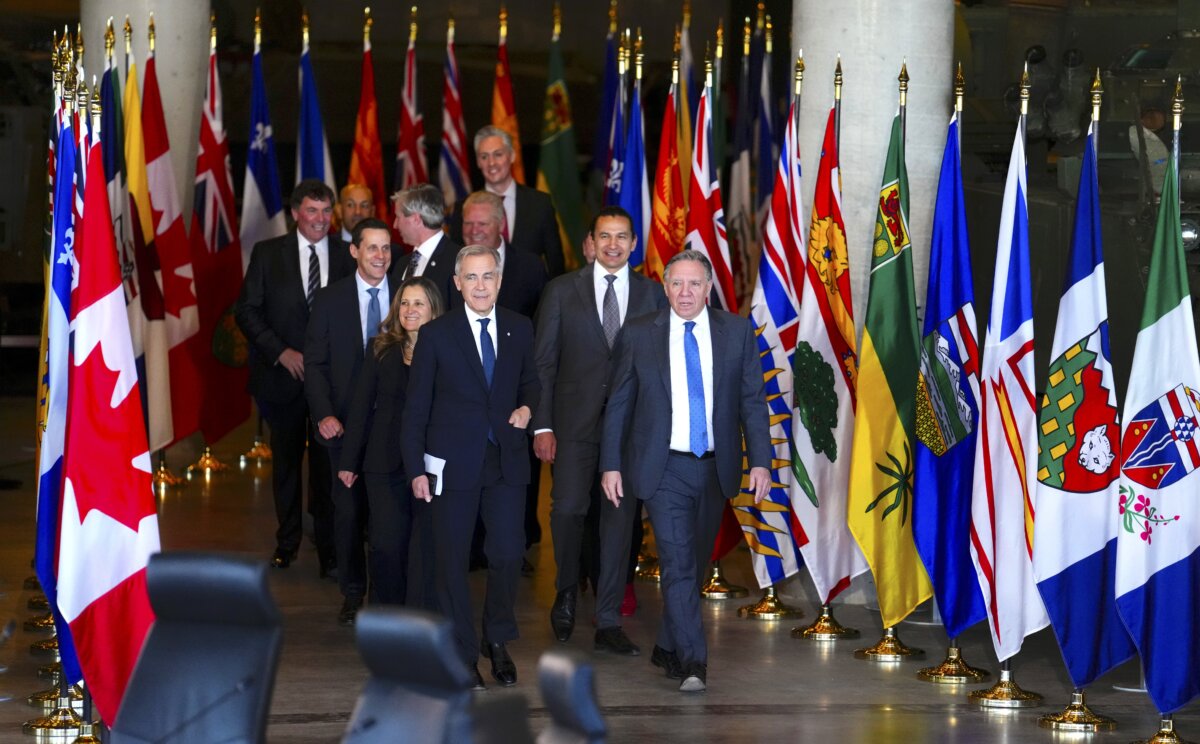
“There are provinces that are persistently poorer in the sense that they have lower fiscal capacity to provide public services over time, and there are some provinces that have gone up and down, into and out of the equalization system,” Boadway said.
He points to Saskatchewan and Manitoba as examples of provinces that often transition in and out of receiving equalization payments, depending on the year.
“Sometimes they get equalization, sometimes they don’t. Ontario has basically almost never got it, until recently it became entitled to it, and Alberta has mostly not got it as well,” Boadway added.
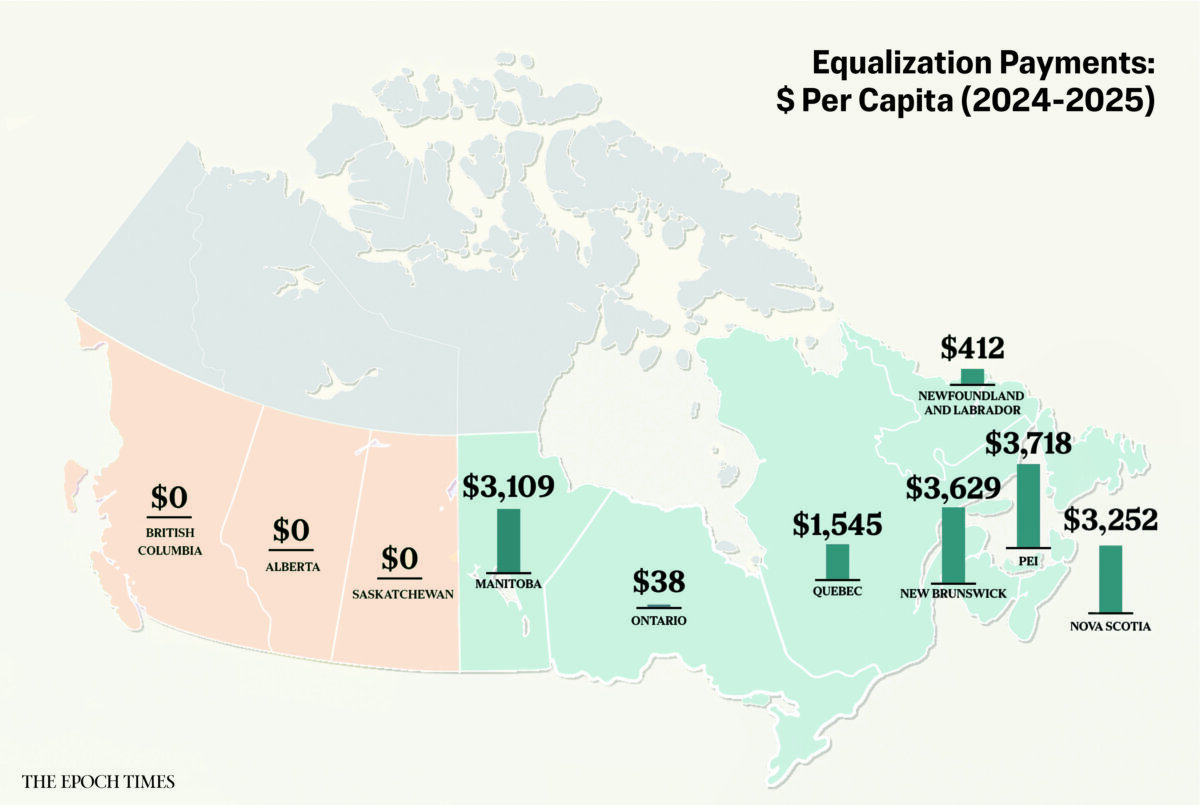
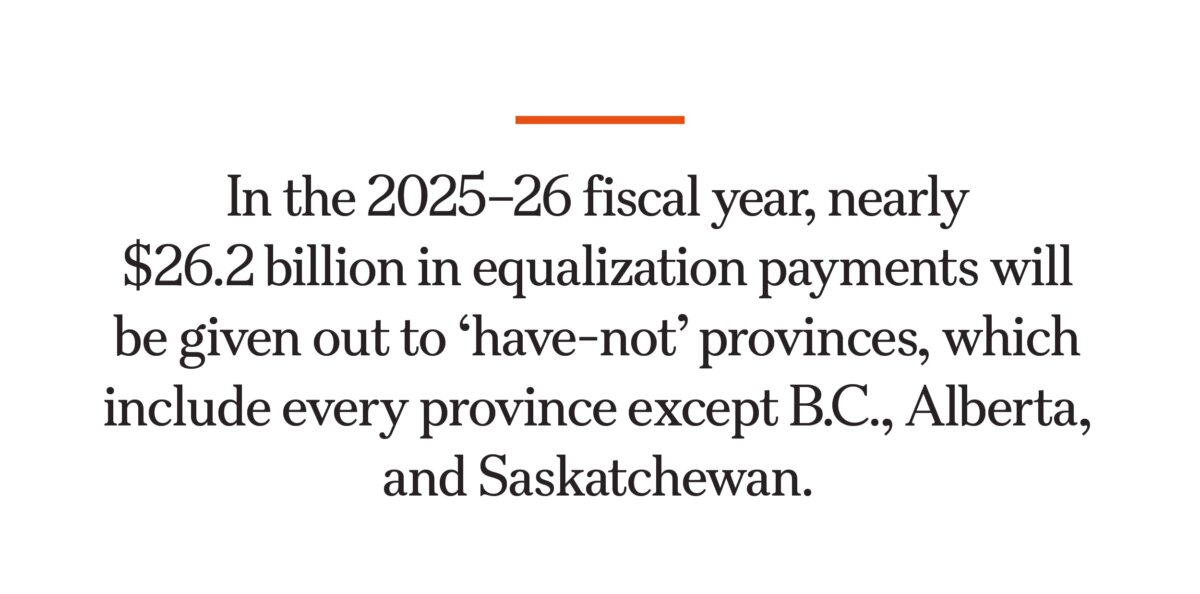
In the 2025–26 fiscal year, nearly $26.2 billion in equalization payments will be given out to “have-not” provinces, which include every province except B.C., Alberta, and Saskatchewan. Resource-rich Alberta has not received an equalization payment since the 1964–65 fiscal year.
In the 2024–25 fiscal year, equalization payout estimates saw $13.3 billion go to Quebec, $4.4 billion to Manitoba, $3.3 billion to Nova Scotia, $2.9 billion to New Brunswick, $610 million to P.E.I., $576 million to Ontario, and $218 million to Newfoundland and Labrador, according to the Library of Parliament.
The West Weighs In
Alberta and Saskatchewan have frequently found themselves on the “have” side of the equation and both have voiced considerable objection to the equalization program.
Saskatchewan Premier Scott Moe says that the way equalization payments work show “which provinces are driving Canada’s economy and how the equalization formula disincentivizes economic growth.”
Alberta Premier Danielle Smith says that the equalization system isn’t sustainable. “It’s time for a better deal that doesn’t put all the weight on a few provinces,” she said.
Marisa Breeze, press secretary to Alberta’s Treasury Board and finance minister, says the province does not consider the equalization system fair.
“Albertans continue to make a disproportionate contribution to Canada’s economy and federal finances,” Breeze told The Epoch Times.
Breeze said that in 2024, Albertans paid $19 billion more in taxes to Ottawa than what they received in federal spending. “That’s over $3,870 per person, which is $2,400 more than what British Columbians paid,” she added.
“Alberta isn’t asking for special treatment – we’re asking for fairness. That’s something all Canadians should respect.”
Ottawa says equalization is an important way to address “fiscal disparities” among the provinces, and notes that every province has been a recipient of equalization funding at some time since the program’s inception in 1957.
“Parliament and the government of Canada are committed to the principle of making equalization payments to ensure that provincial governments have sufficient revenues to provide reasonably comparable levels of public services at reasonably comparable levels of taxation,” states the Constitution Act.
The payments are calculated based on a weighted three-year moving average that lags by two years in order to provide more stability and predictability. In addition, the total equalization payout is adjusted in line with economic growth.
Potential Reform
Brossard said that major reform is unlikely anytime soon but that eventual changes to the way equalization is calculated could be a net good for the country.
Tombe, for his part, said “the rationale for reform is growing stronger.” Meanwhile, “whether governments and politicians respond, that’s a separate question,” he added.
The current framework for equalization was renewed in 2023 and slated to run until 2029. Boadway highlighted that it’s “a federal budgetary item, and it’s entirely up to the federal government to decide.”
He said there have been minor tweaks to funding formulas and the way equalization payments are calculated on an ongoing basis, including recently regarding the way property taxes are factored in and a larger reform done around a decade ago in what taxes are considered.
Editor’s note: The subheadline of this story has been corrected to say “Increasing Quebec’s power prices by just 2 cents per kilowatt hour could reduce its equalization payments by over $4 billion, one economist points out.” The Epoch Times regrets the error.
 Friends Read Free
Copy
Facebook
Tweet
Friends Read Free
Copy
Facebook
Tweet