
Hybrid vehicles continue to gain ground in Australia’s car market, capturing a new sales record in the December quarter even as fully electric vehicle sales slows.
New figures from the Australian Automobile Association’s (AAA) EV Index show hybrids accounted for 19.13 percent of new light vehicle sales in the three months to Dec. 31, the highest share recorded so far.
A total of 55,458 hybrid vehicles were sold during the quarter, surpassing the previous record of 16.70 percent market share in the September quarter of 2024.
About 1.2 million new cars are sold in Australia every year.
Plug-in hybrid electric vehicles (PHEVs) also continued their steady rise, making up 5.32 percent of new vehicle sales, compared with the previous peak of 4.82 percent earlier in 2025.
Fully electric vehicles, however, lost some ground. Battery electric vehicles (BEVs) accounted for 9.25 percent of sales, slipping from 9.70 percent in the previous quarter.
Petrol and diesel cars still dominate the market but there their percentage of market reached a new low of 66.30 percent.
Government policy has played a significant role in accelerating the shift toward electrified vehicles.
Since July 2022, electric and plug-in hybrid cars priced below the luxury-car tax threshold have been exempt from fringe benefits tax (FBT) when provided to employees through salary packaging.
Australia currently has 91 EV models available, with about 65 percent classified as fully electric vehicles.
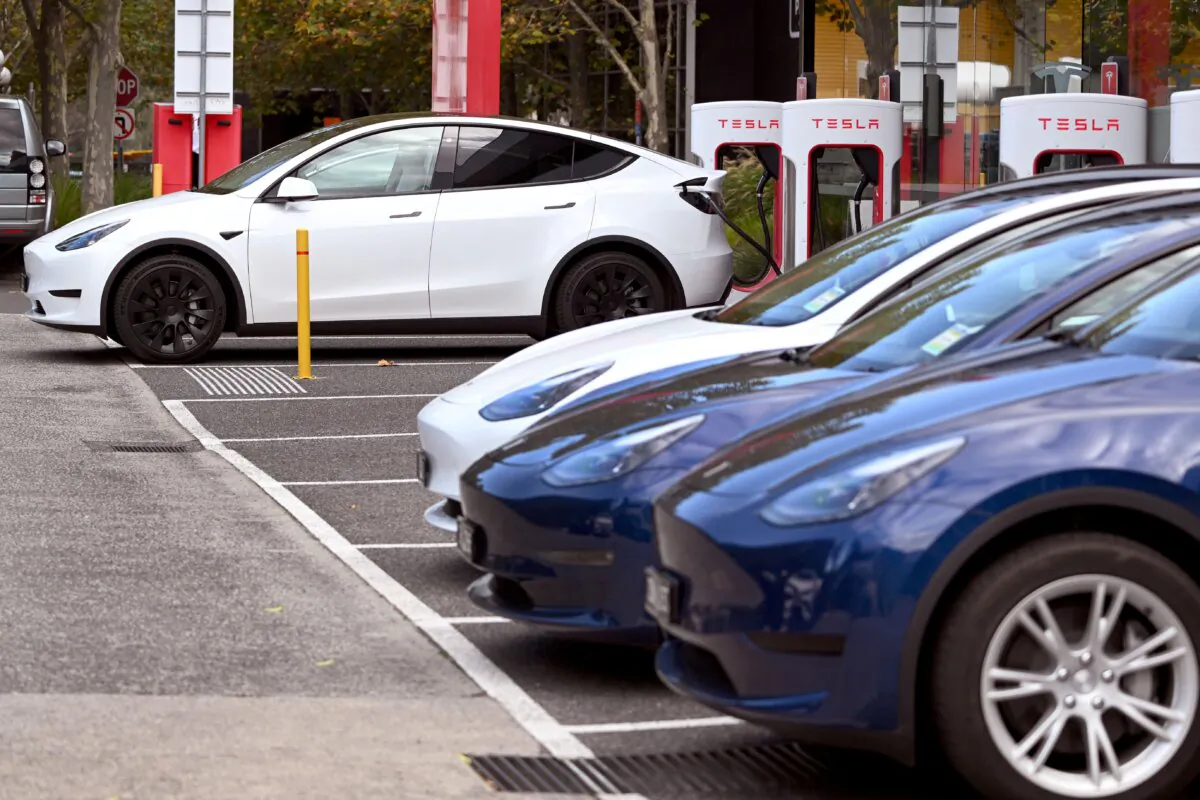
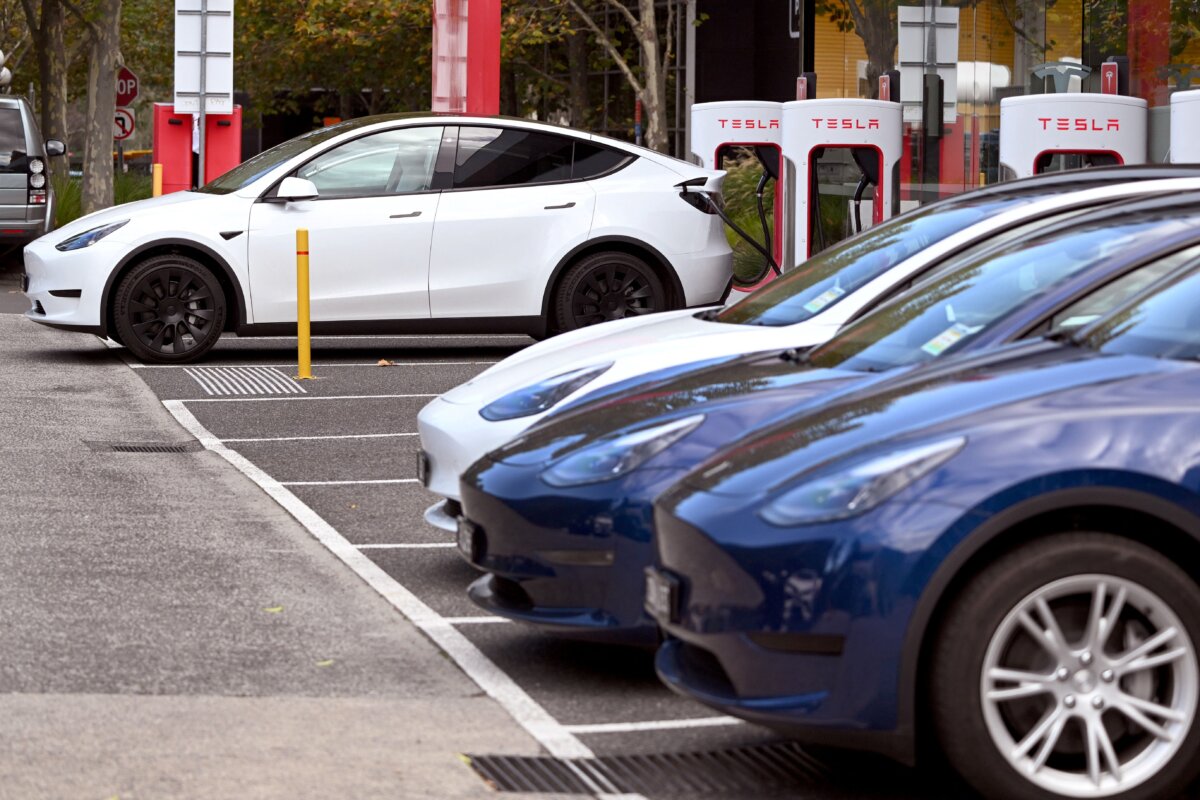
Popular models including the BYD Atto 3, MG ZS EV, Polestar 2, Tesla Model 3 and Tesla Model Y together made up 72 percent of EV sales in 2022.
The Climate Council has argued that BEVs can be significantly cheaper to operate with annual energy costs up to 2.4 times lower than hybrids.
The long-term shift toward electric vehicles also raises broader questions about how Australia’s energy system will cope with rising electricity demand.
“The main issue is that electric vehicles could add significant electrical load to the grid at the wrong time. And there may be parts of the grid, especially in the distribution networks—which is like the edge of the grid in a way—that may already be congested,” says Prof. Pierluigi Mancarella, chair of Electrical Power Systems at the Melbourne Energy Institute.
Electricity demand typically peaks around 6 p.m., when many households return home. If large numbers of EV owners plug in their cars at the same time, it could place additional strain on the network.
 Friends Read Free
Copy
Facebook
Tweet
Friends Read Free
Copy
Facebook
Tweet