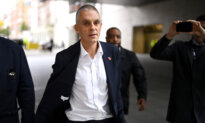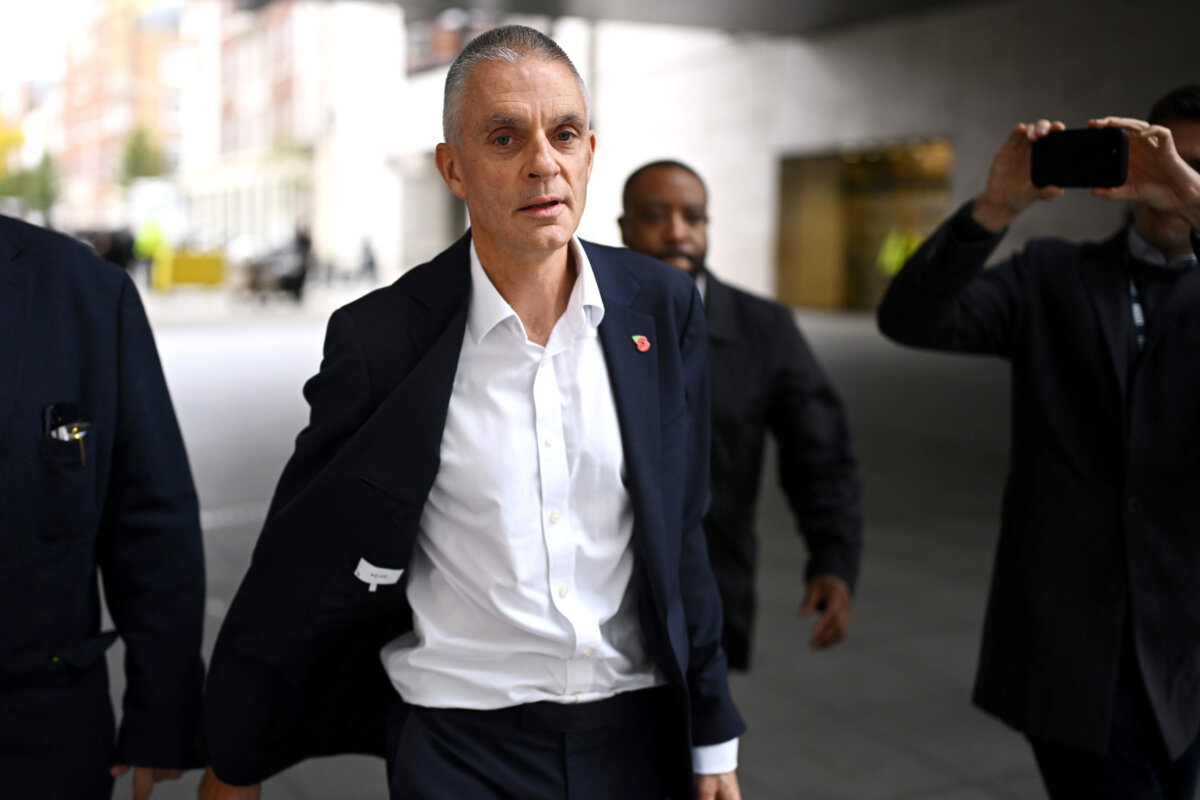

Outgoing BBC Director-General Tim Davie, who resigned following a scandal over the alleged misleading editing of a speech by U.S. President Donald Trump, told staff on Tuesday the corporation has to “stand up for our journalism” in what he said was a battle against the corporation’s “enemies.”
Davie quit on Sunday following a scandal over the way the BBC’s Panorama documentary cut and spliced together statements Trump made some 54 minutes apart in his speech on Jan. 6. 2021, falsely creating the impression that he urged his supporters to “fight like hell,” when he had in fact called for them to “go peacefully.”
In remarks seen by the PA news agency, Davie told BBC staff: “We have to be very clear and stand up for our journalism.
“We are a unique and precious organization, and I see the free press under pressure, I see the weaponization. I think we’ve got to fight for our journalism.”
He added, “We have made some mistakes that have cost us, but we need to fight for that.”
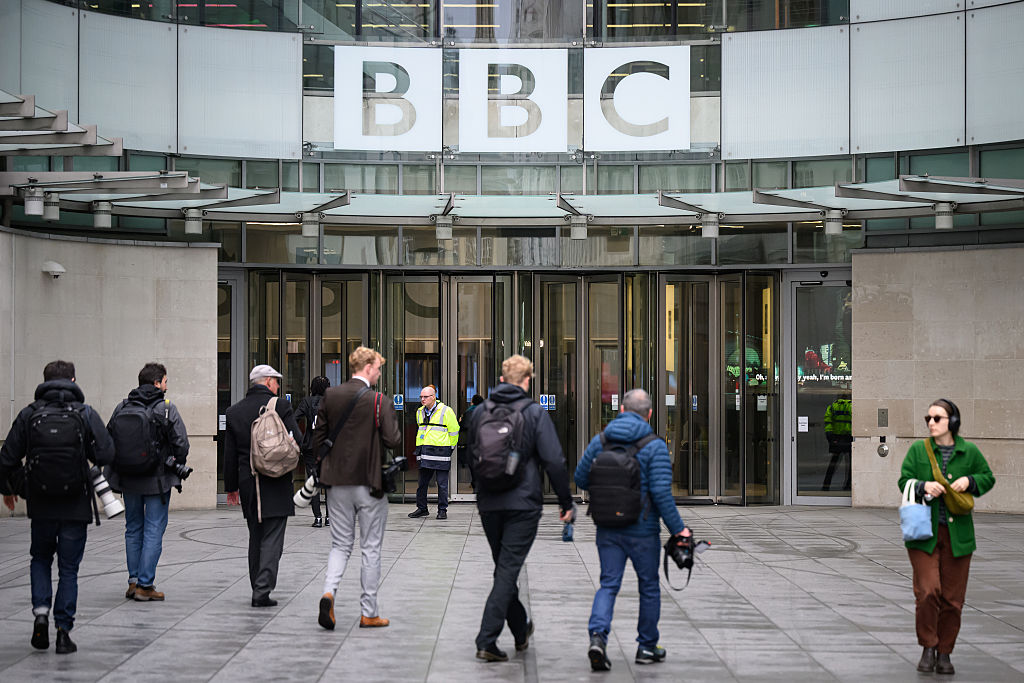
Trump has threatened to sue the BBC for “no less than” a billion dollars if it does not offer a fulsome apology and a complete retraction of the challenged statements in the Panorama program in question by Friday, which could cost the corporation or the British taxpayer dearly in legal fees and damages if a defamation lawsuit ensues.
Downing Street declined to comment on the U.S. president’s threat of legal action, saying it was a matter for the BBC.
Davie said in the meeting from Broadcasting House in central London that he was “proud” of the corporation’s journalists, and insisted they were doing a “fantastic” job, adding, “We will thrive and this narrative will not just be given by our enemies: It’s our narrative.”
Deborah Turness also announced her resignation as CEO of BBC News on Sunday amid the growing uproar over the Panorama edit, after a leaked internal memo also drew attention to the corporation’s apparent bias on trans issues, matters of race and ethnicity, and concerns over aspects of BBC Arabic’s coverage of the Gaza War.
“I know at her heart she is an absolute fighter for impartiality, and I think we should credit her for doing a really tough job,” Davie said of Turness, adding it has been “really tough” for her because of what he termed “the level of weaponization and polarization” in the world currently.
Disaffection with ‘Auntie’
Founded in 1922, the BBC was affectionately known as “Auntie” by British viewers for decades, but has come under increasing criticism from across the political spectrum for its alleged biases, its management, and its funding, as well as numerous scandals about the criminal behavior of some of its famous presenters—the most damaging of which centered on the prolific pedophile, Jimmy Savile.
A number of surveys in recent years have shown declining levels of trust in the corporation, while calls to defund the BBC have grown since the COVID-19 pandemic era of 2020–2021, when many people felt the official narrative around lockdowns and vaccine safety was pushed unquestioningly by the broadcaster, with a lack of proper journalistic scrutiny.
The BBC is publicly funded through a license fee, with a television license costing 174.50 British pounds (about $229) annually a legal requirement for anyone who watches live television, regardless of whether they choose to consume the corporation’s programs. That covers for about 68 percent of BBC’s funding.
The evasion rate has increased over recent years, with the government estimating that more than 11 percent of households that watch live TV do not have a license.
Downing Street indicated that Prime Minister Sir Keir Starmer has not had a conversation with Trump about his threatened legal action.
Asked whether the government would help the BBC pay any damages that a court might award to the U.S. president, a spokesman said this was a “hypothetical” question.
“Our position is clear: The BBC is independent and it’s for the corporation to respond to questions about their editorial decisions and, more broadly, we have a close relationship with the U.S. on shared priorities, including security,” the spokesman said.
The latest crisis for the BBC began last week, with the leaking of an internal report written by Michael Prescott when he was an adviser to the BBC’s editorial standards committee. His memo raised serious concerns about the editing of the Panorama program, among other issues around impartiality and bias within the corporation’s news output.
BBC chairman Samir Shah has apologized for an “error of judgment” over the editing—but some lawmakers who spoke in Tuesday evening’s House of Commons debate said that it was disingenuous to label a choice as a mistake.
Parliamentary Debate
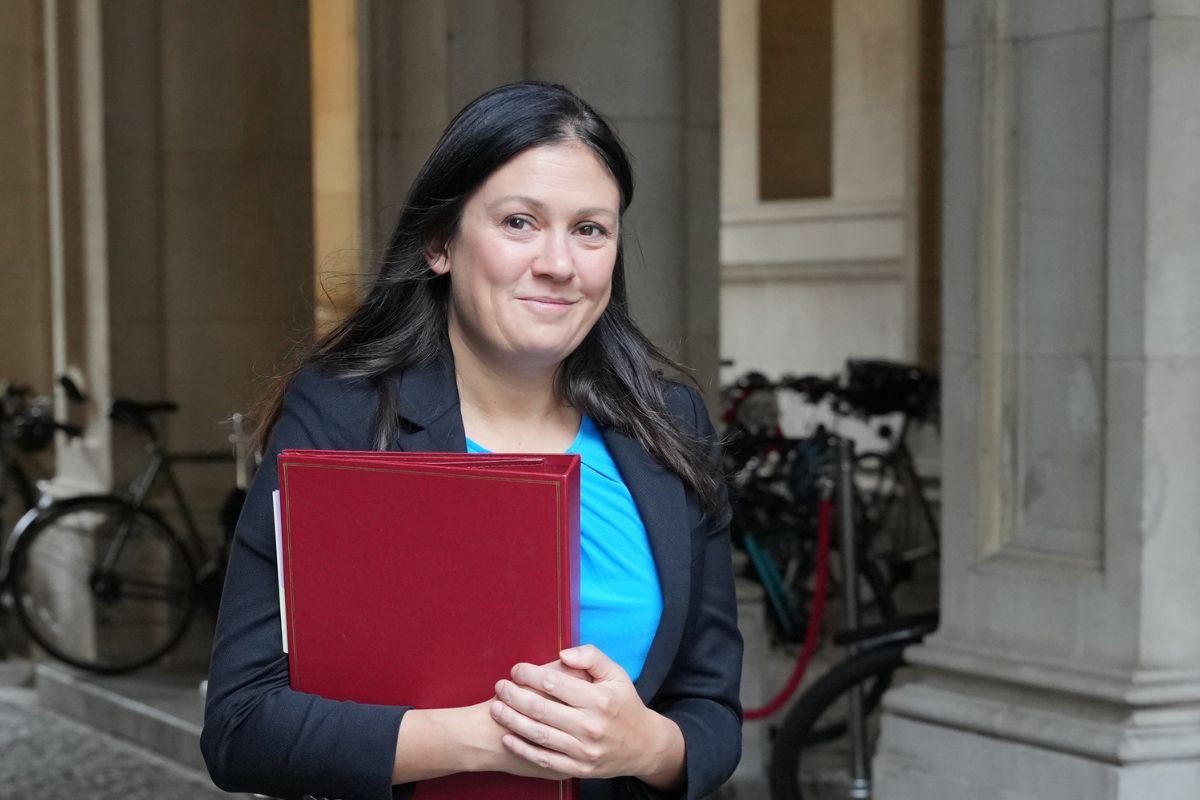
Culture Secretary Lisa Nandy asked MPs to “consider just what is at stake” before calling for the broadcaster to be defunded.
She called on the BBC to “renew its mission for the modern age” in order to restore trust following the crisis.
The once-a-decade process of reviewing the broadcaster’s royal charter will begin shortly, with Nandy saying it would ensure a BBC which is “fiercely independent” and “genuinely accountable” to the public it is supposed to serve.
Backbench member of Parliament (MP) Sammy Wilson, of the Democratic Unionist Party (DUP), said he objected to paying the license fee, describing the BBC as “this body which has fabricated the news, misused its monopoly and hidden behind the protection of politicians in this House, far too cowardly to take them on over the years.”
Another DUP member, Carla Lockhart, criticized what she termed the “woke, lefty agenda” of the BBC, referencing its stance on trans issues and related language use as particularly objectionable.
Independent MP Rupert Lowe, formerly of Reform UK, said, “‘Auntie’ is definitively a monopoly. … This recent disgusting episode … where we have undermined our relationship with probably our greatest ally, is just the tip of the iceberg.”
Nandy ruled out funding the BBC through general taxation “because whilst it’s absolutely essential that good journalism is well resourced, it is also absolutely essential that the BBC remains independent from government.”
“There is a fundamental difference between raising serious concerns over editorial failings and members of this House launching a sustained attack on the institution itself, because the BBC is not just a broadcaster, it is a national institution that belongs to us all,” Nandy said.
BBC Needs ‘Saving From Itself’
The Conservative’s shadow Culture Secretary, Nigel Huddleston, labeled the BBC “a sorry mess—sadly, one of its own making,” adding that it needs “saving from itself.”
“We all want the BBC to succeed and be the best possible version of itself, but that requires institutional change, and far more than a few moves at the top,” Huddleston said.
Labour’s Graham Stringer said from the backbenches, “I do not think any reasonable person can think that the program put out by Panorama was a mistake. It was clearly manipulation with a purpose, and unfortunately it follows a long line … [including] Gaza, anti-women trans issues and Europe.”
Prescott, the author of the leaked memo, had been due to give evidence to MPs on the Culture, Media and Sport Committee on Tuesday afternoon, but the session was postponed.
Shah and fellow members of the BBC’s editorial guidelines and standards committee, Sir Robbie Gibb and Caroline Thomson, have agreed to appear before the committee in the coming weeks.
Billion Dollar Lawsuit
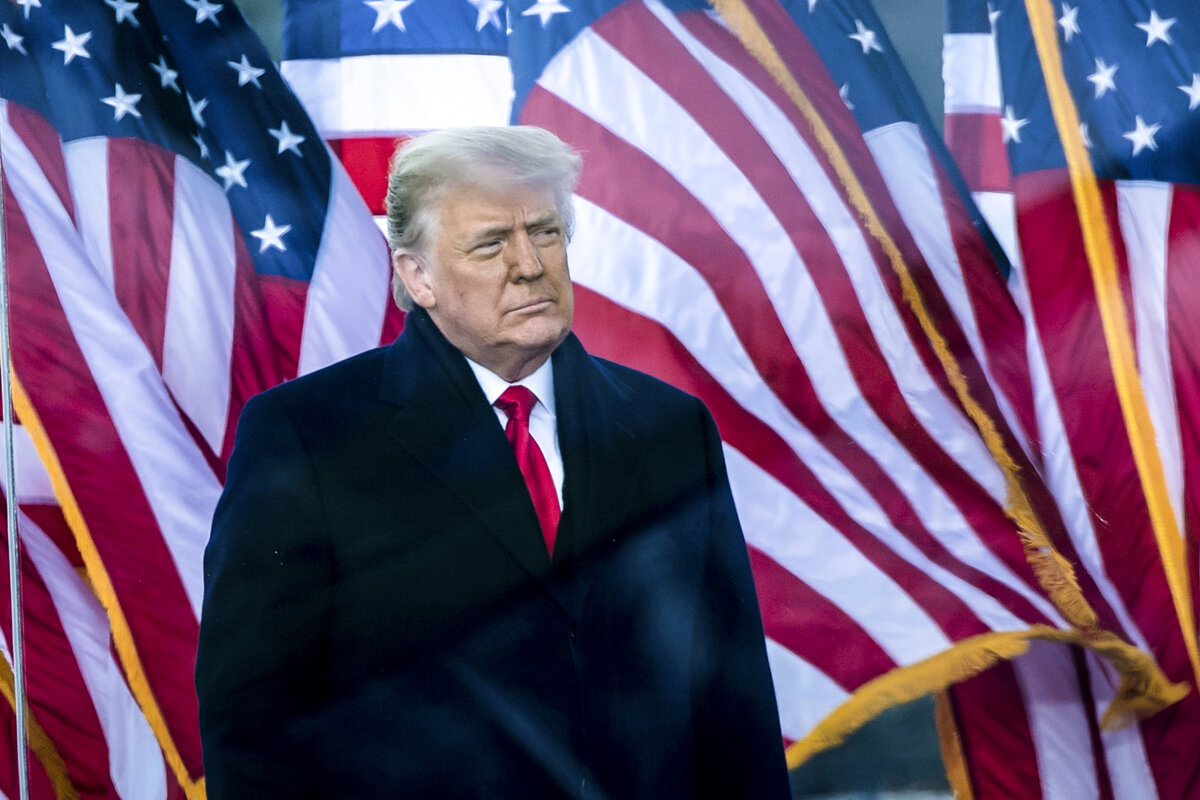
A legal letter, sent from Trump’s lawyer Alejandro Brito and put into the public domain on Monday, demanded that “false, defamatory, disparaging, and inflammatory statements” made about Trump be retracted immediately.
The letter says if the BBC does not comply with the requests, Trump will be “left with no alternative” but to proceed with the billion-plus dollar lawsuit.
Trump has taken legal action against a number of media outlets in the United States as part of what he has characterized as his war on “fake news.”
He is currently locked in a $15 billion legal battle with the New York Times, which he is suing for defamation, following lawsuits against ABC News and CBS News’ “60 Minutes” program, both of which were settled out of court by the news organizations’ parent companies.
Trump also filed a lawsuit against The Wall Street Journal and media mogul Rupert Murdoch in July after the newspaper published a report exploring Trump’s alleged ties to the late financier and convicted sex offender Jeffrey Epstein.
Trump would not be able to sue the BBC for defamation in the UK, as the one-year limitation for doing so has passed since the Panorama documentary was broadcast on Oct. 28, 2024. However, in Florida, where the legal action would be filed, the time limit is two years.
If the President does proceed with his lawsuit, he would have to prove that Panorama was viewed in the United States—where the BBC can be viewed on streaming and other services, but where BBC iPlayer is not available—and that it caused him serious reputational damage.
PA Media and The Associated Press contributed to this report
 Friends Read Free
Copy
Facebook
Tweet
Friends Read Free
Copy
Facebook
Tweet