
Iran’s Islamic Revolutionary Guard Corps (IRGC) warned on July 30 that countries helping Washington in its war effort against Tehran would face a “harsh response,” as Iranian missiles targeted Jordan and an Iranian strike in Kuwait killed a worker.
The warning, issued on July 30 through Iranian state media, came after the U.S. military said it completed a “heavy wave of strikes” against Iran in retaliation for Tehran’s targeting of American forces in Jordan.
The strikes followed President Donald Trump’s warning that Iran would be hit “very hard” after a brief pause in fighting between the two countries.
“We’ll be hitting them hard,” Trump told Fox News on July 29. “They’re going to get a beating.”
In a statement carried by Iran’s state-run IRNA news agency and the state-affiliated Mehr News Agency, the IRGC urged countries in the region and beyond to stop assisting the United States.
“Countries that are involved in assisting the aggressor, if they do not correct their behavior, will receive a harsh response,” the IRGC said, according to Mehr.
The IRGC also claimed that two oil tankers attempted to use what Tehran calls an “unsafe southern route” through the Strait of Hormuz near the Omani coastline after purportedly being encouraged by U.S. aircraft to attempt transit.
One tanker caught fire, forcing both vessels to reverse course, according to the IRGC. The vessels were not identified, and the claim could not be independently verified.
Calling the Strait of Hormuz “our territory,” the IRGC claimed its naval forces “firmly control it,” adding that Tehran will not allow the strategic waterway to reopen fully while the United States makes “threats and interventions” in the region.
U.S. Central Command (CENTCOM) has strongly disputed Iranian claims of control over Hormuz.
The command said in a July 29 statement that the IRGC has “no authority to dictate routes for free and open traffic flow,” insisting that commercial vessels would continue to use the strait with the support of the U.S. military.
“Since early May, CENTCOM forces have helped approximately 1,000 vessels and 500 million barrels of crude oil pass through the narrow waterway,” the command said.
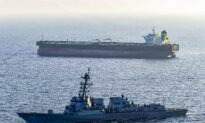
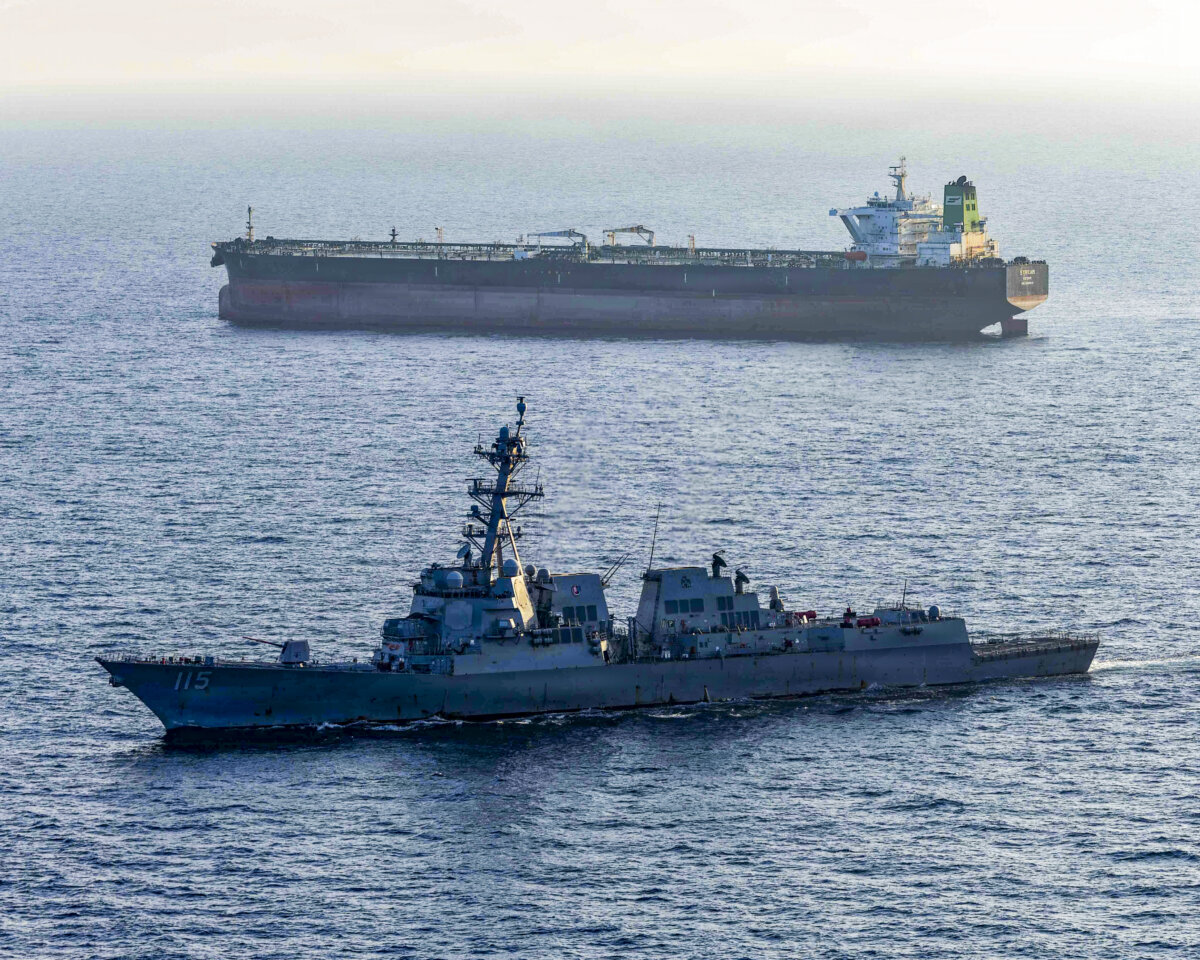
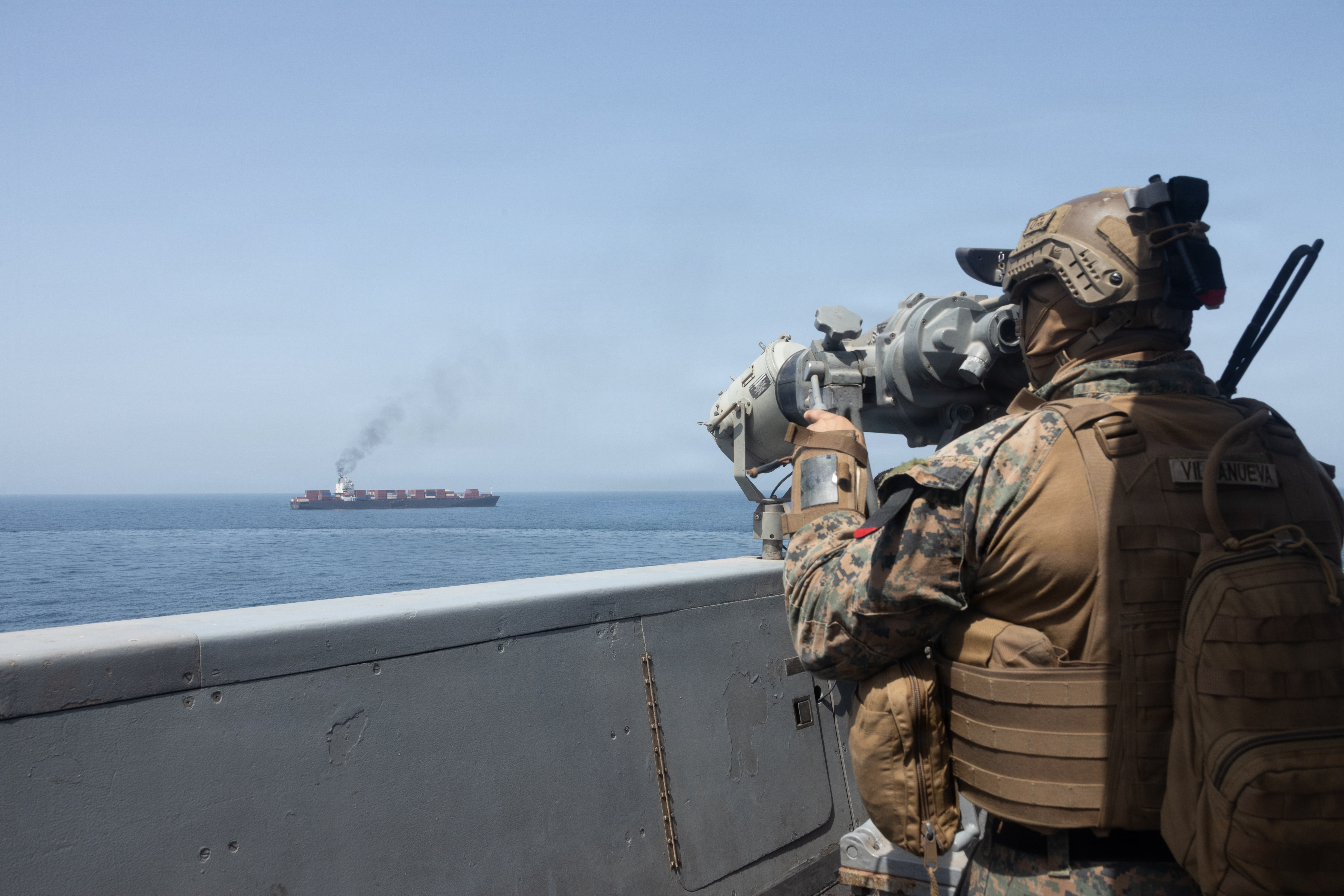 U.S. forces patrol the Arabian Sea near M/V Touska on April 20, 2026. (U.S. Navy via Getty Images)
U.S. forces struck dozens of IRGC targets, including military command centers, missile and drone facilities, coastal surveillance and air defense sites, and maritime capabilities, Central Command said in a post on X.
The strikes were launched in response to an attempted surprise attack on U.S. forces on July 28, when the IRGC fired multiple ballistic missiles from Iran. All the missiles were intercepted, according to the U.S. military.
Attacks Spread Across Region
Amid the latest round of escalation, Jordan’s military said its air defenses intercepted five Iranian missiles targeting the kingdom early Thursday, with no reported casualties.
In Kuwait, an Iranian strike hit a building operated by a Chinese company in the north of the country, killing one worker and causing significant damage, the Kuwaiti Defense Ministry said in a post on X.
The Institute for the Study of War said Iran’s attacks on Jordan followed Tehran’s rejection of a compromise over control of the Strait of Hormuz during recent talks with Oman.
“The Iranian regime also likely sought for its attack on Jordan to signal the regime’s willingness to incur the risk of full-scale conflict with the United States in order to secure control over the strait,” the Washington-based institute said in a post on X.
The fighting has also begun reaching farther west.
A drone caused a fire that engulfed two gas vessels at Egypt’s Mediterranean port of Damietta, the Egyptian cabinet said on Thursday. British maritime security firm Ambrey said on Wednesday that a drone had hit a U.S.-owned gas storage tanker at the port.
Egypt, a close ally of the United States and a regional mediator, is one of the only countries in the Middle East to have been spared direct military action during the war. No group or country has claimed responsibility for the strike.
Asked during an Oval Office event if Iran was responsible for the strikes on the gas vessels in Egypt, Trump responded: “It’s a little more of the same.”
The Saudi Ministry of Defense’s official spokesperson, Maj. Gen. Turki Al-Maliki, said on July 29 that Saudi forces carried out attacks in Iraq after Saudi air defenses intercepted and destroyed several drones targeting petroleum facilities in the Eastern Province and Riyadh regions of Saudi Arabia.
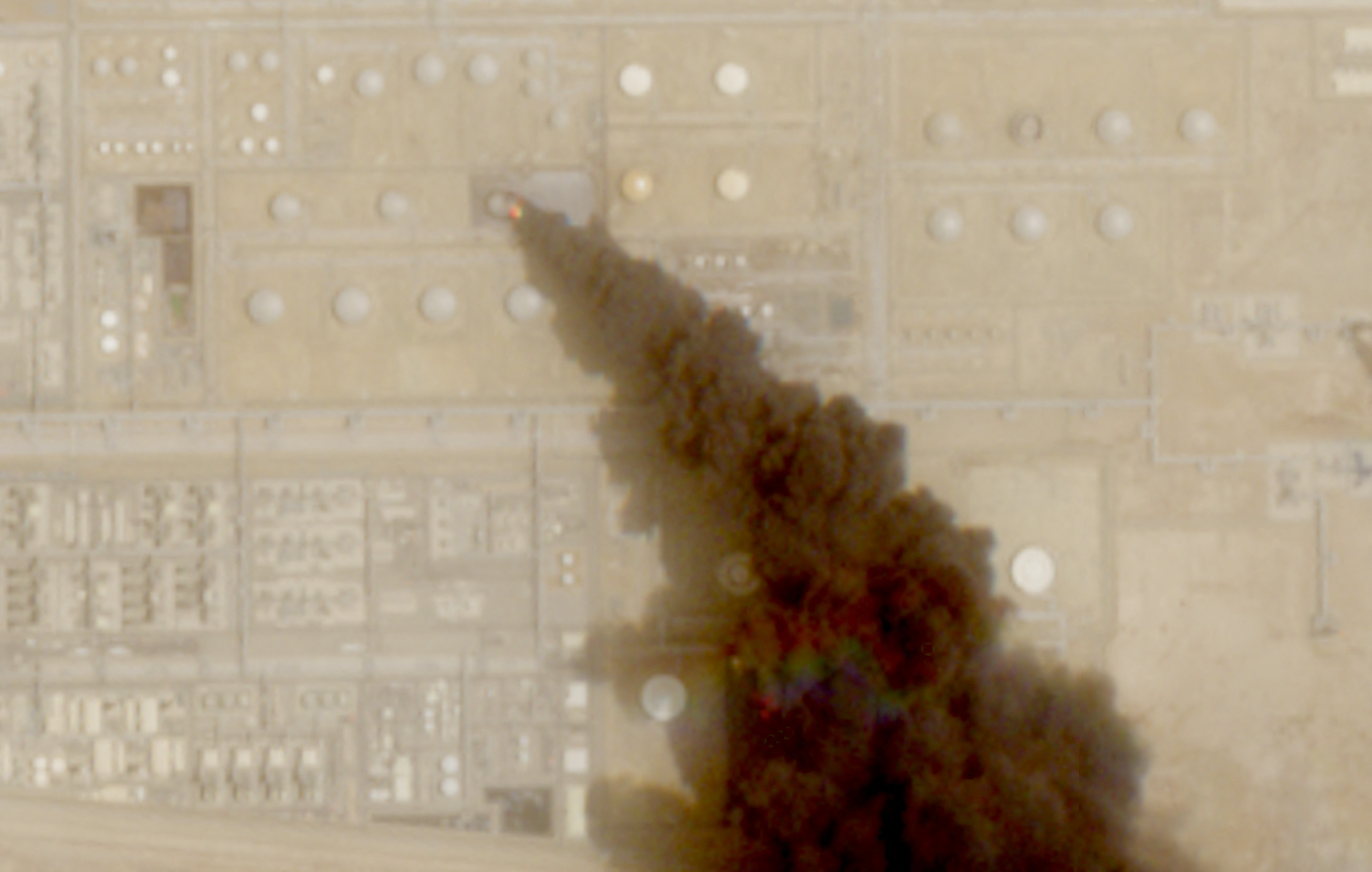 A satellite image shows a trail of smoke rising from an oil facility in Jizan, Jazan province, Saudi Arabia, on July 26, 2026. (European Union/Copernicus Sentinel-2/Reuters)
 Friends Read Free
Copy
Facebook
Tweet
Friends Read Free
Copy
Facebook
Tweet