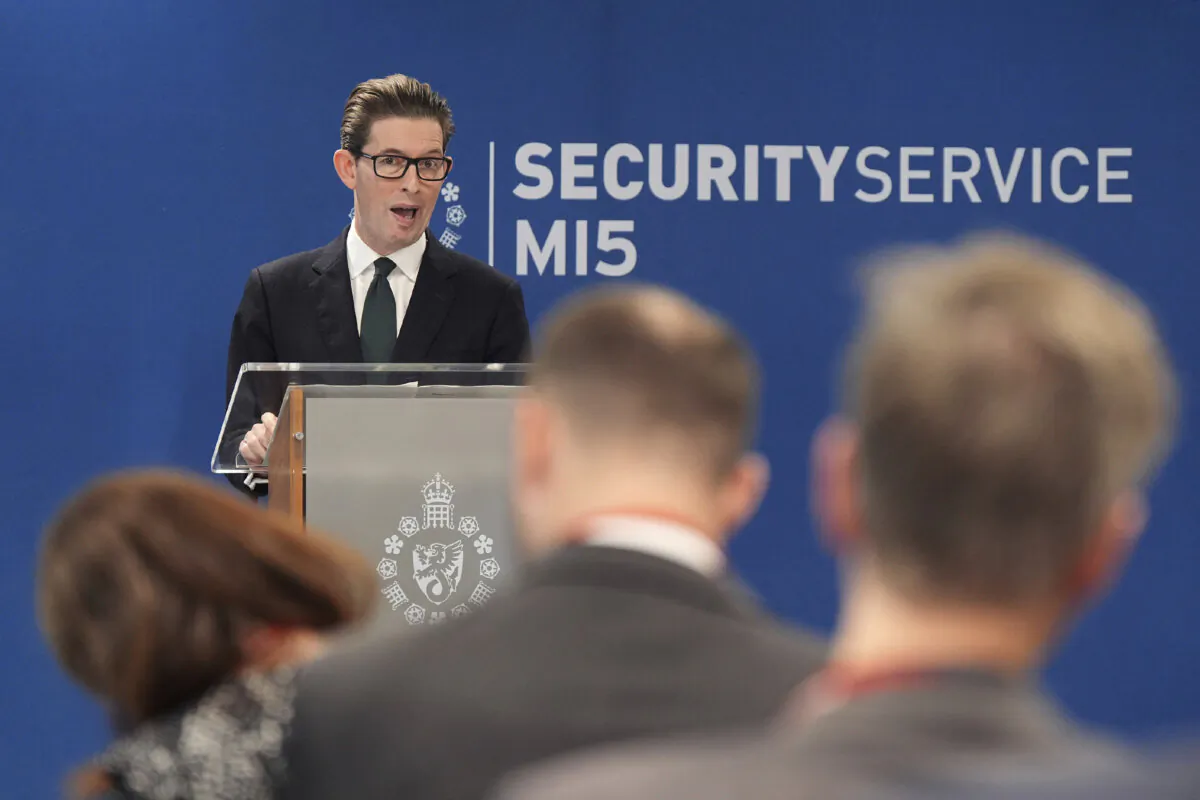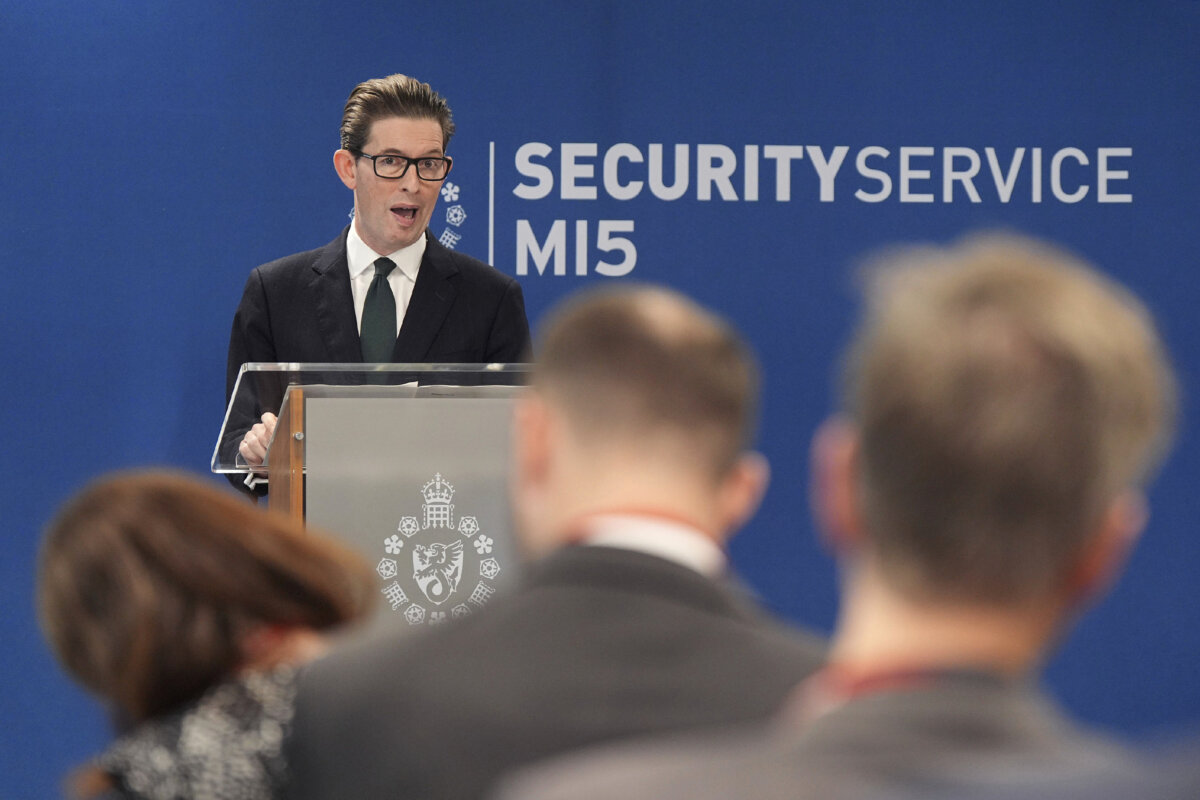

UK domestic spy agency MI5 warned on Oct. 13 that the country’s politicians are being targeted by agents of China, Russia and Iran who are seeking to undermine democracy.
MI5’s National Protective Security Authority issued new guidance to lawmakers on Oct. 13 “to protect democratic institutions from espionage and foreign interference,” the agency said in a statement issued with the guidance.
MI5 Director General Ken McCallum, who has led the agency since 2020, urged lawmakers to take action.
“When foreign states steal vital UK information or manipulate our democratic processes they don’t just damage our security in the short-term, they erode the foundations of our sovereignty and ability to protect our citizens’ interests,” McCallum said in a statement.
“Everyone reading this guidance cares deeply about the role they play in UK democracy. Take action today to protect it, and yourself.”
MI5’s guidance warns UK lawmakers that state-backed actors and their proxies are attempting to manipulate, discredit and secretly gather information on political figures at all levels.
“This is done often through subtle and deceptive means that blur the line between legitimate engagement and malign activity,” MI5 said.
MI5 also warned politicians and their staff to beware of attempts to elicit information through phishing attacks and blackmail, as well as by cultivating long-term and personal relationships with them, making political donations and seeking to influence their decisions, often subtly.
“While the guidance highlights that the UK is a target of strategic foreign interference and espionage from elements of the Russian, Chinese and Iranian states, it takes an actor-agnostic approach, focusing on the behaviours, methods and warning signs that should raise red flags, regardless of where the threat originates from,” the agency said.
Beware of ‘Overt Flattery’
In the guidance, MI5’s National Protective Security Authority urged politicians to “keep track of odd social interactions,” and “overt flattery.”
Security Minister Dan Jarvis said those working in government, public service or politics should trust their instincts.
“If something does not feel right … follow NPSA’s guidance,” Jarvis, a former British Army officer, said. “Foreign intelligence officers frequently operate covertly and exploit professional networking sites and personal vulnerabilities to build influence.”
In the statement, MI5 specifically mentioned the cases of Nathan Gill and Christine Lee.
Last month, Gill, a former Member of the European Parliament, pleaded guilty to eight counts of bribery, after an investigation revealed he had received payments in return for making statements which supported the presence of pro-Russian media outlets in Ukraine.
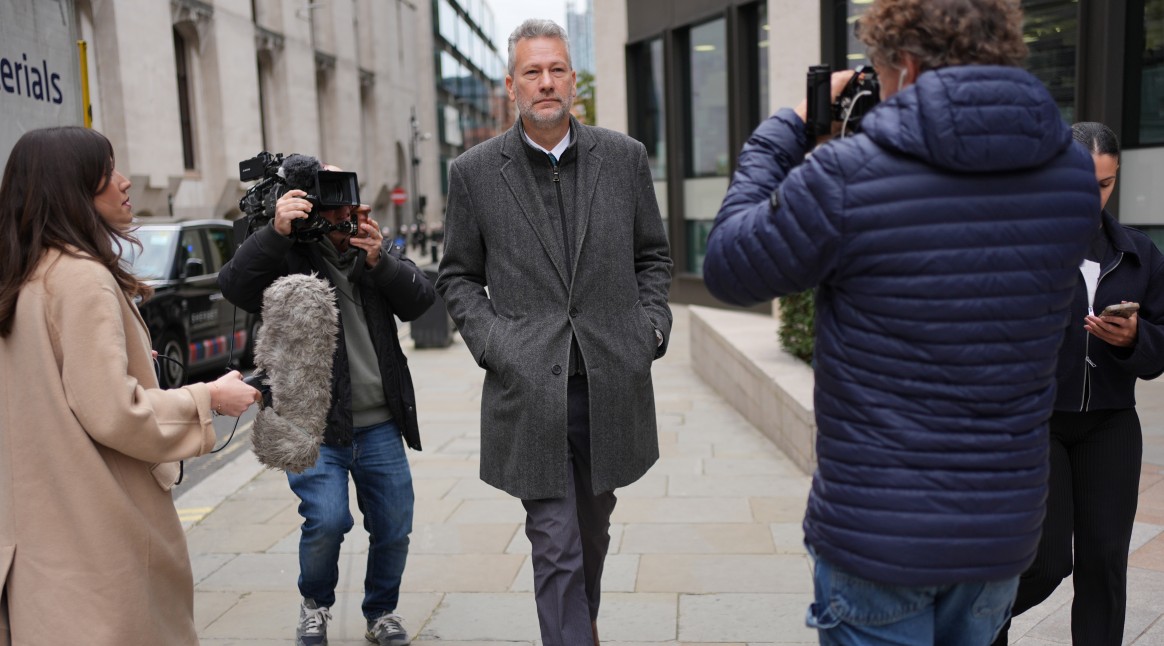
Gill, a former leader of Reform UK in Wales, is due to be sentenced next month.
In January 2022, MI5 emailed an alert to the House of Commons Speaker Sir Lindsay Hoyle about Lee, a London-based lawyer who the agency said was engaged in “political interference activities” on behalf of the Chinese Communist Party (CCP). The House of Commons is the lower chamber of the UK Parliament.
Last year, Lee lost a legal challenge against MI5’s actions. Lee had donated at least £500,000 ($664,000) to Labour lawmaker Barry Gardiner, who was chairman of the Chinese in Britain All-Party Parliamentary Group, which has since been disbanded.
Lee, who denies any wrongdoing, claimed at a tribunal that the MI5 alert contained “factual errors” and was “plainly wrong.”
In a 41-page ruling, Lord Justice Singh, sitting with Lord Boyd and Judge Rupert Jones, said MI5 had issued the alert for “legitimate reasons.”
Questions for Starmer
MI5’s latest guidance comes as UK Prime Minister Keir Starmer prepares to face questions on Oct. 15 in the House of Commons from opposition Conservative Party leader Kemi Badenoch about the handling of a case that collapsed last month.
In September, prosecutors dropped charges of spying for China against two men. Former director of the China Research Group think tank Christopher Cash, 30, and Christopher Berry, 33, were charged with passing sensitive information to China. The pair were due to go on trial this month, having denied all the accusations against them.
Prosecutor Tom Little told London’s Old Bailey Court on Sept. 15 that the case against the pair, both British nationals, no longer met the evidential threshold and would not proceed.
Director of Public Prosecutions Stephen Parkinson later said there had been an “evidential failure” and that the crux of the issue that led to the trial collapsing was the definition of the word “enemy” in the Official Secrets Act.
In a letter to the chairs of two parliamentary committees on Oct. 7, Parkinson said the Crown Prosecution Service (CPS) did not receive evidence from the government “that at the time of the offence China represented a threat to national security.”
Reuters contributed to this report.
 Friends Read Free
Copy
Facebook
Tweet
Friends Read Free
Copy
Facebook
Tweet