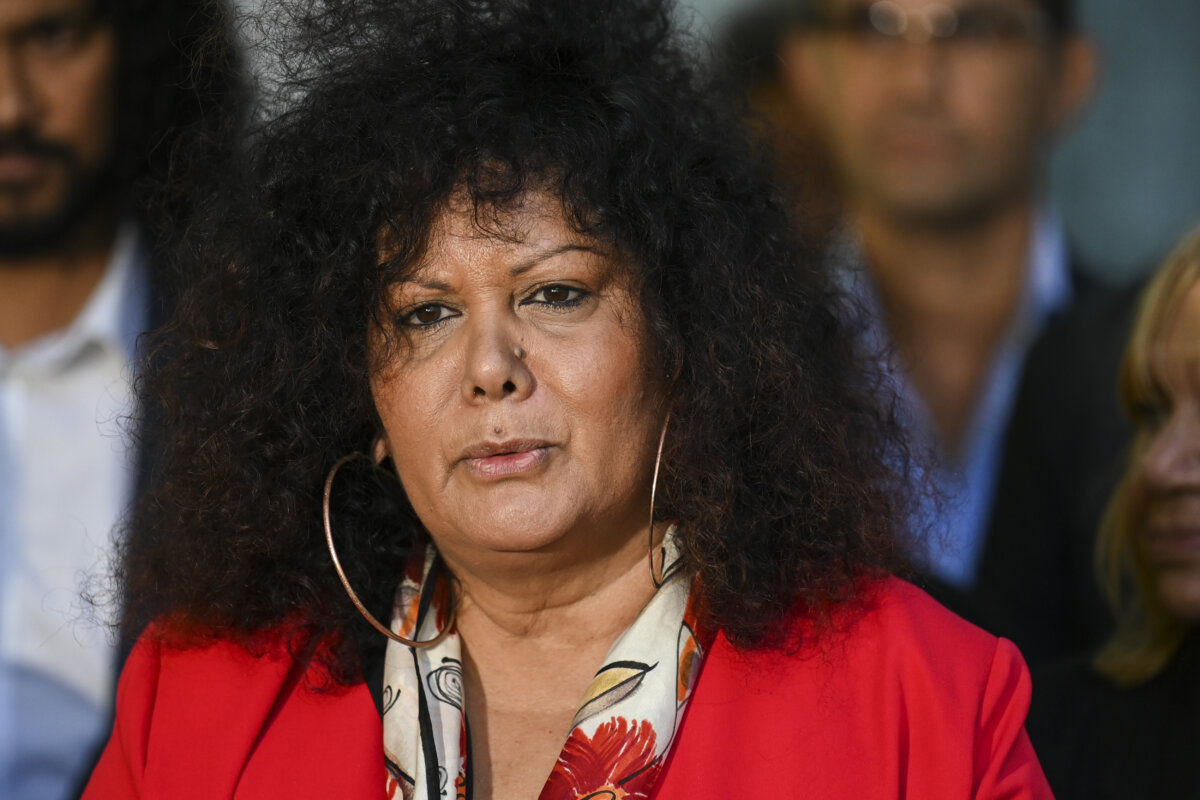

A parliamentary hearing has revealed a lack of clarity on Indigenous “Closing the Gap” spending with Minister Malarndirri McCarthy earmarking penalties to help with enforcement.
Closing the Gap is an Australian government strategy to resolve disparities between Indigenous and non-Indigenous Australians in key areas such as health, employment, education and life expectancy.
Data released this year shows most Close the Gap targets are not being met, with some even going backwards.
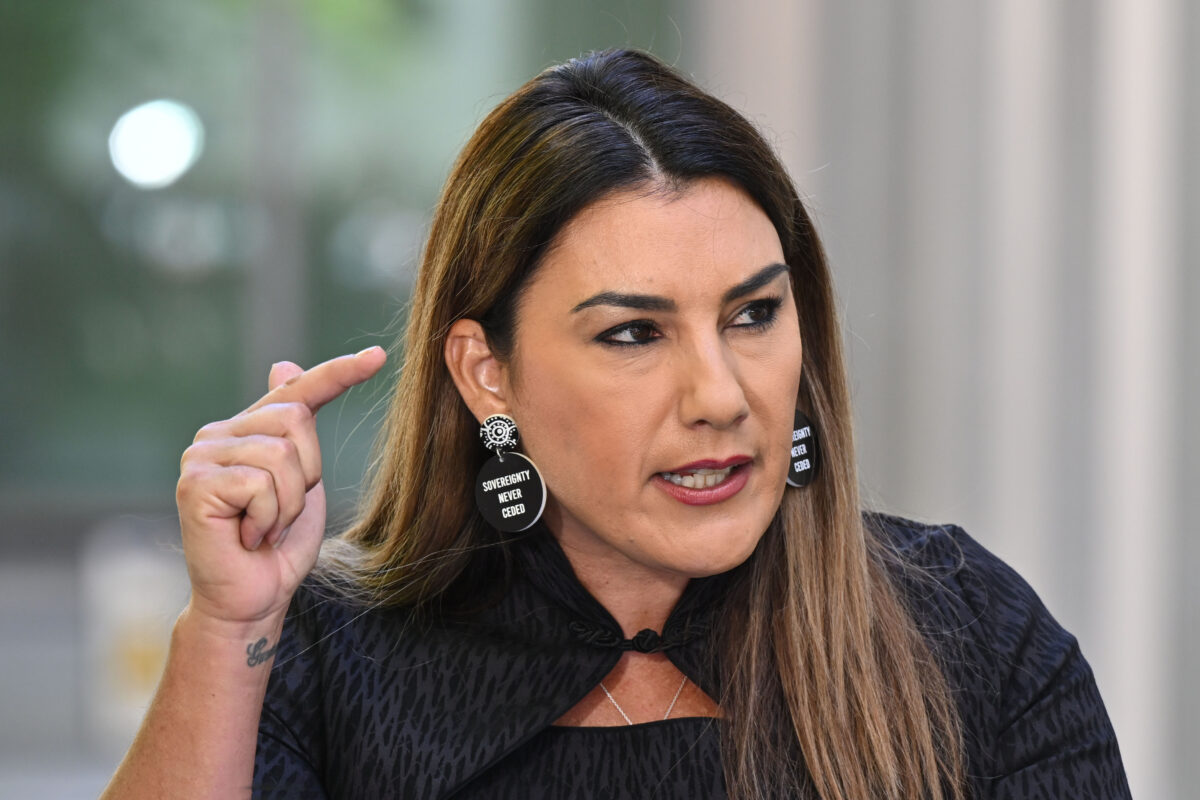
During a Senate Finance and Public Administration hearing on Oct. 7, Senator Lidia Thorpe raised questions of accountability for federal funding.
Thorpe said there was a lack of transparency around how taxpayer money was being distributed to the states and territories, and whether results could be achieved.
Minister Considers Penalties to Rein in Spending
In response, Labor Minister McCarthy said federal funding was not part of the 2020 National Agreement on Closing the Gap, which means the Commonwealth apparently has limited control over how funds are spent.
“‘Closing the Gap’ funding is not actually a part of the agreement—this is what we’ve got to manoeuvre now in terms of the federal funding arrangements, and that’s what I want to see happen going forward so there can be levers pulled to ensure targets are being met,” McCarthy said.
The minister said the federal funding was introduced by the previous Morrison government under the 2020 Close the Gap campaign.
“There’s no penalty in the agreement. And what I’m trying to do now is look at the funding, the federal funding arrangements that are made with each state and territory over whatever the agreement might be … so that there is some kind of penalty with regards to why you’re not achieving these targets,” McCarthy said.
“It’s an ongoing conversation, but I’m happy to keep being scrutinised on it, because I do think that is a that is a gap within that agreement.
No Clear Picture of Spending Through the States, Territories
Senator Thorpe also asked how much federal money was being sent to the states and territories.
In response, Simon Gordon, group manager for the Strategy Group at the National Indigenous Australians Agency, said each state and territory had to provide annual reports and accountability plans.
“Every state and territory is required to develop one of those annual reports and implementation plans as well,” Gordon told the hearing. “That’s a primary mechanism for checking right across every party to the national agreement what they’ve done in the previous year, or in some cases, three years, on the question of expenditure.
“The last time an exercise was undertaken to look at the total expenditure being spent on Closing the Gap was … in 2017,” he added. “It was called the Indigenous Expenditure Report that was released, I understand it took around two years to undertake.”
“So in the absence of that, it is really difficult to get that picture of every dollar that’s being spent by every party.”
Gordon said there was a budget “fact sheet” put out by the federal government that outlined the amounts allocated across all portfolios.
Where Are Aboriginals Falling Behind?
Targets have been falling since the beginnings of the $1 billion Close the Gap campaign in 2020.
Earlier in the year, a Productivity Commission report found only 33.9 percent of Aboriginal school children were developmentally on track in 2024, with 50.3 out of every 1,000 children being placed into care.
Suicide rates for Indigenous Australians also reached 30.8 per 100,000 in 2023—more than double the national rate of 11.8.
Crime also continues to plague Aboriginal communities, with 2,304.4 out of every 100,000 Indigenous Australians incarcerated in 2024.
Productivity Commission chief Selwyn Button said the figures reflected the overall lack of progress.
“The outcomes reflect limited progress of governments in sharing decision-making and data with communities, strengthening the Aboriginal Community Controlled sector, and changing the way governments operate,” he said.
“The transformational change that governments committed to is falling well short of what has been promised.”
 Friends Read Free
Copy
Facebook
Tweet
Friends Read Free
Copy
Facebook
Tweet