
Opposition MPs are expressing concerns about a proposed cybersecurity bill which they say would give Ottawa powers to unilaterally shut down internet access for individual users.
Bill C-8 would allow cabinet to secretly block “any specified person” from accessing any telecommunications or internet network it believes necessary to protect the nation, without disclosing the order or the reasons behind it.
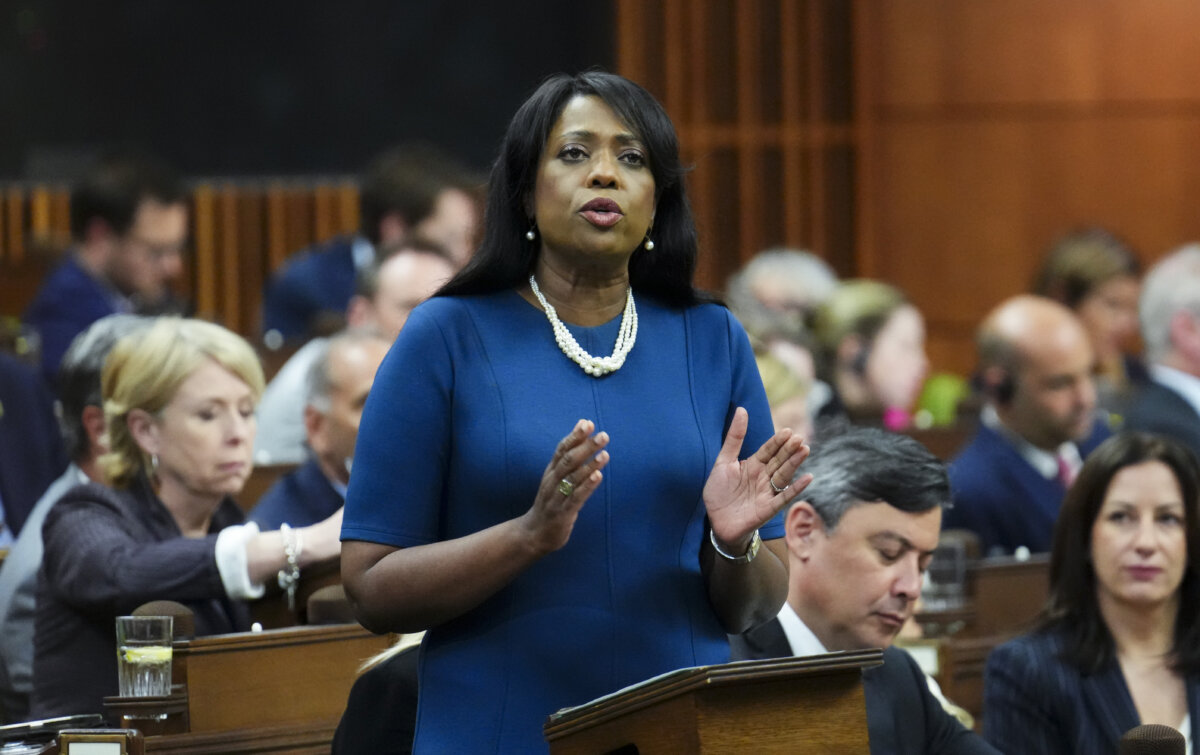
Conservative MP Leslyn Lewis said on Oct. 3 that the legislation would “grant the federal government sweeping powers” that contravene Sections 7 and 8 of the Charter of Rights and Freedoms. Lewis, who holds a PhD in international law, said the bill “as it stands would allow the government to deprive individuals of essential services without ever seeing the evidence.”
“Canadians should not have to surrender their rights to remain secure,” she said during debate in the House of Commons.
The legislation, also known as An Act Respecting Cybersecurity, was introduced June 18 by Public Safety Minister Gary Anandasangaree. The bill is in its second reading in the House of Commons and still needs to go through several stages in the House and Senate before becoming law.
Bill C-8 amends the Telecommunications Act to allow the Minister of Industry, via permission from cabinet, to direct telecommunications service providers to “do anything, or refrain from doing anything, that is necessary to secure the Canadian telecommunications system,” according to the first reading of the bill.
For instance, if enacted the legislation would allow the government to order companies like Rogers, Telus, or Bell to block specific services for users or shut down a person’s legal right to access the internet or phone networks in certain circumstances.
The Liberals say the bill is necessary to protect Canada from foreign interference and misuse of the telecommunications systems, such as threats from hackers and ransomware fraudsters.
Criticisms about Bill C-8 were also voiced by other opposition parties on Oct. 3, including Bloc Québécois MP Alexis Deschênes, who said the bill raises “concerns about individual freedoms and the right to privacy.” NDP MP Gord Johns also said the bill presents significant risks of infringing on the rights of Canadians.
“The bill would allow for mandatory information sharing between telecom regulators and federal agencies, and possibly onward to foreign governments,” Johns said. “What is the standard for this disclosure? Simply ‘the minister’s own judgment of what is necessary’ is vague, subjective, and wide open to abuse.”
Debate in House
Lewis outlined a scenario during debate in the House of Commons in which a hypothetical woman named Sarah who is frustrated by what she sees as government corruption says she will release documentation proving her claims. She is subsequently assessed as a threat by the government, who issues an order via Bill C-8 and shuts off her service without a court order and without providing any information as to why she was barred from the internet.
“Sarah is shocked to find that she cannot access her email, bank account, or work portal. Her social media accounts are frozen. She cannot contact her friends, family or colleagues. She has been cut off entirely from the digital world and she has no idea why,” Lewis said. “This scenario is plausible, and legal, under the bill as written.”
Fellow Conservative MP Matt Strauss said the bill alarmed him as well.
“When I read the bill for the first time, my jaw hit the floor,” Strauss said Oct. 3. “Imagine being put, effectively, into a digital gulag, unable to use the phone, the internet, or one’s online banking, and if the person tells anyone that this happened, they could go to physical jail.”
Liberal MP Jacques Ramsay disputed that the bill would amount to overreach and said it is “essential to protect Canadians” and to safeguard national security. Jacques said the bill is being proposed to counter cyber threats from adversaries such as Iran, Russia, China, and North Korea.
“Orders and directives cannot and will not be used to conduct surveillance or intercept private communications,” Ramsay said. “Rather, these powers are intended to be used in serious and rare circumstances when there is an urgent need to address a known threat or vulnerability.”
Liberal MP Kevin Lamoureux, who serves as parliamentary secretary to the Liberal Government’s House leader, said the bill is crucial for protecting national security and the economy.
“Protecting the critical systems we have in place is ultimately protecting the Canadian economy, among many other things,” he said. “Yes, we need to be concerned about the whole issue of privacy and so forth, but not moving legislation of this nature forward would have a very negative impact on cybersecurity and our economy.”
Lamoureux also disagreed with opponents of the bill saying it could be used to infringe on rights, portraying this as an unrealistic claim.
“The Conservatives have come up with a whole conspiracy theory on how Big Government is going to take everything away, when the legislation is all about protecting Canadians and protecting the economy,” he said.
Strauss responded by noting the Trudeau government used the Emergencies Act in 2022 to freeze $7.8 million in assets and 170 bitcoin wallets that it said were linked to protesters in the trucker convoy.
“The member said it is a conspiracy that the Liberals might freeze bank accounts. They already did that,” Strauss said. “I do not want to hear any more about defending Charter rights from any such member.”
The Federal Court of Canada ruled in January of last year that the use of emergency powers by the government in 2022 was unjustified and unlawful. The presiding judge found that the legal threshold for invoking the act, specifically, a “threat to the security of Canada” as defined under the law, had not been met.
 Friends Read Free
Copy
Facebook
Tweet
Friends Read Free
Copy
Facebook
Tweet