
News Analysis
When a fire broke out in a battery storage bank at the Sunbank solar farm in Summerside, Prince Edward Island, nearby residents were warned to shut their windows, turn off home ventilation systems, and stay indoors.
Officials established a voluntary evacuation zone within 500 metres of the Sept. 7 fire due to concerns about hazardous smoke, and local schools closed over air-quality risks as emergency crews worked to contain the plume. The 21.6-megawatt facility combines thousands of solar panels with large-scale battery storage systems that feed power into the municipal grid.
“A lot of my colleagues barely slept because they were worried,” said resident Aestos O’Brien-Balamut, who fled his home in the evacuation zone to stay with nearby in-laws, grabbing some belongings and a cat on the way out.
“I got only an hour of sleep.”
The fire highlights a growing challenge as battery storage expands alongside renewable energy across Canada. Utility-scale batteries can help manage the intermittent nature of solar power, but they also bring specific fire, chemical, and environmental hazards.
The Summerside incident raises questions about whether fire codes, municipal planning rules, emergency-response capabilities, and public-health safeguards are keeping pace.
The Science Behind Thermal Runaway
Unlike conventional structural fires, fires involving lithium-ion battery energy storage systems (BESS) are driven by a chemical process known as thermal runaway.
Thermal runaway begins when an internal failure or short circuit causes a battery cell to heat uncontrollably. Rising temperatures then trigger chemical reactions that generate additional heat and flammable, pressurized gases, which ignite neighbouring cells and cause a dangerous chain reaction across the entire system.
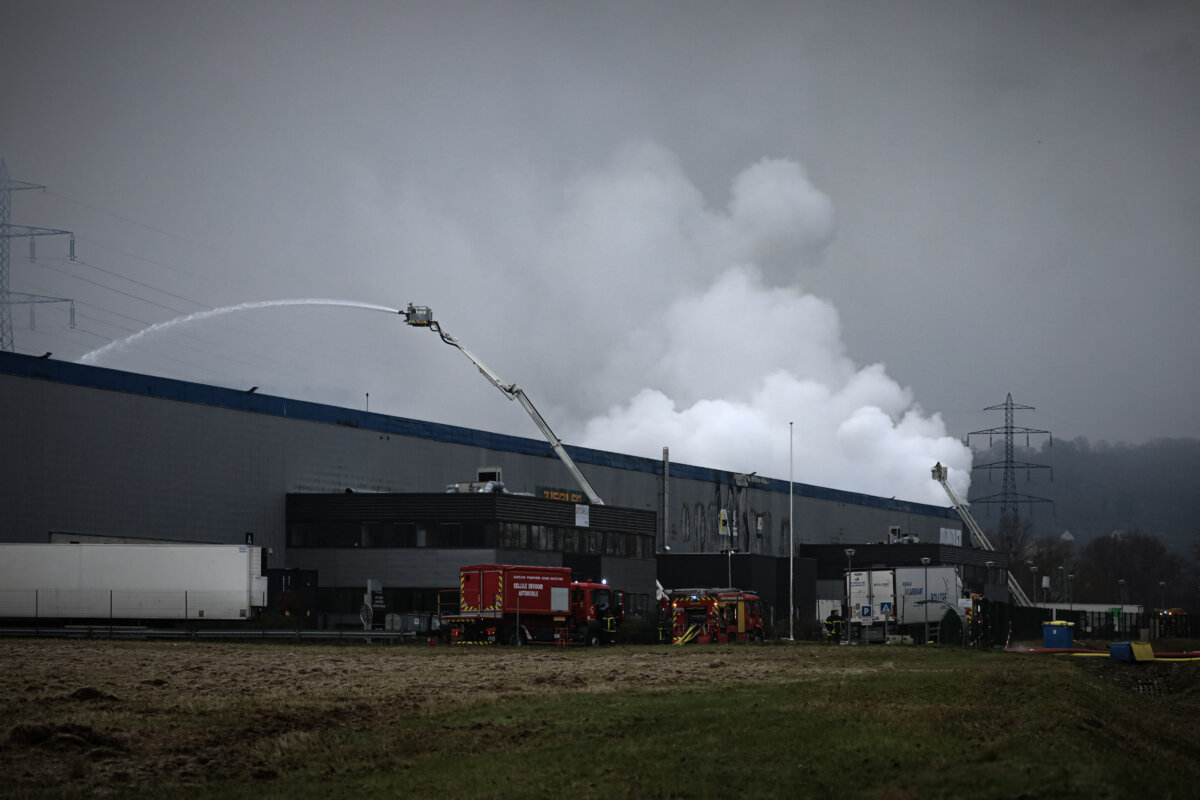
Because dousing lithium-ion batteries with heavy streams of water can trigger electrical shorting or explosive reactions, Summerside firefighters avoided direct flooding. Instead, emergency crews used misting units to cool the perimeter of the fire while allowing the compromised battery unit to safely burn through its fuel.
The containment strategy requires emergency crews to manage and monitor the fire for days or weeks.
It was not until Sept. 21, after nearly two weeks, that the City of Summerside announced that the fire at the Sunbank site is officially out, emergency crews have cleared the scene, and the recovery and operational phase has begun.
Airborne Toxicity
During thermal runaway, burning lithium-ion cells release a mixture of dangerous gases and vaporized compounds.
Among the primary airborne hazards is hydrogen fluoride, a highly corrosive gas capable of causing severe respiratory damage and systemic chemical poisoning when inhaled. Combustion also produces carbon monoxide and hydrogen cyanide.
People exposed downwind have reported acute symptoms including severe coughing, eye irritation, sore throats, headaches, and a metallic taste.
Long-Term Environmental Risks
The environmental effects of an industrial battery fire can extend beyond the initial smoke plume. While lighter gases disperse into the atmosphere, heavier combustion products can pose longer-term contamination risks.
Smoke plumes can carry microscopic soot particles and vaporized heavy metals, including nickel, cobalt, and manganese. As the plume cools, these particulates can settle on nearby fields, residential rooftops, roadways, and surface water.
Even after the flames subside, damaged battery units can remain vulnerable to delayed re-ignition because of heat trapped inside unburned cells.
Specialized environmental remediation teams are used after such fires to extract and transport compromised materials to dedicated processing facilities. As Prince Edward Island lacks the ability to process hazardous waste, it must be transported off-island.
Without strict containment and soil remediation, toxic runoff and settled ash can pose risks to groundwater and soil health.
Municipal Warnings
The P.E.I. incident comes as lithium-ion power sources become more widespread across Canada’s residential, commercial, and industrial sectors.
Toronto fire officials reported in May that the frequency and intensity of lithium-ion battery fires are continuing to increase across the city. The city has recorded 100 lithium-ion battery so far in 2026, Toronto Fire Services Chief Jim Jessop said in a social media post on Sept. 21. In a post earlier this month, Jessop said the total for all of 2025 was 91.
The fire chief warns that first responders are encountering fires that burn with unprecedented speed, intensity, and chemical toxicity.
Jessop says lithium-ion battery fires pose serious operational challenges because they can reach thermal runaway and room flashover in under 90 seconds, calling this the “window of survivability,” and adding that this is 3.5 minutes less to escape than a decade ago, in 2016, when the window was 5 minutes.
Toronto Fire Services dispatches specialized hazardous materials units to every reported battery call. Jessop has urged federal and provincial authorities to establish strict standards for battery manufacturing, import quality, and storage limitations, saying safety frameworks have failed to keep pace with deployment.
Regulations
Although industrial battery installations house megawatts of chemical energy, safety guidelines often permit them near residential properties. The Sunbank solar farm, for example, is located within 10 metres of upscale residential housing.
Under standards such as National Fire Protection Association 855, baseline setback requirements between outdoor energy storage systems and property lines can be as short as 10 feet (3 metres). Engineering exceptions or local mitigation barriers can sometimes reduce those distances further.
These minimal setbacks were created primarily to limit radiant heat transfer between physical structures during standard fires. They do not account for toxic gas plumes generated during thermal runaway events, which can necessitate evacuation zones of 500 metres or more, as seen in Summerside.
Battery storage can support grid stability and help integrate renewable energy sources into the electricity system. At the same time, battery facilities can present safety and environmental considerations that require appropriate planning, monitoring, and risk management.
For O’Brien-Balamut, the proximity of the Sunbank facility to homes remains a concern.
“It just sucks that the solar farm is so close to a residential area and affected so many people,” O’Brien-Balamut said.
 Friends Read Free
Copy
Facebook
Tweet
Friends Read Free
Copy
Facebook
Tweet