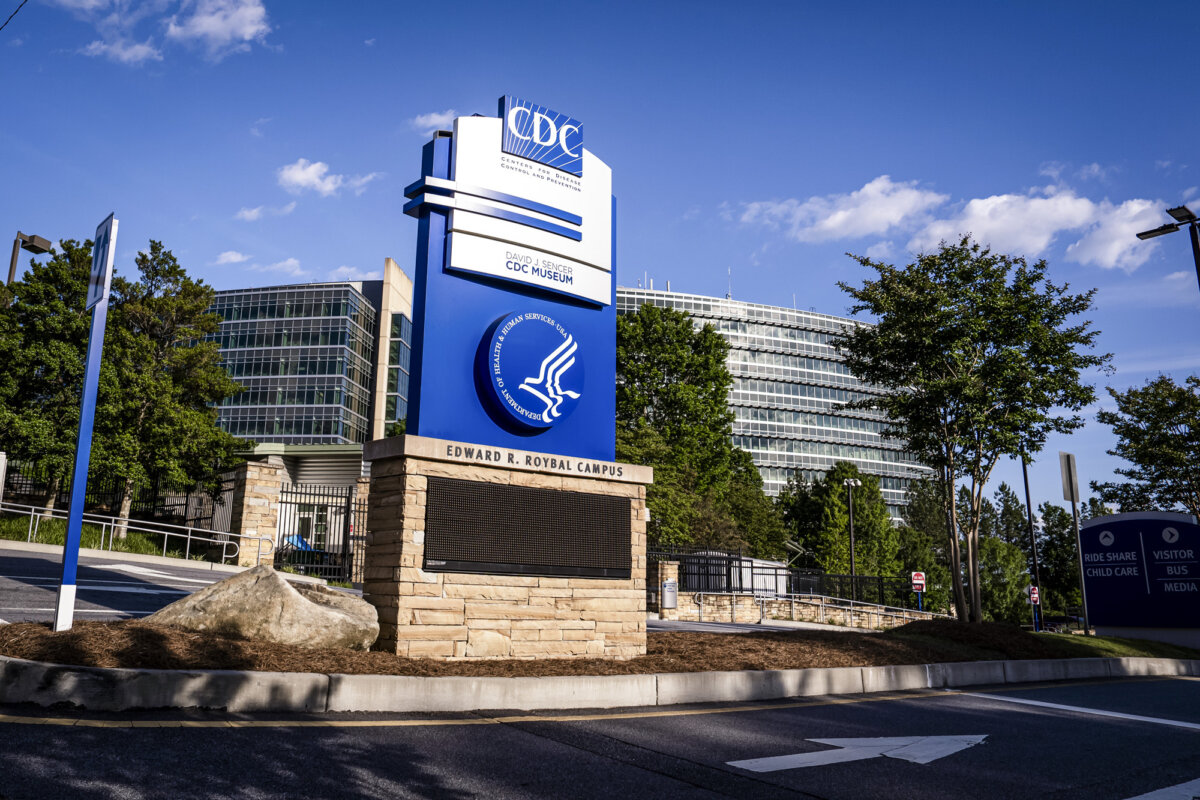

A bill to establish a permanent Australian Centre for Disease Control (CDC) has passed the House of Representatives with support of Labor, the teals, Greens, and Centre Alliance.
Health Minister Mark Butler told parliament the Australian CDC would be an “independent” commonwealth agency separate from the Department of Health.
Butler said it would serve as the national leader and “authoritative voice” on public health, leveraging the best scientific and technical expertise across the country.
“Establishing a permanent Australian CDC through this bill will deliver on our commitment to create an independent agency that will help protect Australia from diseases and other public health threats,” Butler said (pdf).
“It ensures that Australia joins our international peers in establishing a permanent national centre for disease control.”
The Australian CDC is due to begin operating on Jan. 1, 2026. As a statutory agency within the health minister’s portfolio, it will be accountable to parliament.
Butler said in the early stages, the CDC would be looking at pandemic preparedness, communicable diseases, environmental health and occupational respiratory diseases. After an independent review in 2028, it will then look to expand, potentially covering chronic conditions.
“No Australian will be left behind,” Butler said.
The bill came after three years of policy development and public consultation.
“This bill establishes a permanent, evidence-based institution to ensure that Australia is better prepared, more united and more accountable in the face of future public health threats,” Butler said.
“It is a long overdue reform, one that honours the hard lessons of the past and builds a stronger, healthier future for all Australians.”
Barnaby Joyce Says Senate Inquiry Needed
However, Nationals Member for New England Barnaby Joyce said he hoped the bill would have a Senate inquiry for a “hard look at this piece of legislation.”
Joyce also used his speech to reflect on the COVID-19 pandemic response during his speech, saying he believed they had “overreacted.”
“What happened then was the state had primacy over the individual. You’ve always got to be cautious when the state becomes more powerful than the individual,” Joyce said.
“We have to be really careful when the state comes in and has this manifest power that completely consumes the right of the individual.”
“The other thing that happened during COVID is our national debt went through the roof.”
Labor MP Says It’s Common Sense
However, Labor Member for Makin Tony Zappia described the proposal to set up a CDC as a “common sense response” to the lessons learned from COVID.
“In particular, we learned that our national health services must be better resourced and coordinated and that we must have better data shared across all jurisdictions—not only jurisdictions here in Australia but across the world,” he said.
Zappa shared that in his local community, hardly a day went by without someone speaking to him about the effects of COVID, the vaccines or economic disruptions that changed their life forever.
“In the interconnected world that we live in today, it is more essential than ever before that we be better prepared for another global or national pandemic,” he said.
He said during COVID, there were too many “mixed messages” and opinions which left people confused.
“To this day, I regularly hear from people who are adamant that they or their family members continue to suffer from the long-term health effects of the COVID vaccines,” Zappia said.
“Of course, it may be argued that the long-term health effects that they refer to could also be attributed to the COVID infection itself. Some of those questions will never truly be answered, and I know that the debate continues.”
Zappia argued the legislation would “better coordinate” the national health expertise that presently exists.
The bill is now before the Senate.
 Friends Read Free
Copy
Facebook
Tweet
Friends Read Free
Copy
Facebook
Tweet