
Police are investigating the death of a 19-year-old Canadian woman found on a popular Australian beach on Jan. 19 surrounded by a pack of dingoes.
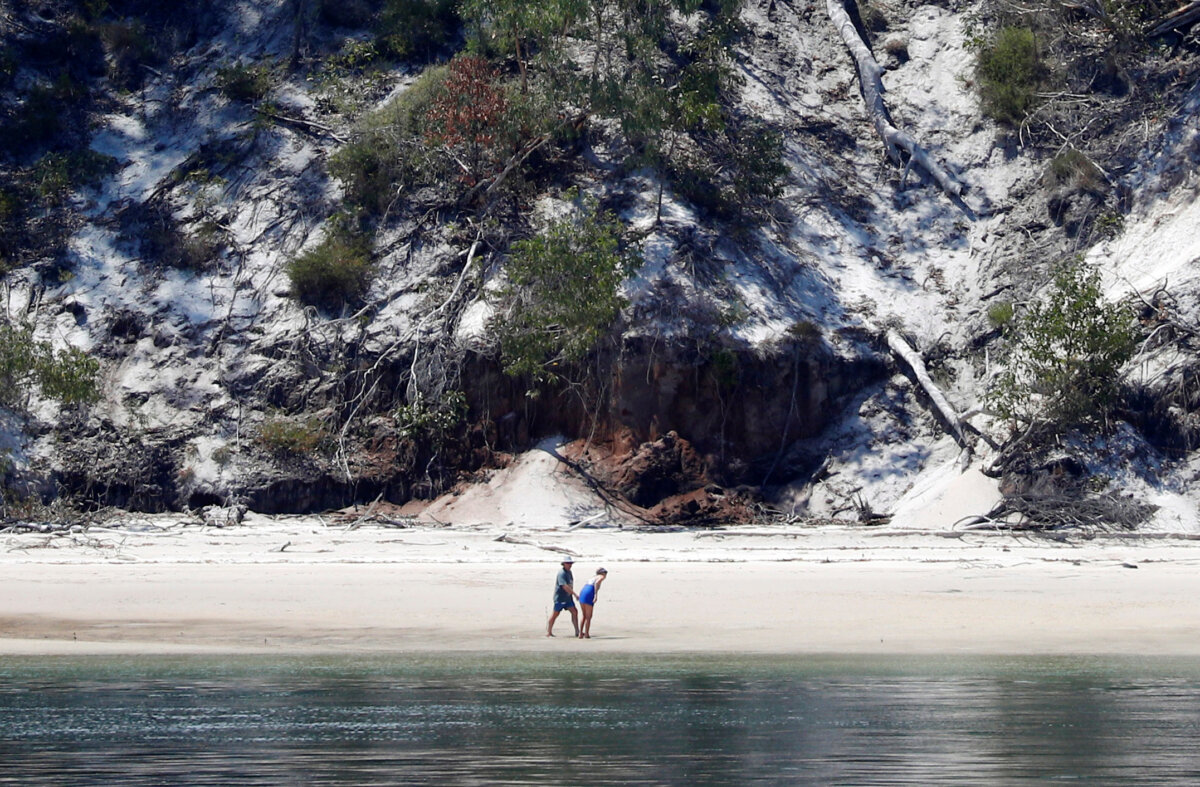
At about 6:35 a.m. on Jan. 19 (1:30 a.m. on Jan. 19, ET), Queensland Police were called to Fraser Island, an island off Australia’s eastern coast following reports that a woman had been found unresponsive.
The woman was declared deceased shortly afterward north of Maheno Wreck.
“Initial information indicates, the woman may have gone for a swim around 5 a.m.,” reads the news release.
“A crime scene has been established, with investigations ongoing into the circumstance.
“Police are appealing to anyone who may have relevant information, including dash cam vision or witnessed anything to come forward.”
However, later commentary indicated that her body had been “touched and interfered with” by the dingoes, according to Queensland Police Inspector Paul Algie.
“Dingoes had physically been in contact with the body,” he told ABC.
“We simply can’t confirm whether she drowned or died as a result of being attacked by dingo.”
The inspector described the scene as “very traumatic and horrific.”
“She was a young woman enjoying a beautiful part of the world, and that’s what makes this such a tragedy,” he said.
The woman’s body has been transported to mainland Australia.
The Queensland government announced that a nearby campsite, close to where the body was discovered, had been temporarily closed, and five warning signs were installed on the island to alert visitors to dingo activity.
Acting Minister for Tourism Deb Frecklington confirmed that her department was working closely with police for the investigation.
“This is a heartbreaking tragedy that has understandably left many Queenslanders reeling,” she said.
While Fraser Coast Mayor George Seymour said it was possible her death may have been due to a dingo attack.
“It looks likely, doesn’t it,” he told AAP.
“It’s just hard to imagine that she drowned and then was on the beach. If she drowned, she might have washed up on the beach days later.
“But to go swimming at 5 a.m. and be found at 6 a.m.—it does seem more likely [to be dingoes].”
Dingo-Tourist Interactions
Fraser Island, the world’s largest sand island, draws around 400,000 visitors annually. While wild dingoes are a popular attraction on the island, they have had dangerous interactions with tourists, including bites and in 2001, a fatal attack that killed nine-year-old Clinton Gage.
“Dingoes are wild animals, and while they are very culturally and significant to the local First Nations people and to the people that live on the island, they are still wild animals and need to be treated as such,” said Algie.
“I implore all people that visit … that you do not go near dingoes, that you do not feed dingoes, and that you just leave them to live their life, and you need to move around them accordingly.”
 Friends Read Free
Copy
Facebook
Tweet
Friends Read Free
Copy
Facebook
Tweet