
A majority of senators rejected an amendment by the Senate Human Rights Committee that would have made Indian residential school “denialism” a criminal offence.
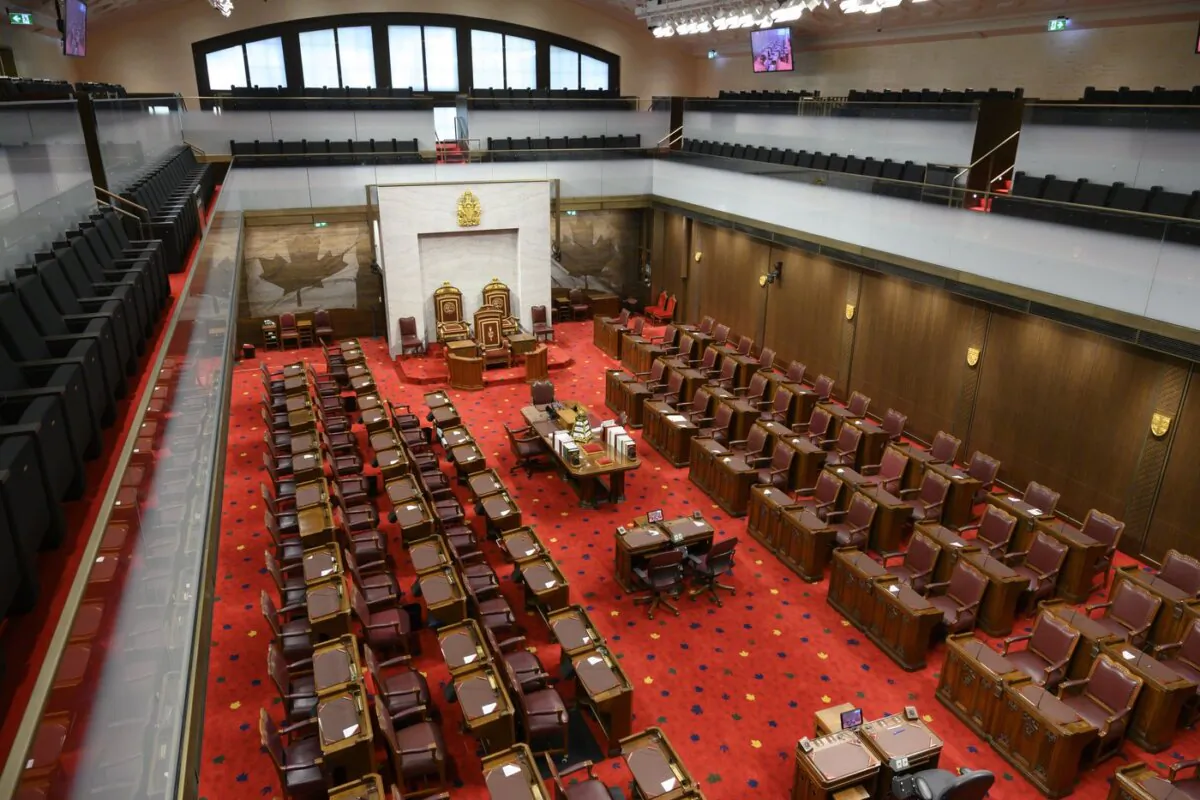
A total of 41 senators voted against the amendment on June 3, while 32 senators voted in favour, and two abstained. Prior to the vote, Sen. Pierre Moreau, the government representative in the Senate, said there had been “online backlash” to the amendment, and that he would vote against it.
The proposed amendment to the Liberal government’s anti-hate legislation Bill C-9 said that any Canadian who “wilfully promotes hatred against Indigenous peoples by condoning, denying, downplaying or justifying the Indian residential school system” would be guilty of an indictable offence punishable by up to two years’ imprisonment, or could be prosecuted by summary conviction. The amendment would apply to statements made “other than in private conversation.”
Sen. Nancy Karetak-Lindell, who introduced the amendment, said the change to the Criminal Code was needed because of “growing anti-Indigenous racism, violence, and rhetoric surrounding the lasting harm of the Indian residential schools.” Karetak-Lindell had attended a residential school in the Northwest Territories when she was younger, and said she and her siblings “lost a chance to grow up in our culture, in our language.”
The Senate Human Rights Committee voted 7–1 to amend Bill C-9.
A spokesperson for Justice Minister Sean Fraser said in a June 3 statement that while residential school denialism was a “serious issue,” it did “not fit within the scope” of what Bill C-9 was designed to do. The spokesperson added that the issue warranted further study in Parliament, including via consultations with indigenous peoples.
Bill C-9, also known as the Combatting Hate Act, would create new criminal offences for intimidation and obstructing access to places of worship, as well as a new offence for intentionally promoting hatred through the public display of certain symbols, like the Nazi swastika or Hezbollah flag.
The bill was previously amended in the House of Commons to remove the religious defence to hate speech in the Criminal Code, which currently protects individuals from charges of wilfully promoting hatred when expressing religious beliefs in good faith. The legislation was stalled in the House of Commons justice committee for several weeks due to opposition from Conservatives, but the Liberal government passed a motion to curtail debate and force a vote, which led to Liberal and Bloc Québécois MPs passing the bill.
The Senate committee’s proposed amendment to Bill C-9 echoed a previous 2024 private member’s bill by NDP MP Leah Gazan, which would have outlawed the denying, justifying, or downplaying of harms caused by residential schools. Her legislation did not become law.
Controversy around Canada’s history of residential schools surged in 2021 after the Tk̓emlúps te Secwépemc First Nation announced that ground-penetrating radar technology had identified the potential unmarked burial sites of 215 children at the former Kamloops residential school site in British Columbia. Additional announcements of potential burials by other First Nations followed.
While Tk̓emlúps te Secwépemc has received more than $12.1 million from the federal government for field work and research related to the issue, there have so far been no excavations at the site, and no bodies have been uncovered.
Following the Kamloops announcement, Canada experienced a sharp increase in arson attacks against churches. There were 90 arson attacks on places of worship in 2021, and 74 attacks in 2022, compared to 43 from 2015 to 2020.
 Friends Read Free
Copy
Facebook
Tweet
Friends Read Free
Copy
Facebook
Tweet