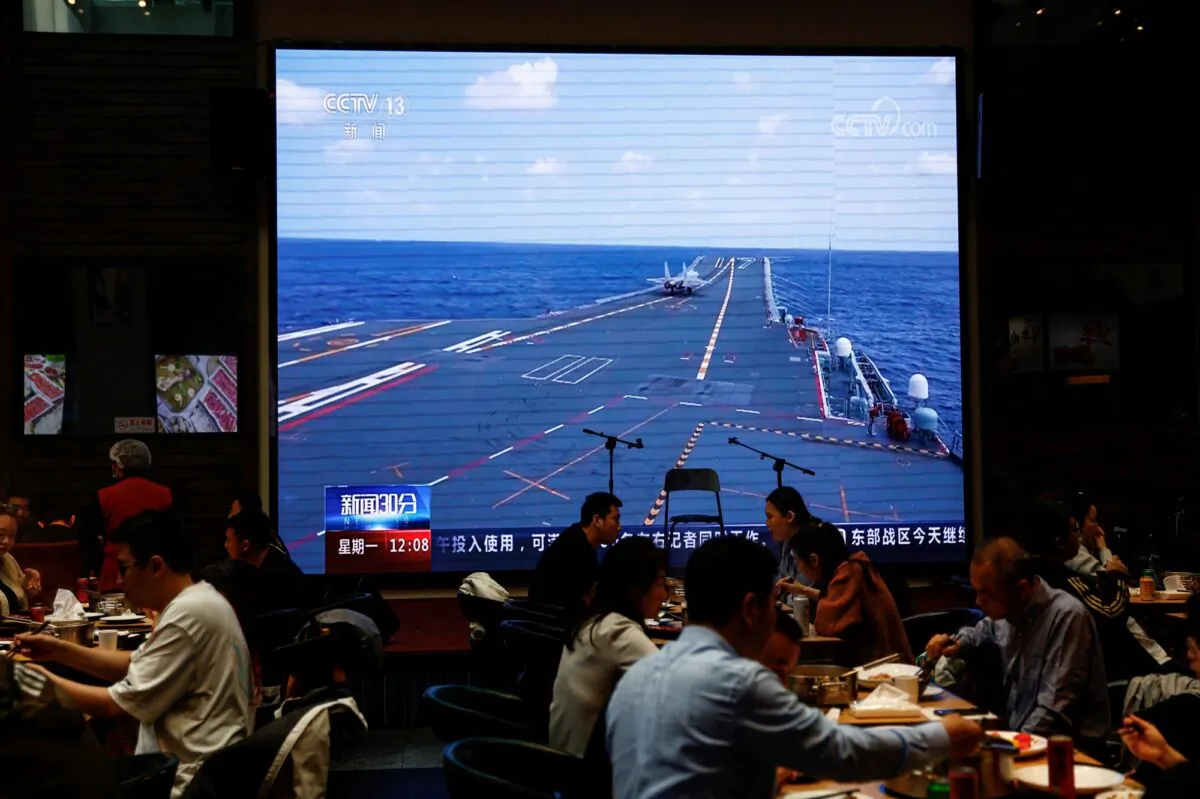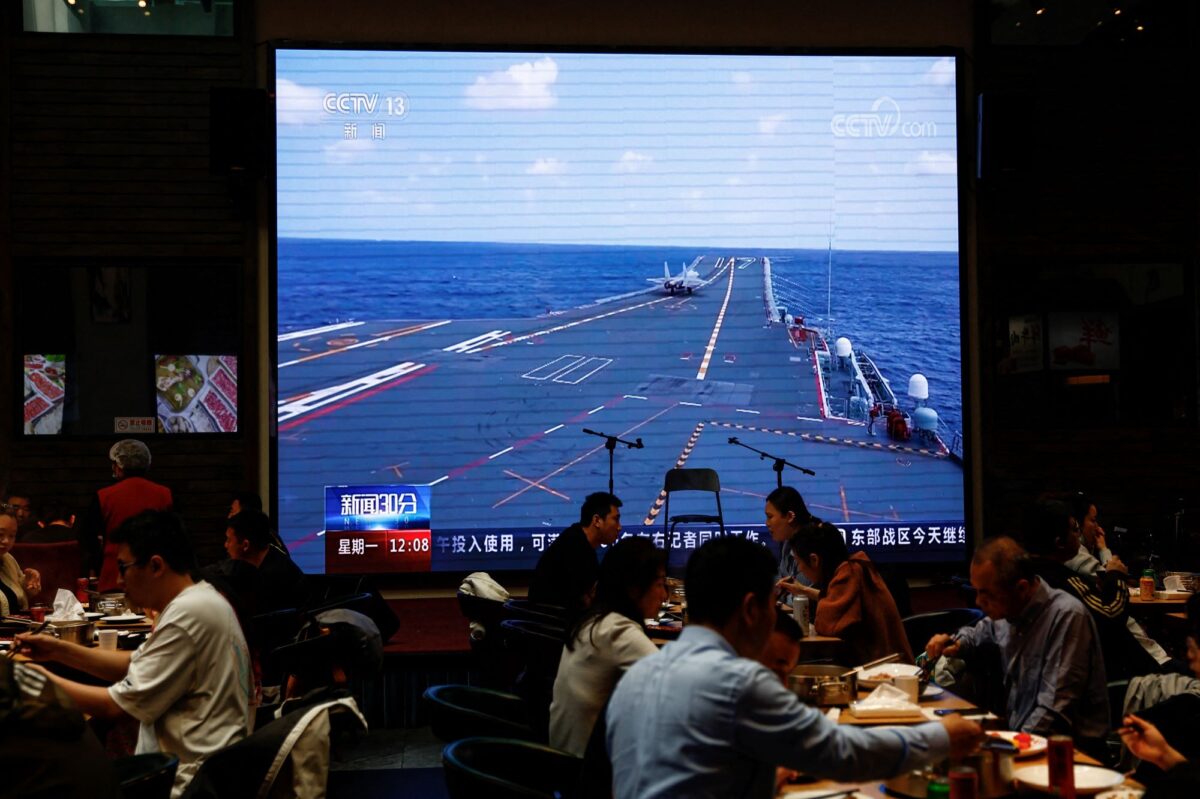

Taiwan and Japan expressed concern on Dec. 5 about what they described as a sharp rise in Chinese military and coast guard operations in East Asian waters.
Taiwan presidential spokesperson Karen Kuo told reporters in Taipei that President Lai Ching-te had directed the island’s security services to maintain constant vigilance amid what she described as widespread Chinese activity not limited to the Taiwan Strait.
According to Kuo, the deployments stretched “from the Yellow Sea down through waters near the disputed Senkaku Islands in the East China Sea, into the South China Sea and the western Pacific.”
Kuo said such movements “indeed pose a threat and impact to the Indo-Pacific and the whole region.” She added that Taiwan was calling on China “to live up to its responsibilities as a major power and to exercise restraint in its actions.”
Kuo said Lai had instructed national security bodies to provide real-time updates and to work closely with unspecified “friendly partners” to preserve regional stability.
On Dec. 4, Lai reiterated in a post on X that Taiwan was prepared to strengthen defenses.
“While aspiring for peace, we harbor no illusions,” he wrote, saying Taiwan would enhance its capabilities “with a newly announced special defense budget and closer cooperation” with partners such as the United States to “boost deterrence & uphold regional peace.”
Last month, Lai announced an additional $40 billion in defense funding to counter China’s accelerating preparations for a potential forced unification by 2027, which Taipei rejects.
U.S. President Donald Trump signed new bipartisan Taiwan legislation on Dec. 2.
The Taiwan Assurance Implementation Act requires the U.S. State Department to review and update guidelines for American engagement with Taiwan at least every five years to boost U.S.–Taiwan ties.
Lai welcomed the decision, while China’s foreign ministry said it “firmly opposes any form of official exchanges” between Washington and what it calls “China’s Taiwan region,” according to a briefing by spokesperson Lin Jian.
Japan Monitoring Developments
In Tokyo, Japanese Defence Minister Shinjiro Koizumi said on Dec. 5 that Japan was aware of reports of large-scale Chinese deployments in the East China Sea.
Speaking to reporters, he declined to comment on the specifics but said the Self-Defense Forces were observing Chinese movements “with great attention.”
“China has been expanding and stepping up its military activities in the areas surrounding Japan,” he said, adding that Japan makes “a constant effort to gather and analyse information on Chinese military movements with great attention.”
Koizumi said the government would continue monitoring the situation “with deep concern” and ensure thorough reconnaissance and surveillance.
Relations between China and Japan are under increased strain following remarks by Japanese Prime Minister Sanae Takaichi last month.
On Nov. 7, she said a hypothetical Chinese blockade or attack on Taiwan, located little more than 60 miles from Japanese territory, could constitute a “survival-threatening situation,” a legal term that may allow Japan to mobilize its Self-Defense Force.
Ambassador Fu Cong, China’s permanent representative to the United Nations, in a Nov. 21 letter to U.N. Secretary-General António Guterres, called the comments “the first time Japan has issued a threat of force against China” since World War II.
Japan responded in the letter by reaffirming that its defense policy was “exclusively defense-oriented,” rejecting Beijing’s claims.
China’s military has not commented on the reported deployments. But Chinese foreign ministry spokesperson Lin Jian said at a daily briefing in Beijing on Dec. 5 that Chinese navy and coast guard operations in “relevant maritime areas” complied with domestic and international law.
Reuters and Frank Fang contributed to this report.
 Friends Read Free
Copy
Facebook
Tweet
Friends Read Free
Copy
Facebook
Tweet