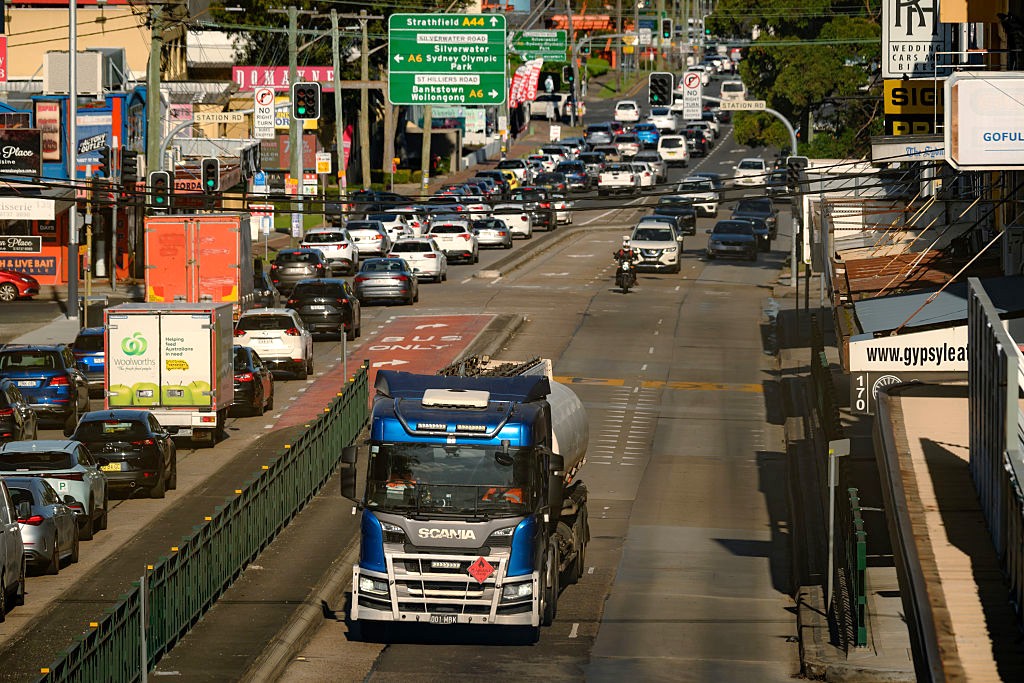


Few motorists may realise it, but over half of all the unleaded petrol Australians use daily comes from a small, reclaimed piece of land off the coast of Singapore.
The 35 square kilometre Jurong Island, in turn, imports roughly two-thirds of its crude oil from the Middle East.
Yet the outbreak of the Iran War has put this globe-trotting supply chain under stress and caused Australian fuel prices to spike to nearly $3.00 per litre for unleaded before government tax cuts helped temporarily soften the blow.
For Australians, being at the end of such a long supply chain has exposed a bigger challenge: the limits of globalisation and aggressive outsourcing of local manufacturing capability.
Globalisation and Outsourcing
Globalisation pushes for the free movement of trade and capital across national borders so that companies can spread their supply chains globally to achieve the lowest cost of producing a product—almost like a global factory.
This movement has largely seen Western developed countries drop tariffs and move manufacturing to poorer countries with lower labour and material costs—this includes areas like automaking, medical supplies, smelting, consumer goods, and so on.
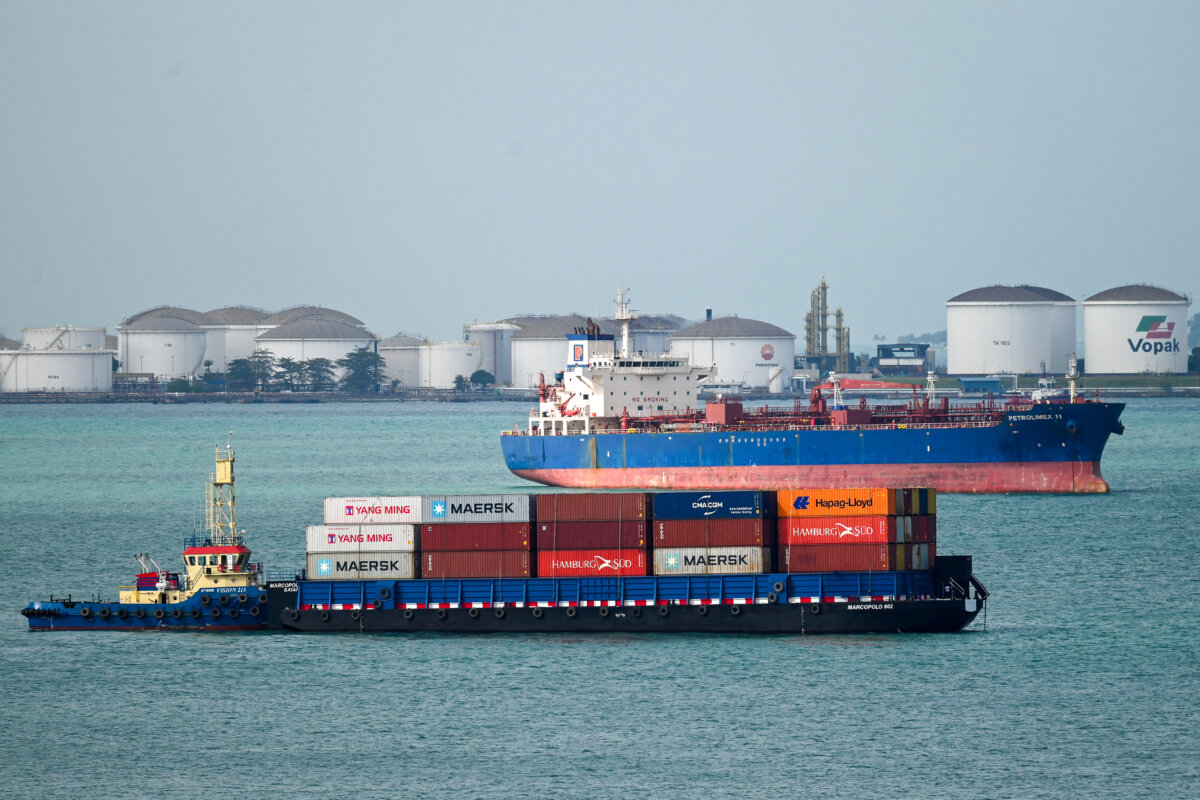
In terms of fuel production, at its peak in 2000, Australia had eight oil refineries that could produce the nation’s needs. Now, after 20 years only two remain, the Viva Refinery in Geelong, Victoria and the Ampol-owned Lytton Refinery in Brisbane. The country now imports 90 percent of its fuel needs.
According to the National Roads and Motorists’ Association (NRMA), roughly 54.7 percent of Australia’s petrol imports come from Singapore, followed by 22.5 percent from South Korea, 11.5 percent from India, and 10 percent from Malaysia.
Almost 30 percent of the nation’s diesel comes from South Korea, 15.4 percent from Singapore, and 14.4 percent from Malaysia.
Fuel Crisis an ‘Outstanding Example’ of Failures of Globalisation
“Australia’s current fuel crisis and the outsourcing of manufacturing was 100 percent caused by globalisation,” said retired University of Queensland academic Eric Louw, in an interview with The Epoch Times.
The political expert said shutting down local refineries is an “outstanding example” of where profit margins and cheap consumer prices outweighed the national interest.
Louw, a researcher in Marxism, says regimes like the Chinese Communist Party (CCP) have aggressively leveraged the globalisation movement to build its own influence.
“During the Cold War, the [Soviet and CCP] communists opposed globalisation and free trade. What has changed is that Beijing decided to accept [and use] the rules-based order,” he said.
“Effectively Beijing built its own global supply chains—via initiatives like the Belt and Road—by piggybacking off the free trade system the Americans built,” Louw said.
The academic says the Trump administration’s deployment of tariffs is largely aimed at counteracting Beijing’s strategy.
Smaller Countries and Local Cultures Suffer
According to The Epoch Times series, How the Specter of Communism Is Ruling Our World, globalisation has also weakened developing countries.
“In the early 2000s, Jamaica opened its markets and began importing large quantities of cheap milk. This made milk more affordable for more people, but it also led local dairy farmers to go bankrupt, as they couldn’t compete amid the flood of cheap imports,” the series said.
Another side-effect is the erosion of local identity.
“Economic globalisation has also contributed to the development of a homogeneous global culture, leading to broad uniformity in consumer trends and unified mechanisms of production and consumption.
“Many small businesses and those associated with local ethnic groups have simply been wiped out by the wave of globalisation.”
What’s Being Done About Fuel?
During the 2021 closures of the Kwinana and Altona refineries, the Morrison government pledged $94 million (US$67.4 million) to secure 1.7 million barrels of crude oil from the United States Strategic Petroleum Reserve (SPR).
At the time, then-Opposition Leader Anthony Albanese said the stockpile was too far away for practical use, and instead called for local refining.
Yet in response to the recent fuel crisis, the now-prime minister has been forced to jet off to Asia to ensure distribution contracts continue to Australia uninterrupted.
On April 10, Albanese visited Singapore, meeting with counterpart Lawrence Wong to secure steady fuel supply to Australia, with Singapore being supplied with liquid natural gas (LNG).
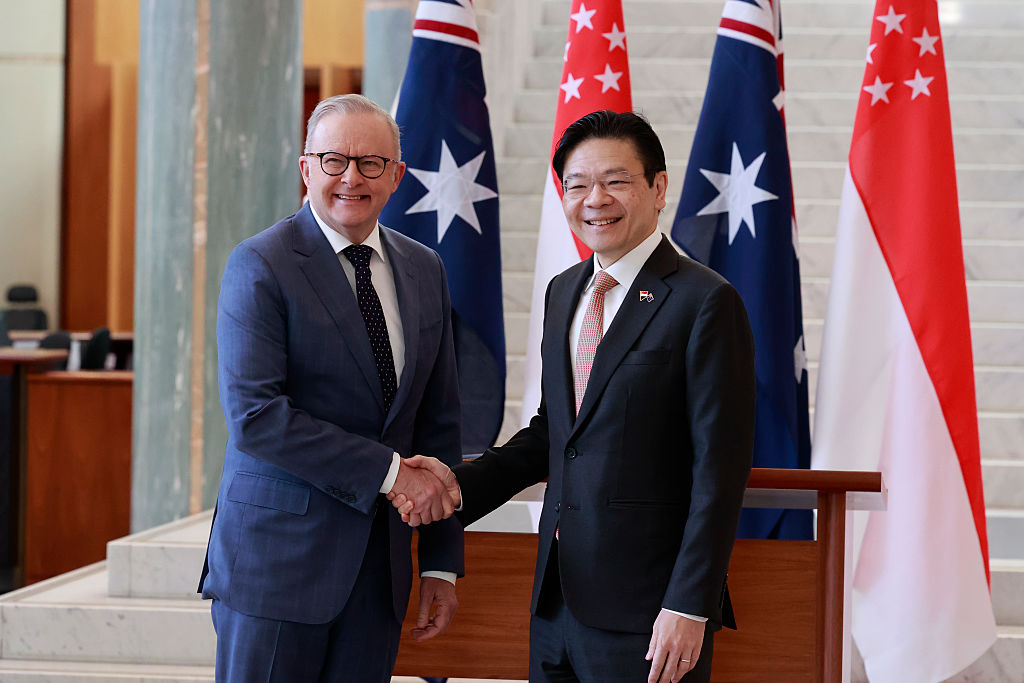
Albanese also visited Brunei and Malaysia from April 14 to 17 to ensure fuel and fertiliser supply, while talks in Malaysia centred on securing fuel for natural gas.
While the Queensland LNP government has taken early steps to establish its own petrol extraction and refining capability.
Yet Dan Ryan, a commercial lawyer who previously served on the Australia-China Council, says Australia has no hope of a successful refining industry if tariffs are not deployed to protect them.
“It levels the playing field and incentivises [private sector] refining here,” he told The Epoch Times, noting that without tariffs only government-backed entities will survive.
“If you can just import your product into Australia, whether it’s a t-shirt or petroleum, businesses will go anywhere in the world where it’s cheaper.”
 Friends Read Free
Copy
Facebook
Tweet
Friends Read Free
Copy
Facebook
Tweet