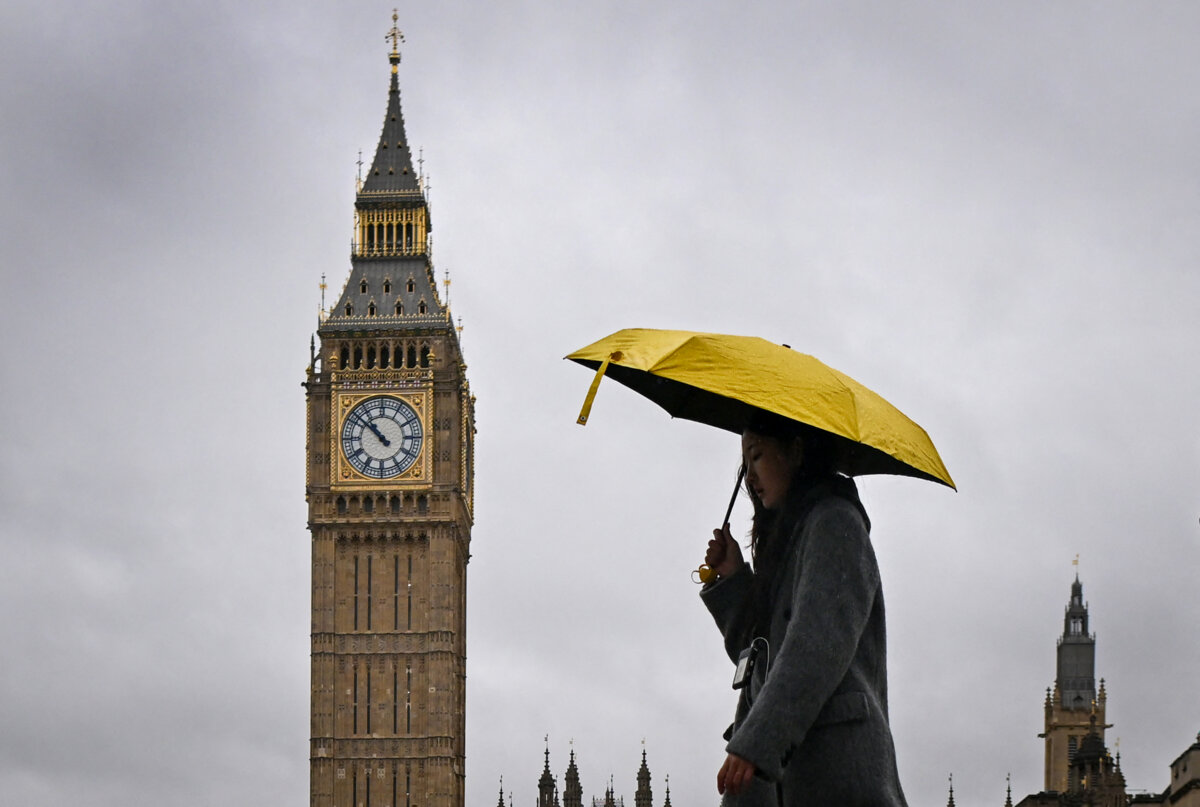

The UK’s economy contracted slightly in April after months of growth, as activity in the services sector weakened, while businesses reported higher costs and disruptions linked to the conflict in the Middle East.
The Office for National Statistics (ONS) said on June 12 that gross domestic product (GDP) fell 0.1 percent in April, marking the first monthly fall since August 2025.
The decline followed growth of 0.3 percent in March and 0.4 percent in February.
Despite the monthly setback, the economy expanded 0.7 percent in the three months to April compared with the previous three-month period.
The slowdown comes as businesses across Europe grapple with higher energy costs and supply-chain disruptions linked to the conflict in the Middle East, while policymakers monitor the impact on inflation and economic growth.
The ONS said the largest single-industry drag came from sports activities and amusement and recreation services, which fell 9.1 percent during the month.
The ONS said some of that decline reflected the cancellation of sporting events in the Middle East, which affected the output of UK-based businesses. Among the events canceled in April were the Bahrain and Saudi Arabian Formula One Grands Prix.
Wholesale and retail trade also weakened in April, falling 0.4 percent as retail activity slowed. Gains in construction and technology-related sectors helped limit the overall decline.
Middle East Conflict Raises Costs
The ONS said companies across several industries reported that the conflict in the Middle East affected business conditions during April.
Manufacturers, wholesalers, transportation firms, accommodation providers, and travel agencies cited weaker turnover linked to the conflict, according to monthly business surveys conducted by the statistics agency.
The agency noted that crude oil and refined petroleum products were among the largest upward contributors to producer-price inflation in April. It also reported that 40 percent of trading businesses experienced higher input costs in April, the highest share since December 2022.
UK Chancellor Rachel Reeves said the conflict had created new risks for the economy but argued that underlying conditions had been improving before tensions escalated.
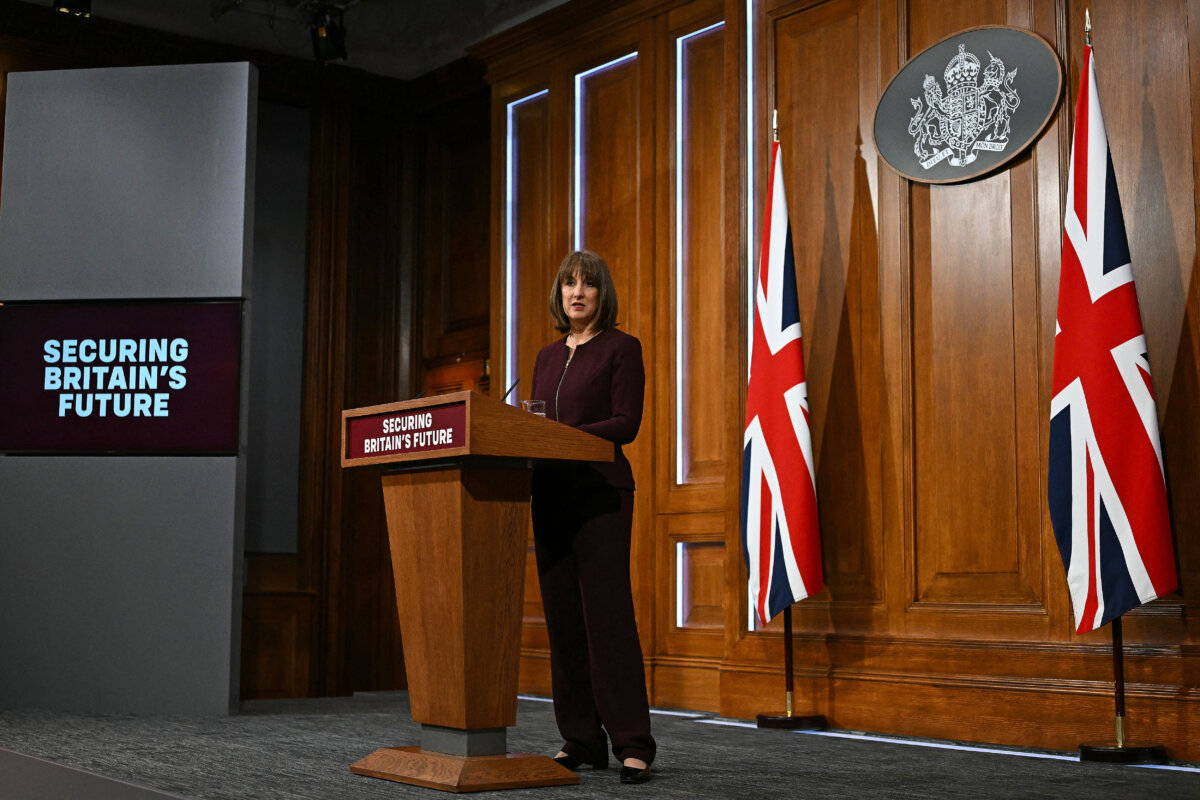
“Before the conflict in the Middle East, growth was higher than expected and inflation was falling,” she said in a June 12 statement in response to April GDP figures. “This is not a war we wanted or joined, but one that will have an impact at home.”
Reeves said that the government’s economic strategy was on track, citing recent upgrades to UK growth forecasts from the International Monetary Fund and the Organisation for Economic Co-operation and Development.
“The choices I have made as Chancellor mean our economy is in a stronger position to deal with the costs of the war, and we are getting on with the job of building a stronger and more secure economy,” Reeves said.
Economy Still Expanding Over Three Months
Despite the monthly contraction, broader economic activity remained positive.
The ONS said GDP grew 0.7 percent in the three months to April, following growth of 0.6 percent in the three months to March.
Services output rose 0.8 percent over the three-month period, while construction activity increased 1.6 percent.
“The economy grew in the latest three months as a whole, reflecting strong growth in February and March. This was despite April showing a small fall,” Liz McKeown, ONS director of economic statistics, said.
She said services remained the main driver of growth, while gains were “partly offset by falls in research and development and in sports industries, alongside a notable fall in electricity generation.”
France Sees Inflation Rise
Fresh inflation data from France suggest that higher energy costs are becoming a broader concern across Europe.
France’s national statistics agency, INSEE, reported that consumer prices rose 2.4 percent in May from a year earlier, up from 2.2 percent in April. The EU-harmonized measure of inflation increased 2.8 percent, the highest level in more than two years.

Energy prices rose 16.6 percent from a year earlier, accelerating from 14.3 percent in April.
Gas prices rebounded 11.3 percent after falling 3.1 percent the previous month, while petroleum-product prices climbed 31.1 percent from a year earlier.
INSEE said the increase reflected higher energy costs and stronger services inflation. Transportation costs also accelerated, driven partly by higher airfares.
 Friends Read Free
Copy
Facebook
Tweet
Friends Read Free
Copy
Facebook
Tweet