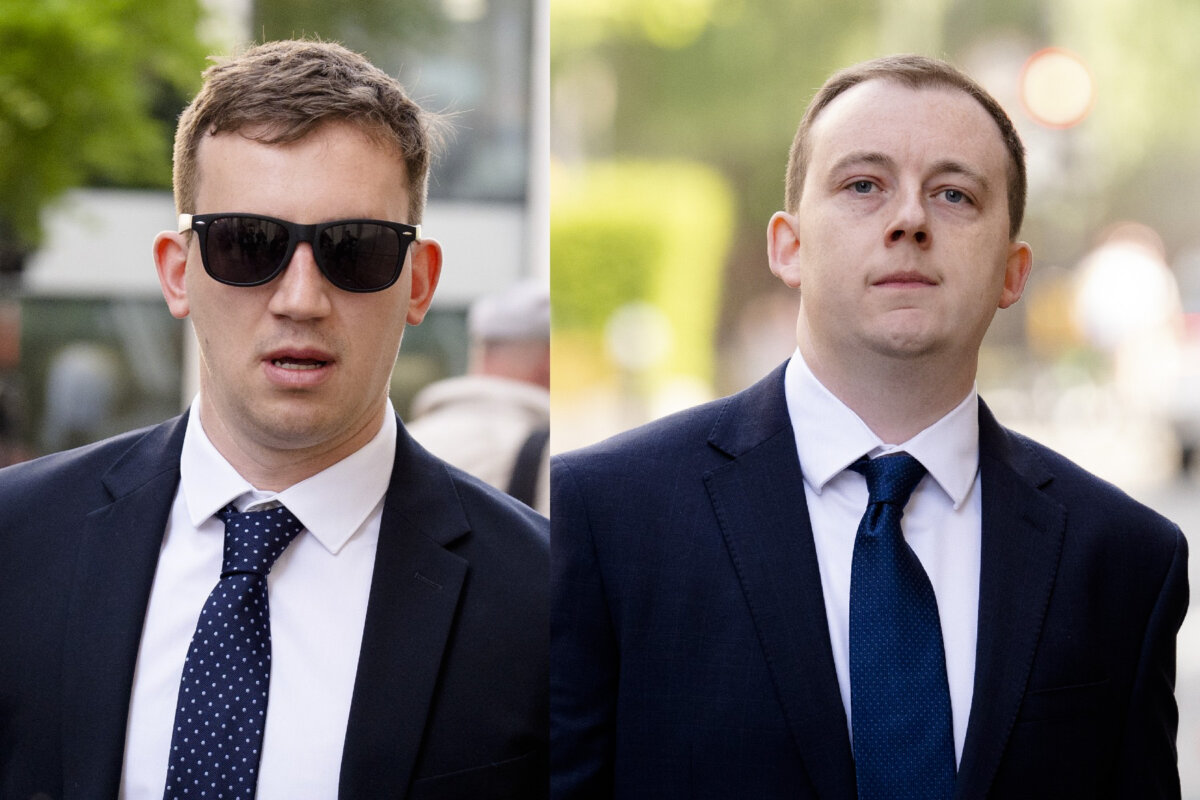
The UK government said on Oct. 6 that it was not to blame for the collapse of a trial of two men accused of spying for China, saying the case fell apart because China had not been defined as “an enemy” in language used by the previous government.
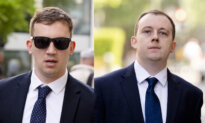
Conservative Party lawmakers, in government from 2010 until July 2024, accused Prime Minister Keir Starmer’s government of deliberately collapsing the trial of Christopher Cash, 30, and Christopher Berry, 33, to avoid upsetting China.
The Sunday Times reported on Oct. 5 that the decision to drop the charges against the pair came after a meeting involving Starmer’s national security adviser, Jonathan Powell, and the Foreign Office’s top civil servant, Sir Oliver Robbins.
Starmer’s press secretary told reporters on Oct. 6, “The suggestion that the government withheld evidence, withdrew witnesses or restricted the ability of witnesses to draw on particular bits of evidence are all untrue.”
Cash, from Whitechapel, east London, and Berry, of Witney, Oxfordshire, were first arrested in March 2023. They were charged with spying for China in April 2024.
Cash was a former parliamentary researcher for Conservative lawmakers and a former director of the China Research Group think tank.
Between December 2021 and February 2023, Cash and Berry were alleged to have “for a purpose prejudicial to the safety or interests of the State, obtained, collected, recorded, published or communicated to any other person articles, notes, documents or information which were calculated to be … useful to an enemy.”
They denied all the accusations against them. The charges were made under the Official Secrets Act, which specifies it is a crime to communicate any documents that might be useful to “an enemy.”
To prove the case under the Official Secrets Act, prosecutors would have had to show the defendants were acting for an “enemy.”
The Sunday Times reported that Powell said that a key witness for the prosecution would use evidence based on the National Security Strategy 2025, a report published in June.
It does not refer to China as an enemy, although it warns that Beijing has increased spying and “interference in our democracy and the undermining of our economic security” in recent years.
Cash and Berry were due to go on trial at Woolwich Crown Court in London this month. On Sept. 15, proceedings against the pair were stopped.
Prosecutor Tom Little KC told a hearing at the Old Bailey that the case no longer met the evidential threshold.
“We simply cannot continue to prosecute,” he said.
The judge, Mrs. Justice Cheema-Grubb, said she was satisfied and formally recorded not guilty verdicts against the pair.
Stephen Parkinson, chief prosecutor in England and Wales, said the Crown Prosecution Service had determined the proceedings had to be stopped because of an “evidential failure.”
‘Epoch-Defining Challenge’
When asked about the prosecution of Cash and Berry, the Downing Street press secretary told reporters on Oct. 6 that the “evidence in relation to this case is based on the previous government’s policy that obviously was relevant at the time.”
The press secretary said the previous Conservative government’s policy was to call China an “epoch-defining challenge” but not an enemy.
The spokesperson said the National Security Act would, in the future, allow prosecutors to put suspects in espionage cases on trial in a wider set of circumstances. The press secretary said the government still had confidence in Parkinson.
“It is obviously for the CPS to take decisions on the evidential threshold which they take cases forward, and they obviously judged that that threshold was met at the time,” the spokesperson said.
Alicia Kearns, one of the Conservative Party lawmakers whom Cash worked for, told The Financial Times that Starmer needed to “disclose the decision-making process to the British people in whose interest the prosecution was brought.”
“Starmer had the power to make sure the trial could proceed,” she said. “Either his ministers or most senior advisers acted with his full knowledge, or in contradiction and contempt of his wishes to spike the CPS’s ability to prosecute. Which is it?”
The Financial Times reported that the chairs of Parliament’s justice and home affairs select committees—Labour MP Andy Slaughter and Conservative MP Karen Bradley, respectively—have demanded full explanations from the Crown Prosecution Service about why charges against Cash and Berry were dropped.
Decision Made ‘Independently of Government’
The UK interior ministry, the Home Office, told The Epoch Times in a statement that the decision “not to proceed with prosecuting two individuals under the Official Secrets Act was made by the Crown Prosecution Service, entirely independently of government.”
Cash told reporters outside court, “While I am relieved that justice has been served today, the last two and a half years have been a nightmare for me and my family.”
His barrister, Henry Blaxland KC, said Cash was “entirely innocent and should never have been arrested, let alone charged.”
Berry—who has not spoken to reporters or issued a statement through his lawyers—worked in various teaching posts in China since September 2015.
The Chinese communist regime in Beijing previously denied the allegations that it was involved. The Chinese Embassy in London said that accusations were fabricated.
Reuters contributed to this report.
 Friends Read Free
Copy
Facebook
Tweet
Friends Read Free
Copy
Facebook
Tweet