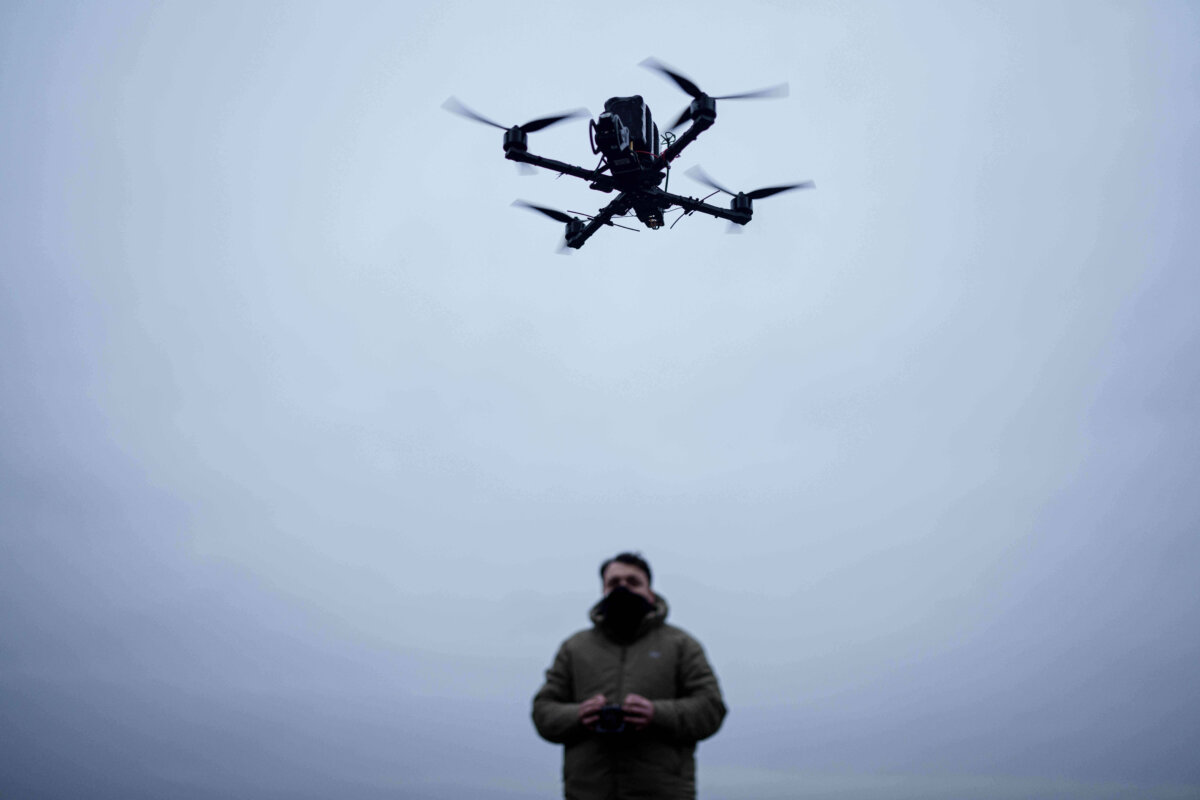
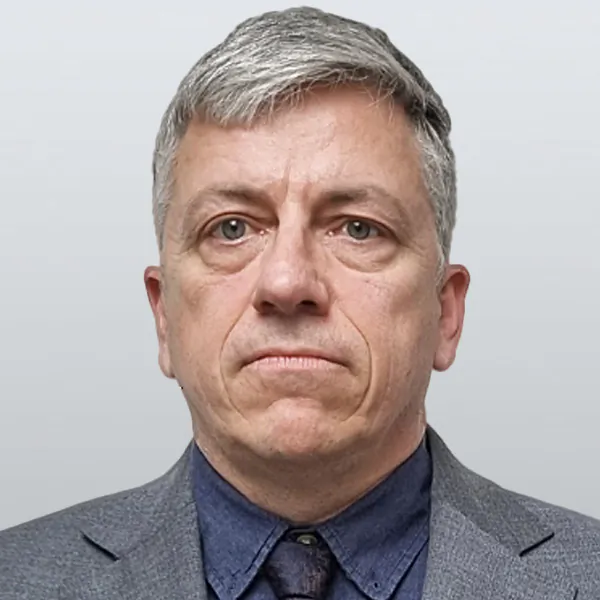
Ukrainian President Volodymyr Zelenskyy said on March 11 that Kyiv has sent specialists to Saudi Arabia, Qatar, and the United Arab Emirates to help them combat Iranian drone attacks.
Kyiv says the Russian military has used thousands of drones, based on the Iranian-designed Shahed aircraft, in Ukraine over the past four years.
The Ukrainians have extensive experience in shooting down drones, often using smaller unmanned aerial vehicles, machine guns, or jamming equipment to cause them to drop out of the sky.
Shortly after the United States and Israel launched Operation Epic Fury on Feb. 28, Iran retaliated with thousands of drones, which have targeted countries in the Gulf that have U.S. bases.
Countries such as Kuwait, Qatar, and the United Arab Emirates have used large numbers of air-defense missiles against Iranian drones, but there has been at least one incident of friendly fire.
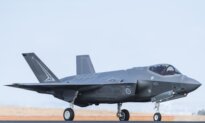
On March 1, three U.S. F-15E Strike Eagle fighter jets were shot down over Kuwait in an incident that the U.S. Central Command said was an “apparent friendly fire incident.”
It also stated that all six crew members of the three planes ejected safely and survived unhurt and that “Kuwait has acknowledged this incident.”
Ukrainian Advisers at US Base
“Regarding the situation in the Middle East, we have sent our teams: three professional, equipped teams,” Zelenskyy told reporters on March 11. “Even those countries that were quietly buying interceptors have, I think, realized that without our military, our operators, our software … without all of that, the interceptors simply don’t work.”
Zelenskyy’s communications adviser said Ukrainian specialists were already working at a U.S. military base in Jordan, without providing details.
Kyiv says Russia has launched about 57,000 Shahed-type drones at Ukraine since February 2022.
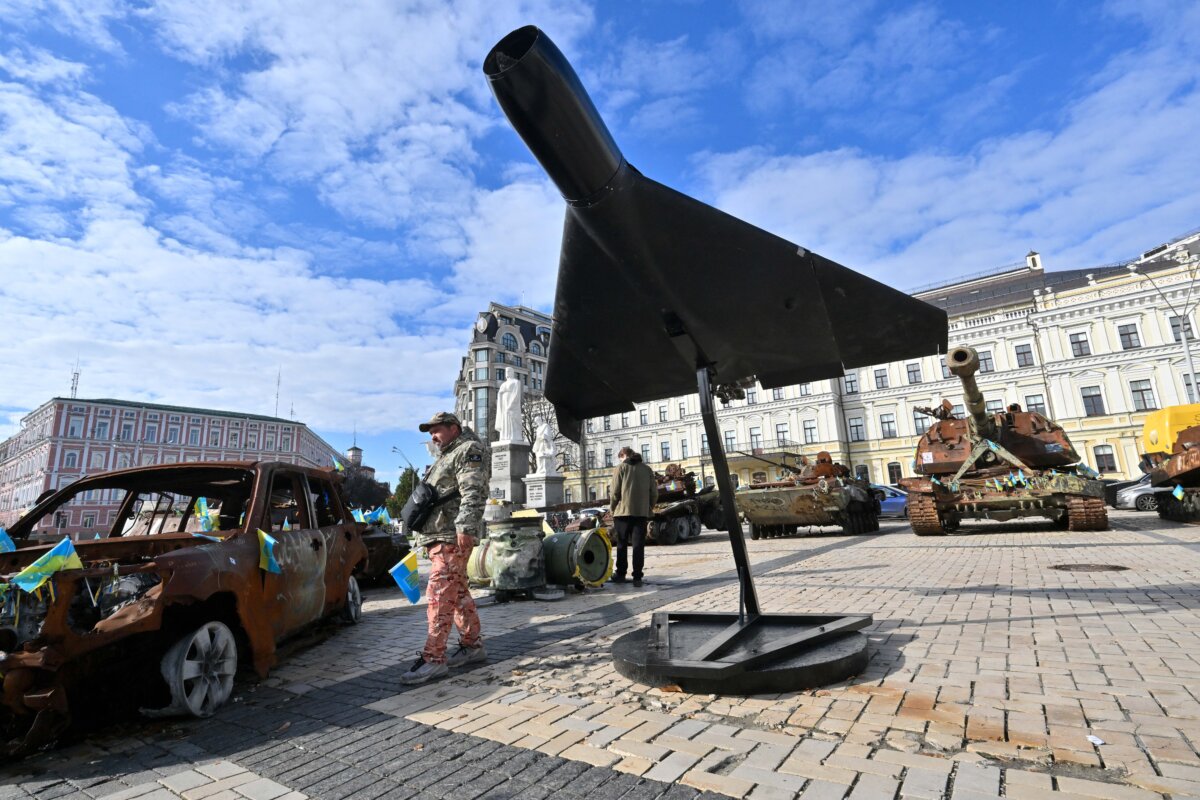
One of the Ukrainian companies that makes interceptor drones that take down Russian-launched Shahed drones is General Cherry.
“We are ready to share them, and we want to share them,” Marco Kushnir, a spokesman for General Cherry, said recently.
Kushnir said they had the capacity to produce tens of thousands of interceptors per month, but he said the decision ultimately depended on the Ukrainian government.
When Russia invaded Ukraine in 2022, Kyiv banned the export of military goods. Manufacturers say they could export interceptors to the Middle East or elsewhere without compromising the country’s defenses.
Demand for Patriots
Kyiv says it is short on U.S.-made Patriot systems, which it needs to intercept ballistic missiles.
When Zelenskyy was asked on March 11 what he wanted in return for the deployment of the specialist anti-drone teams in the Middle East, he said he wanted Patriot missiles.
“Our message is very simple,” he said. “We’d like to quietly … receive the Patriot missiles we have a deficit of, and give them a corresponding number of interceptors.”
Lockheed Martin said in a Jan. 8 statement that it produced 600 PAC-3 MSE interceptors for Patriot batteries in 2025, a 20 percent increase from 2024.
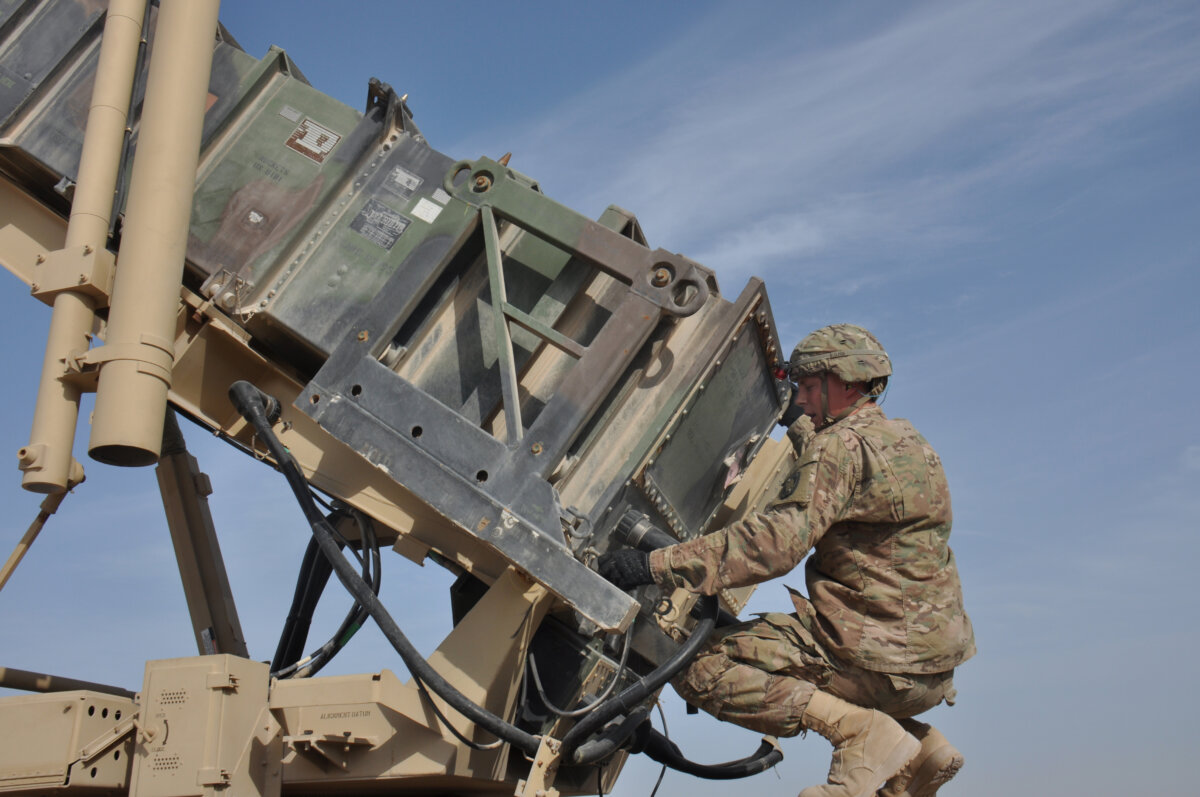
The company said it had signed a seven-year agreement with the U.S. government to increase the number it produced from 600 to 2,000 a year.
Zelenskyy said on March 5 that more than 800 such missiles had been used against Iran in the Middle East in three days, more than Ukraine has held in reserve throughout the four-year conflict with Russia.
Moscow and Tehran have grown increasingly closer over the past decade. They were both allies of the Assad regime in Syria and have helped each other economically and militarily since 2022.
U.S. President Donald Trump spoke with Russian President Vladimir Putin on March 9 to discuss the conflicts in Iran and Ukraine, according to the Kremlin.
Kremlin foreign policy aide Yuri Ushakov said the hour-long phone call between the two leaders was “businesslike, open, and constructive,” according to Russian state-owned news agency TASS.
Zelenskyy told reporters on March 11 that the next trilateral meeting had been postponed but would take place next week. He said that he wanted to discuss the release of more prisoners of war.
On March 10, he said Ukrainian forces had struck a key plant producing missile components in Russia’s border region of Bryansk.
Ukraine’s military said British Storm Shadow missiles were deployed against the Kremniy El factory and posted a video that it said showed explosions and a fire at the plant.
Reuters contributed to this report.
 Friends Read Free
Copy
Facebook
Tweet
Friends Read Free
Copy
Facebook
Tweet