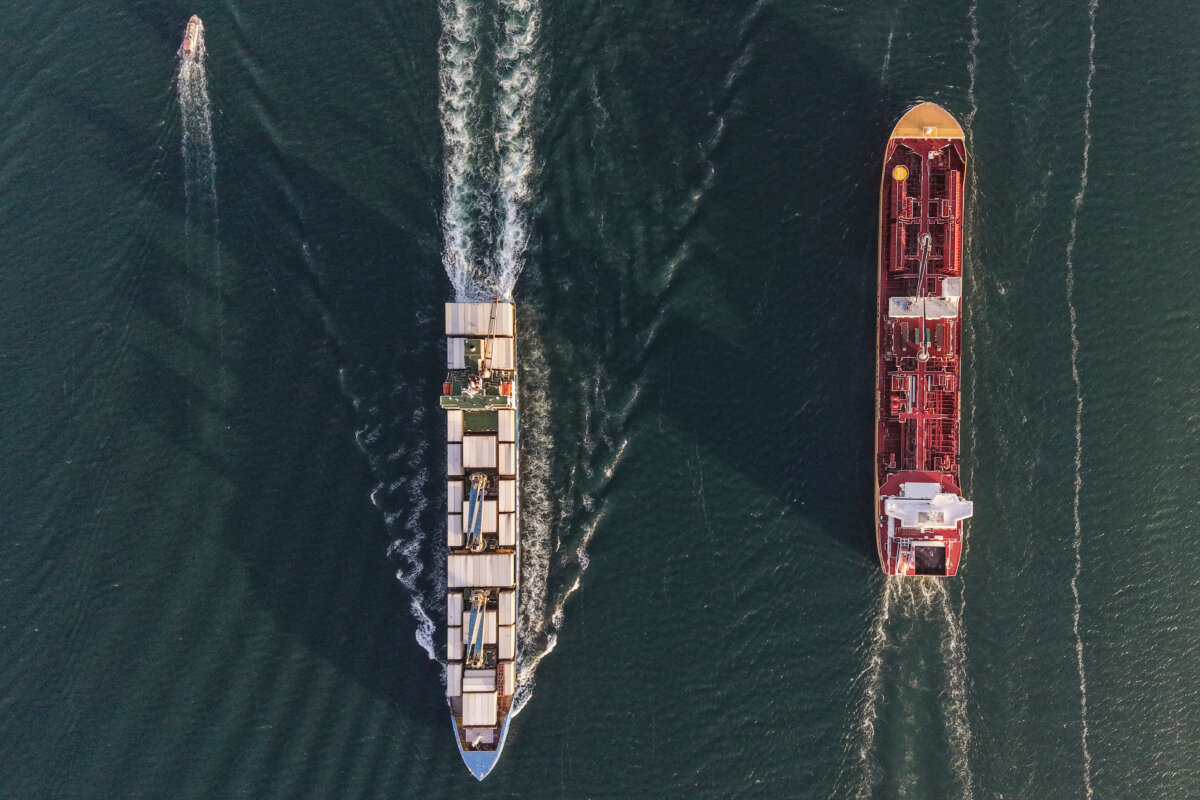

The United States and five Latin American and Caribbean nations issued a joint statement on April 28 backing Panama over China’s retaliatory measures after the Central American nation terminated concessions held by Hong Kong-based CK Hutchison to operate two Panama Canal ports.
In the statement, the United States, Bolivia, Costa Rica, Guyana, Trinidad and Tobago, and Paraguay said they were closely monitoring what they described as China’s “economic pressure” targeting Panama and its actions affecting Panama-flagged vessels.
“Panama is a pillar of our maritime trading system, and as such must remain free from any undue external pressure,” they stated. “Any attempts to undermine Panama’s sovereignty are a threat to us all.”
The countries accused China of attempting to “politicize maritime trade and infringe on the sovereignty of the nations” in the hemisphere and affirmed their support for Panama.
“The sovereignty of our hemisphere is non-negotiable,” U.S. Secretary of State Marco Rubio said in a post on X. “We are deeply concerned by China’s targeted economic pressure after the Balboa & Cristóbal terminals decision. We stand in solidarity with Panama.”
Panama’s Supreme Court ruled in late January that the concessions held by Panama Ports Company, a unit of CK Hutchison, for the Balboa and Cristobal terminals in the Panama Canal were unconstitutional. The ruling followed an audit by Panama’s comptroller, which alleged irregularities in the 25-year extension of the 2021 concession.
The Central American nation later named U.S. subsidiaries Maersk APM Terminals and Mediterranean Shipping Company’s Terminal Investment Ltd. as interim operators of the ports under 18-month contracts.
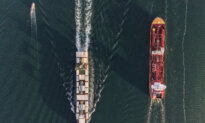
Following the ruling, the Federal Maritime Commission, an independent federal agency regulating the U.S. international ocean transportation system, said on March 26 that China has increasingly detained Panama-flagged vessels “under the guise of port state control.”
The commission said the level of detentions by Chinese authorities was “far exceeding historical norms.”
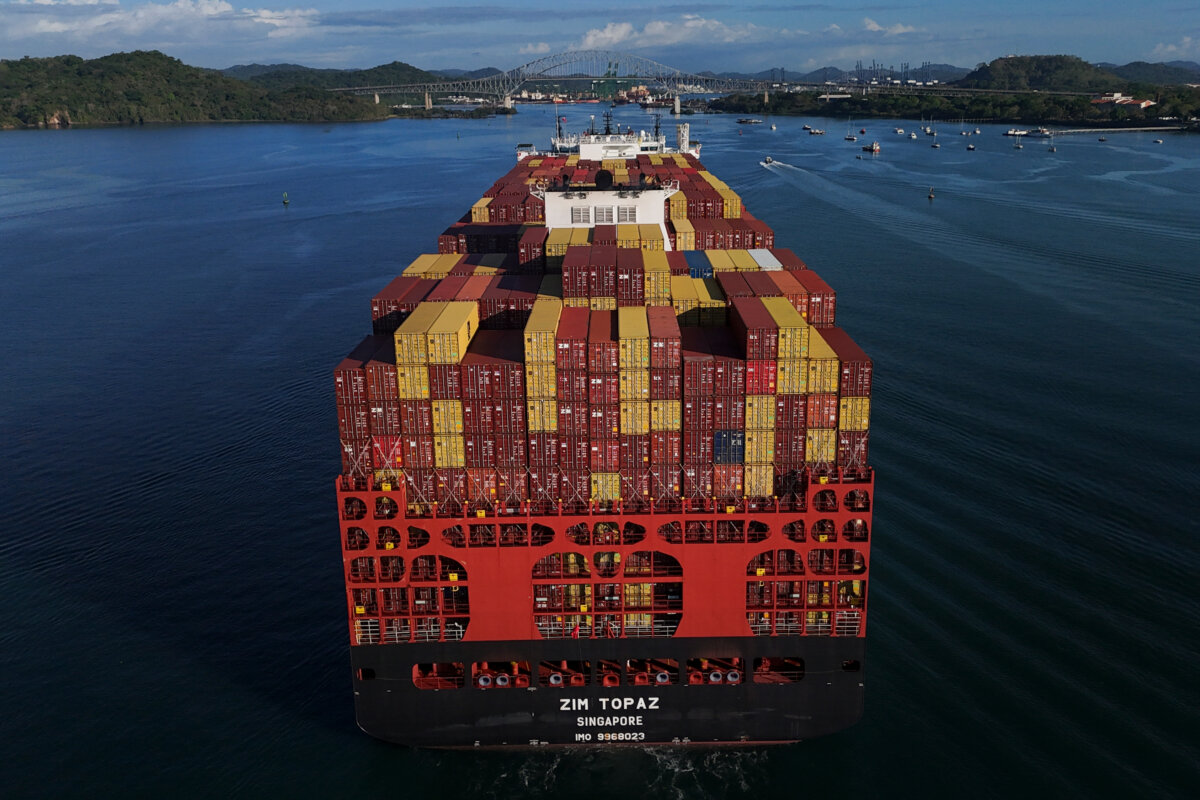
“These intensified inspections were carried out under informal directives and appear intended to punish Panama after the transfer of Hutchison’s port assets,” Laura DiBella, chair of the Federal Maritime Commission, said in a March statement.
“Given that Panama‑flagged ships carry a meaningful share of U.S. containerized trade, these actions could result in significant commercial and strategic consequences to U.S. shipping.”
Rubio said in an April 2 statement that China’s detentions of Panama-flagged vessels raise “serious concerns about the use of economic tools to undermine the rule of law in Panama.”
“Detentions, delays, or other impediments to the movement of vessels undermine the stability of global supply chains, increase costs for businesses and consumers, and erode confidence in the international trading system,” he said.
CK Hutchison has denounced the ruling as unconstitutional and began international arbitration proceedings against the Panamanian government, seeking more than $2 billion in damages, according to the Federal Maritime Commission.
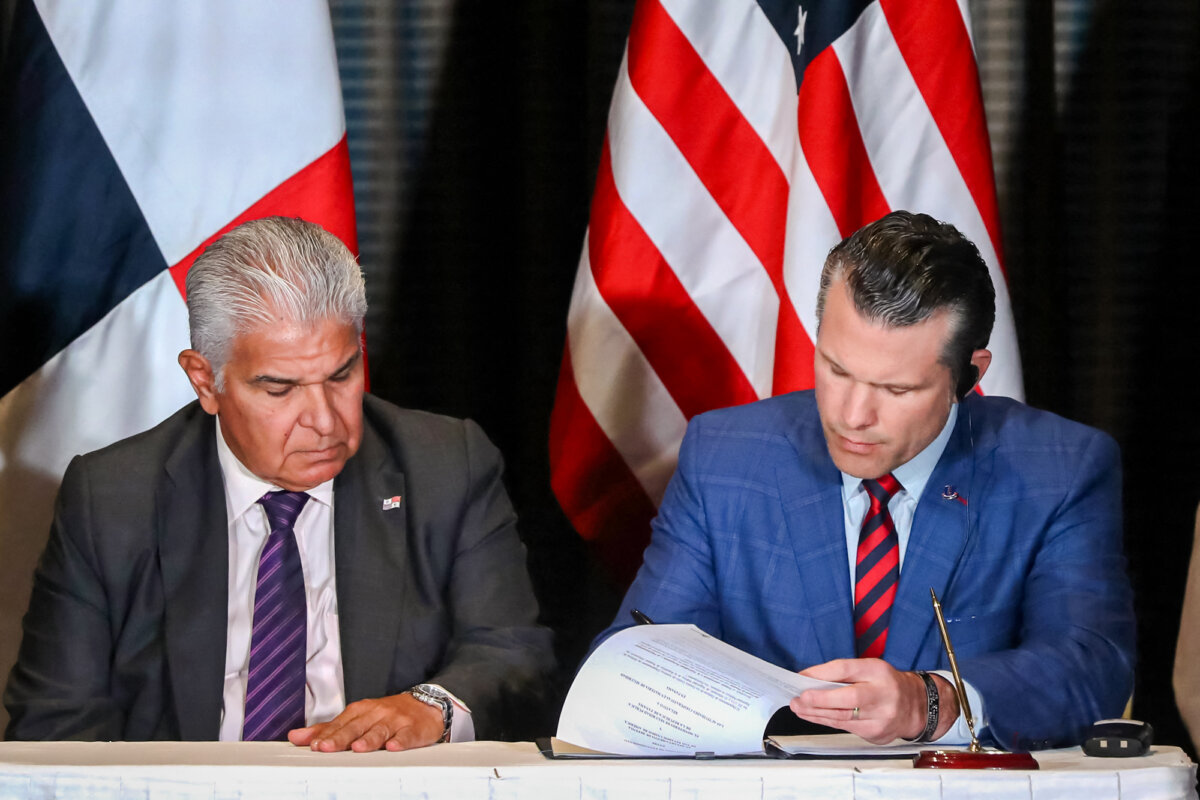
On April 9, U.S. War Secretary Pete Hegseth said he sees the canal as key terrain that Panama would secure together with the United States and not with China.
“We are helping to take back the Panama Canal from communist Chinese influence,” Hegseth said at a press briefing in Panama City.
U.S. and Panamanian officials signed a memorandum of understanding on bilateral security matters in the region that will help expand joint training exercises between the two countries and improve overall interoperability between their military forces, Hegseth said at the time.
The agreement will also reestablish a rotational joint presence at a handful of previously operational U.S. military installations, including Rodman Naval Station, Howard Air Force Base, and Fort Sherman.
Hegseth noted that jungle operations would be revived at an operations center, allowing U.S. and Panamanian troops to train side by side.
Last year, U.S. President Donald Trump said he wanted to return the Panama Canal—one of the world’s most strategic shipping routes, carrying about 5 percent of global trade—to U.S. control.
“American ships are being severely overcharged and not treated fairly in any way, shape, or form, and that includes the United States Navy,” Trump said on Jan. 20, 2025, during his second inaugural address. “And above all, China is operating the Panama Canal.”
 Friends Read Free
Copy
Facebook
Tweet
Friends Read Free
Copy
Facebook
Tweet