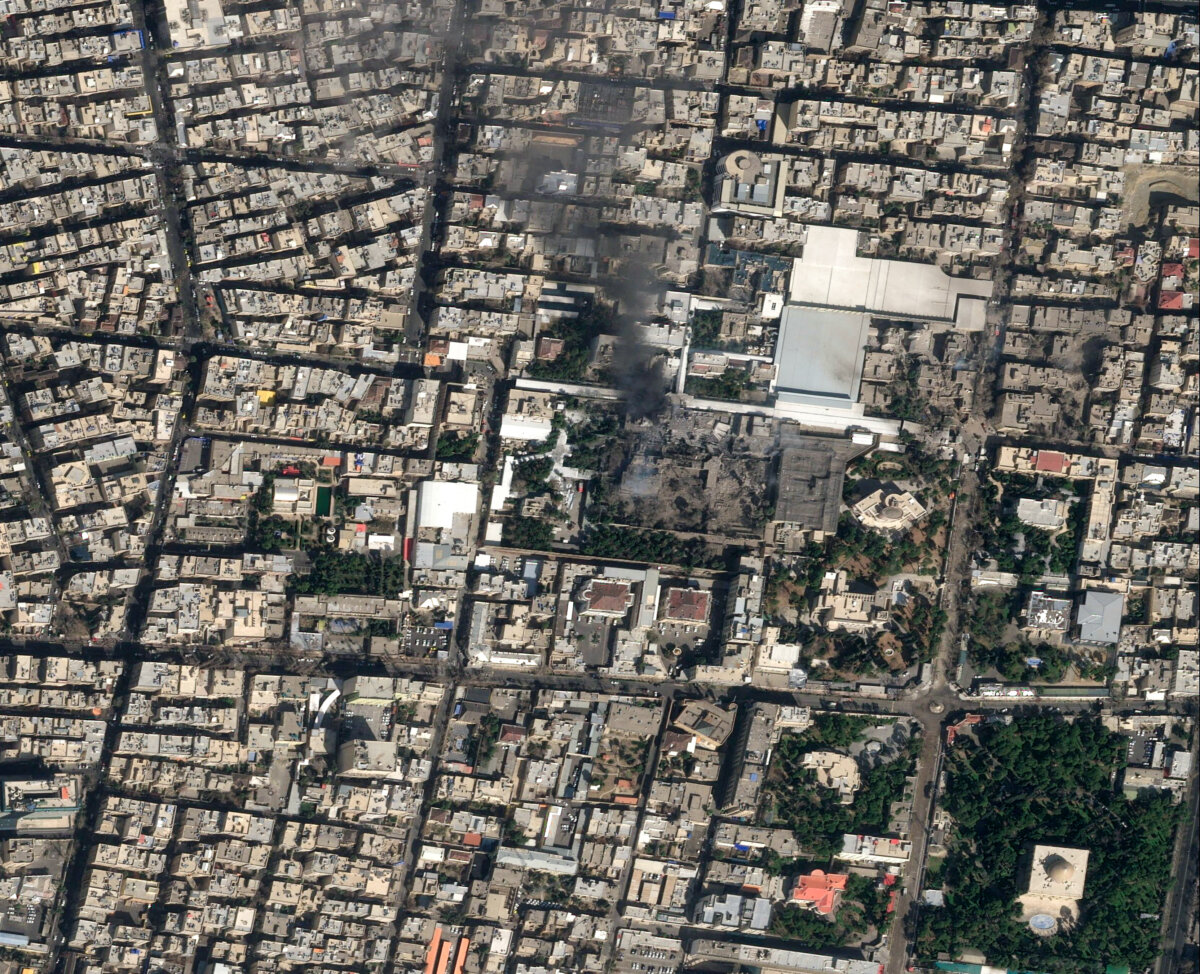

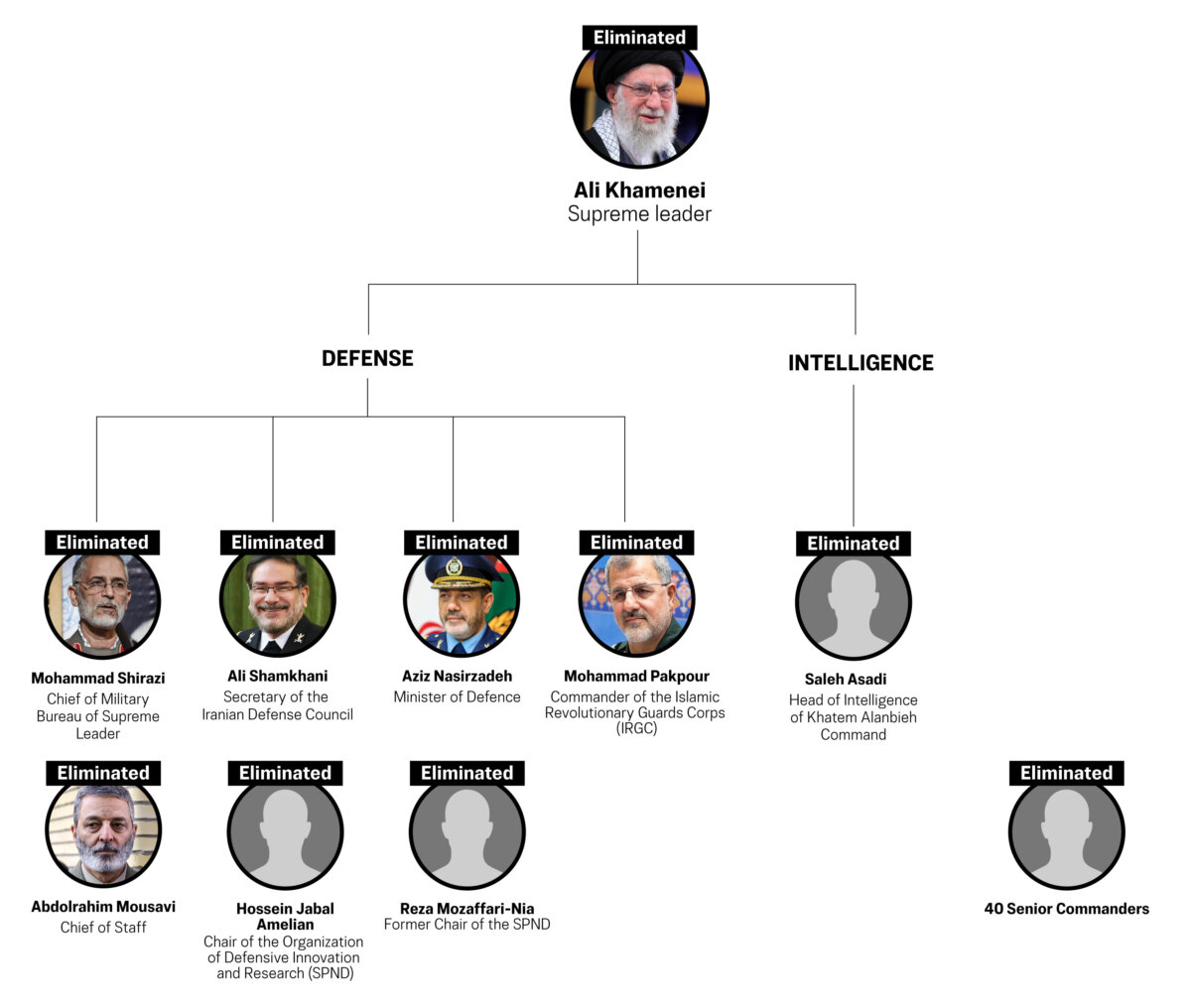
United States and Israeli forces carried out a combined strike on Feb. 28 that killed Iranian leader Ali Khamenei and took out the senior military leadership of the Persian state.
The strike was part of the opening salvo of a larger combined operation, dubbed Operation Epic Fury by the U.S. government and Operation Roaring Lion by Israel.
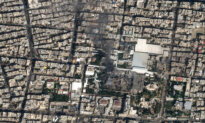
The 86-year-old Khamenei was killed in strikes targeting his leadership compound and residence in downtown Tehran.
Lt. Gen. Abdolrahim Mousavi, who was chief of the general staff of the Iranian Armed Forces, and Iranian Defense Minister Maj. Gen. Aziz Nasirzadeh were killed alongside Khamenei, according to Iranian state media.
The joint U.S. and Israeli operation also targeted a gathering of dozens of leaders at an Iranian Defense Ministry compound and a second gathering at a compound hosting Iranian intelligence leadership.
Forty-eight Iranian leaders were killed in the opening strike, U.S. President Donald Trump told Fox News on March 1.
In a Feb. 28 post on Truth Social, Trump said the United States and Israel worked closely and employed sophisticated tracking technologies to track Khamenei and other Iranian leaders.
“There was not a thing he, or the other leaders that have been killed along with him, could do,” Trump wrote.
The CIA had been tracking Khamenei’s location for months, according to a person familiar with the operation who was not authorized to comment publicly and spoke to the Associated Press on the condition of anonymity. The New York Times was the first to report the active U.S. intelligence effort to track the Iranian leader.
In his social media post, Trump urged the Iranian people to seize the opportunity afforded by the operation.
“This is the single greatest chance for the Iranian people to take back their Country,” Trump wrote.
The U.S. president said Iranian military and police forces are seeking immunity, and he expressed hopes that they will “peacefully merge with the Iranian patriots” to bring Iran back to “the Greatness it deserves.”
The Decision Point
Trump began amassing U.S. strike capabilities near Iran in January and had repeatedly threatened military action if Tehran didn’t submit to new security constraints.
Iranian leaders, in turn, threatened to respond forcefully to any attacks on the Persian state.
Trump ultimately decided to carry out the attack after a round of negotiations in Geneva between U.S. and Iranian representatives. The Geneva talks concluded on Feb. 26 without a diplomatic breakthrough, although Omani Foreign Minister Badr al-Busaidi, who was mediating, said the parties would report back to their respective capitals and return for a round of technical talks the next week.
In an interview with CBS News on Feb. 27, hours before the strikes, al-Busaidi said the Iranian side was willing to give up its enriched uranium and submit to an inspection program.
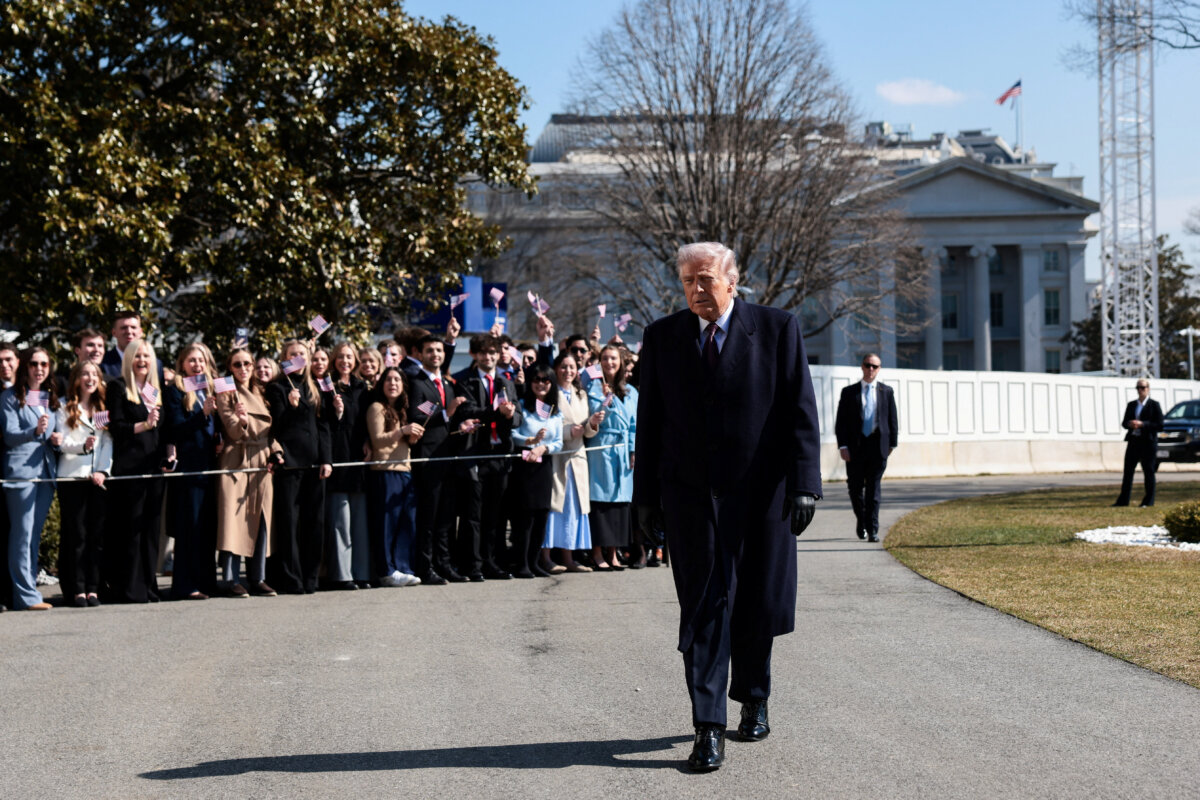
During a stop in Texas on Feb. 27, Trump told reporters, “We’re not happy with the negotiation.”
When asked how much longer he’d let negotiations play out, the president declined to provide specifics.
“We’re negotiating right now, but they’re not getting to the right answer,” Trump said.
At 3:38 p.m. ET on Feb. 27, Trump gave the order to proceed with the attack, according to Chairman of the Joint Chiefs of Staff Gen. Dan Caine.
“The President directed, and I quote, ‘Operation Epic Fury is approved. No aborts. Good luck,’” Caine told reporters at a Pentagon press briefing on March 2.
In a background press call on Feb. 28, a senior Trump administration official said the United States had indications that Iranian forces were at a heightened state of readiness and perhaps prepared to attack preemptively or simultaneously with U.S. strikes.
Strikes in Broad Daylight
Rather than carrying out strikes under the cover of darkness, U.S. and Israeli forces started the operation at about 9:45 a.m. local time.
The timing of the attack may have also been influenced by a unique opportunity to target dozens of senior Iranian officials in one fell swoop.
“We launched the operation by seizing an operational opportunity, striking simultaneously two different gatherings of senior regime officials,” an Israeli military spokesman said on Feb. 28.
Caine said a salvo of sea-launched Tomahawk cruise missiles formed the first wave of the U.S. attack, striking Iran from the south.
Hundreds of land and carrier-launched U.S. fighter jets and electronic attack aircraft followed the initial salvo by firing their own stand-off weapons into Iran. Ground-based U.S. forces also launched stand-off weapons in the opening hours of strikes.
The U.S. Central Command (CENTCOM) U.S. forces struck more than 1,000 Iranian targets. Trump said U.S. forces sank nine Iranian warships and largely destroyed Iran’s naval headquarters.
Along with Iranian leadership, CENTCOM said U.S. and Israeli forces targeted Islamic Revolutionary Guard Corps command facilities, air defenses, airbases, and drone and missile launch sites.
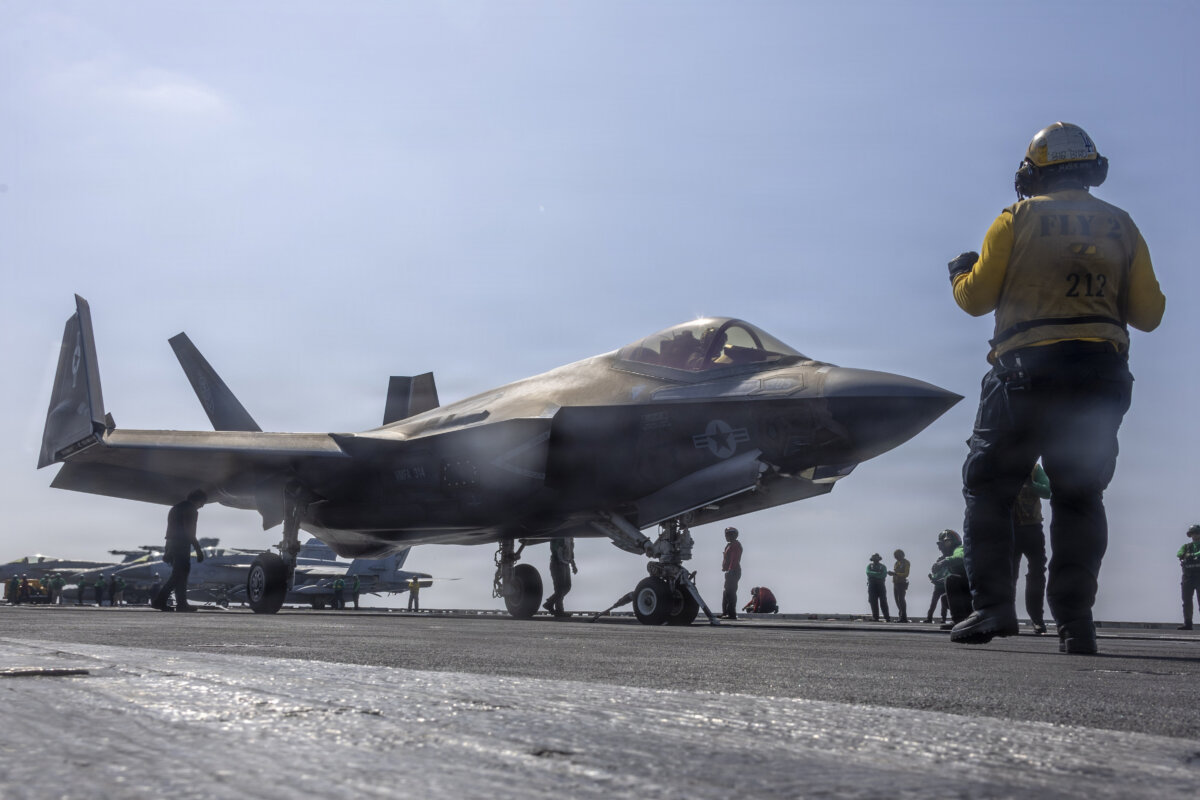
The Israeli military said more than 200 of its jets participated in the opening hours of the joint operation, launching more than 500 munitions.
Although U.S. and Israeli forces have taken out Iran’s military leadership and substantially defanged its offensive capabilities, Iranian forces have responded with ongoing barrages of drones and missiles targeting Israel and other countries hosting U.S. forces throughout the Middle East.
CENTCOM has confirmed that three U.S. military personnel have been killed and five more have been seriously injured. Several others have sustained lesser shrapnel injuries and concussions.
Israeli authorities have reported that 11 people have been killed in Iranian strikes on Israeli territory since the start of the hostilities.
U.S. and Israeli forces have continued to conduct strikes.
Emel Akan, T.J. Muscaro, and The Associated Press contributed to this report.
Correction: A previous version of this article misstated the time U.S. and Israeli forces started their operation in Iran on Feb. 28. The Epoch Times regrets the error.
 Friends Read Free
Copy
Facebook
Tweet
Friends Read Free
Copy
Facebook
Tweet