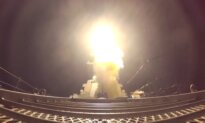
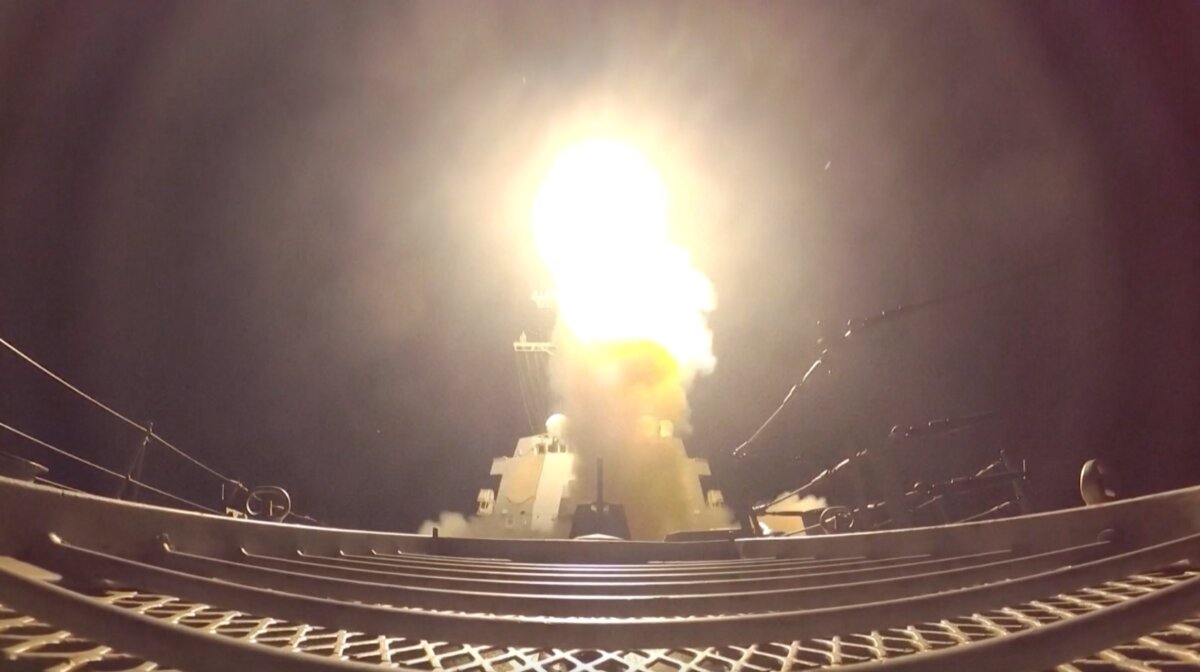
U.S. forces launched new strikes against Iran on July 12, U.S. Central Command (CENTCOM) announced in a social media post.
CENTCOM said the attacks that started Sunday 5 p.m. ET, or early Monday in Iran—directed by President Donald Trump—were aimed at degrading the Iranian regime’s “ability to attack civilian mariners and commercial ships freely transiting the Strait of Hormuz.”
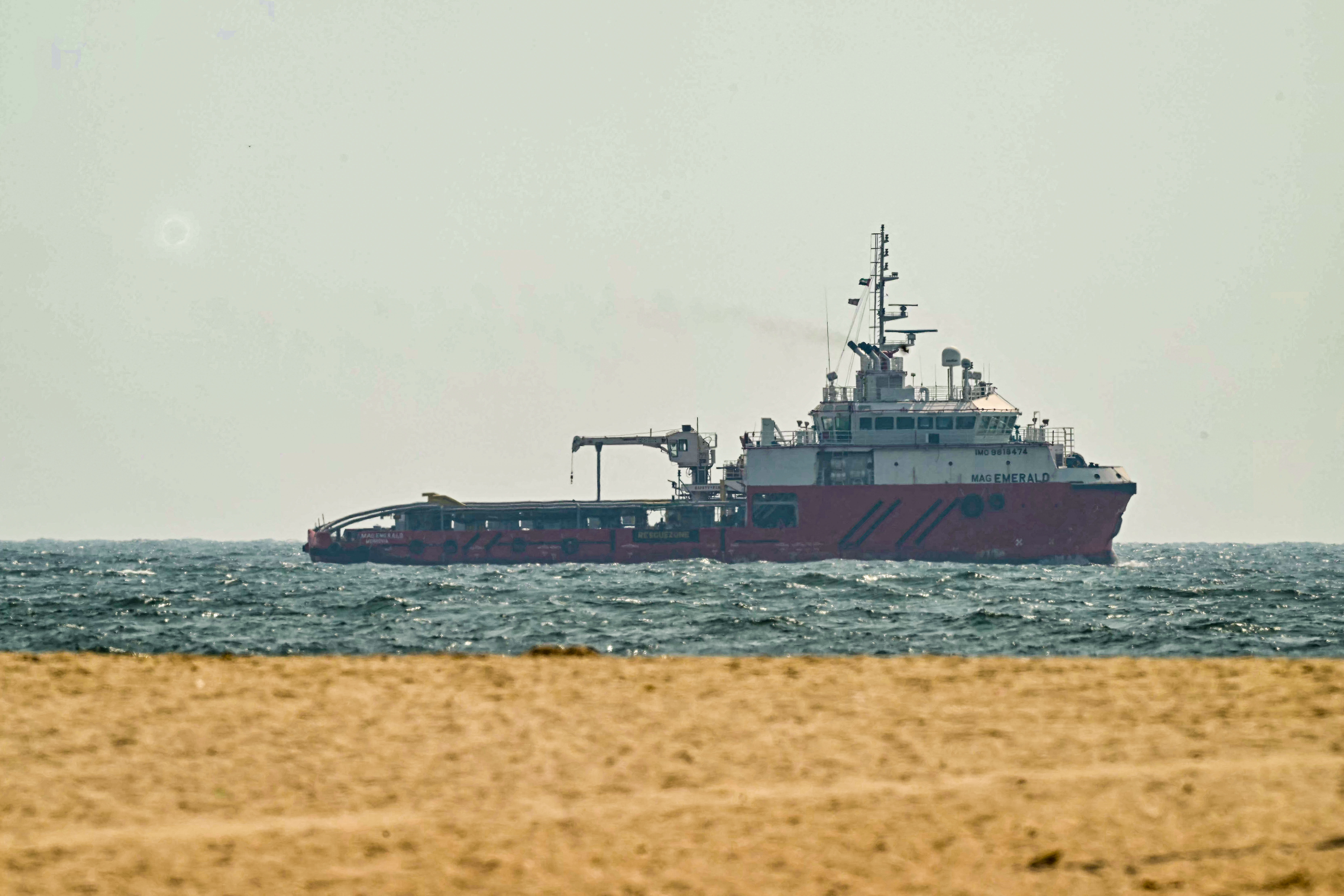
The new round of strikes comes after multiple countries in the Middle East blamed Iran for drone and missile attacks against them on Sunday local time following earlier U.S. strikes on Iran for its striking a Cyprus-flagged container ship transiting the strait.
Bahrain reported further rounds of missile alert sirens on Monday as Iran retaliated over the latest round of U.S. strikes.
CENTCOM said in an update Sunday night that its latest round of strikes was complete, “hitting dozens of targets at multiple locations with precision munitions to degrade Iran’s ability to continue attacking international shipping flowing through the Strait of Hormuz.”
Earlier on July 12, the Qatari Ministry of Defense said that its defensive systems intercepted ballistic missiles that were fired at the Gulf nation, although few details were provided. The country’s foreign ministry also said it condemns Iranian attacks on its territory as well as attacks against Jordan, Bahrain, the United Arab Emirates, Oman, and Kuwait.
The Qatari Foreign Ministry said in a post on X that it has the “full right to respond” to Iranian attacks, and it said that it could “take all necessary measures to protect its sovereignty, security, territorial integrity, and citizens.”
Separately, the ministry of defense for the United Arab Emirates reported on July 12 that it detected missile threats outside the country’s borders and is ready to respond.
In Jordan, the defense ministry said on July 12 that three missiles that originated from Iran fell across locations in the country and that no casualties were confirmed.
Kuwait’s army told local media on the same day that land border installations in the northern part of the country were damaged in attacks, while offshore drilling platforms owned by Kuwait were targeted in a drone attack. One worker on the platform was injured, the army added.
In Oman, state-run media reported that its government summoned Iran’s ambassador “following the targeting of sites in the Governorates of Musandam and Al Wusta by unmanned aerial vehicles,” noting that the incidents represent “irresponsible acts.”
The Bahraini Ministry of the Interior wrote on X early on the morning of July 12 that a siren had been sounded, and it urged citizens to “remain calm and head to the nearest safe place.”
Over the weekend, Iran said that the Strait of Hormuz has been closed by its military in response to recent U.S. strikes. However, the U.S. Central Command (CENTCOM) dismissed Tehran’s claims and said the key waterway is open and that traffic is ongoing.
“Iran does not control the Strait of Hormuz,” CENTCOM said in a post on X. “It remains an international waterway. U.S. forces are positioned and prepared to keep it that way.”
The U.S. strikes on the night of July 11 and afternoon on July 12 were the latest in a cycle of attacks and counterattacks as Tehran has attempts to control shipping in the strait, also serving as an escalation in a conflict that started in February but stopped because of a ceasefire that was brokered under the Trump administration.
The renewed strikes have cast more doubt on the future of an interim U.S.–Iranian memorandum of understanding signed in June that sought to reopen the strait and lead to an end of the conflict. While speaking with NBC News on July 12, U.S. President Donald Trump expressed his displeasure with Tehran and described Iranian officials as “sick” and “very evil” individuals.
“We had meetings with them,” he told the outlet’s “Meet the Press.” “They agreed to a deal yesterday, a perfect deal for us. No nuclear, no this, no that, no nothing. They gave up everything. And then after that, they left the room. And then within an hour, they launched a drone at a ship.”
Trump said the United States launched strikes against Iran on the night of July 11.
Iran’s military, in an article published through the semiofficial Islamic Republic News Agency media outlet, confirmed that it targeted U.S. military installations and sites in both Kuwait and Bahrain on July 12, saying that the attacks were in response to recent U.S. military strikes against Tehran’s assets.
 Iran’s Islamic Revolutionary Guards Corps said it launched missiles at the Al Udeid Air Base in Qatar that is used by the U.S. military and that it also launched an attack on U.S. fueling platforms in Oman. The paramilitary force further added that it launched missiles at Jordan in a bid to attack a U.S. base in the country.
In one statement confirming the Oman strikes, the Islamic Revolutionary Guards Corps said that the U.S. military “attempted once again last night to repeat a failed experiment by provoking several vessels to establish an illegal shipping route south of the Strait of Hormuz.”
Trump on July 10 in a Truth Social post warned that the United States would “decimate and destroy” Iran if the regime tried to kill him, saying that 1,000 missiles are “locked and loaded” and aimed at the country if it tries an assassination attempt. On July 11, Iranian leader Mojtaba Khamenei said in a statement that he would avenge the death of his father, Iranian leader Ali Khamenei, who was killed by U.S.–Israeli airstrikes in February.
“Orders have already been given, and the U.S. Military is ready, willing, and able, for a one year period of time, subject to extension, to completely decimate and destroy all areas of Iran,” the U.S. president said.
Jacki Thrapp contributed to this report.
 Friends Read Free
Copy
Facebook
Tweet
Friends Read Free
Copy
Facebook
Tweet