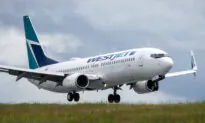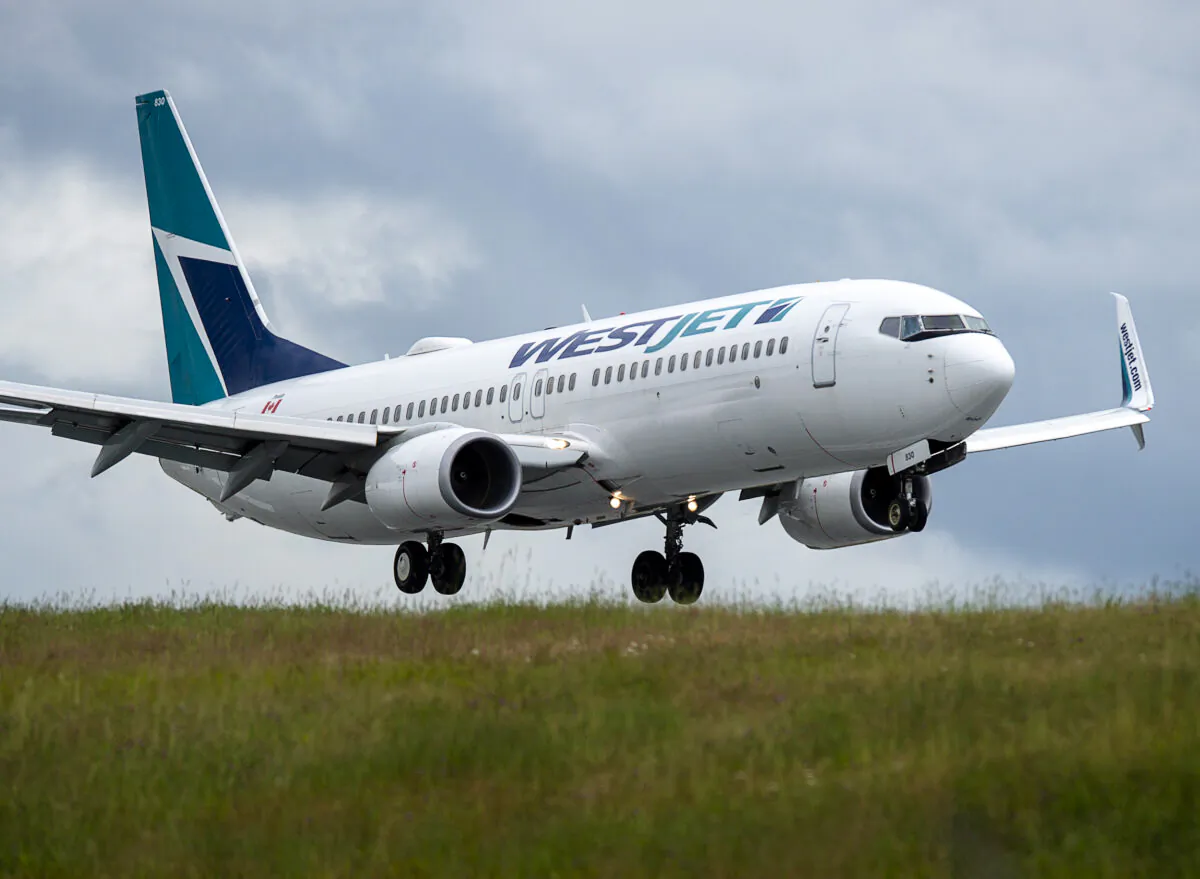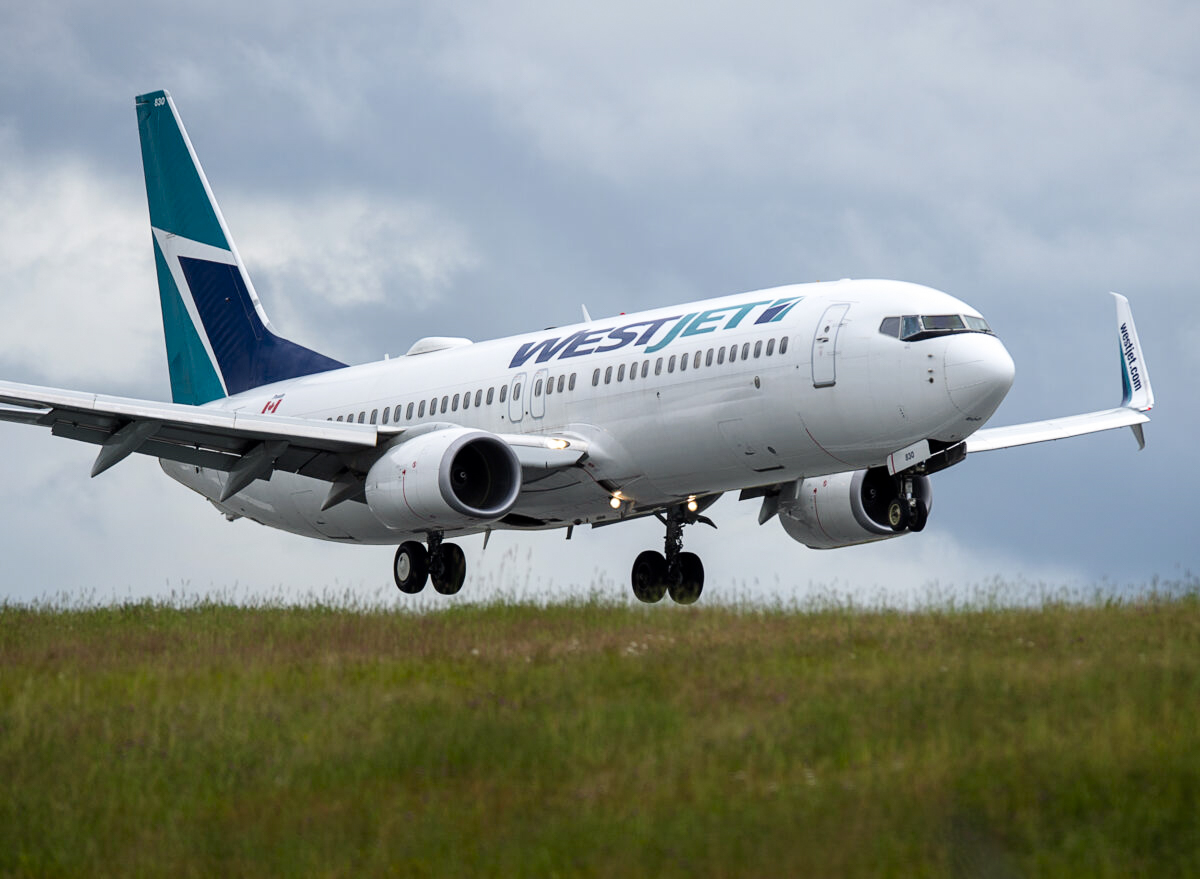

WestJet says it will pause a move to complete the installation of non-reclining seats on its aircraft following criticism by a union, which said the changes will increase “guest frustration.”
The airline announced the updated cabin design for its aircraft in September, a move that included replacing its traditional economy class reclining seats with fixed-back designs.
The changes would offer a new range of seating options in the economy section on its Boeing 737-8 MAX and 737-800 aircraft, and would help “preserve personal space,” the Calgary-based airline said in a Sept. 23 press release.
WestJet said in a statement provided to The Epoch Times that after the new cabin layout—which includes the non-reclining seats—is completed in about half of its all-economy fleet by Dec. 15, the initiative will be put on hold.
“Following December 15, we will pause the reconfiguration work to ensure our aircraft are available to support our operations during the peak winter travel season,” the statement said.
The company said it would be monitoring passenger feedback and the “operational performance” of the reconfigured aircraft, adding it expected to resume making the changes on remaining aircraft in the spring.
WestJet vice-president Robert Antoniuk told staff in an internal memo obtained by The Canadian Press that the updates would only be done on 22 planes “for the time being,” noting the company would be reviewing feedback from staff and passengers.
The decision comes after representatives of both the flight attendants and pilots unions, along with company executives, tested the new seats in a scheduled flight from Toronto to Calgary, according to the memo. The goal of the trip was “to gather a shared understanding of the product, the space and the experience,” Antoniuk wrote.
The WestJet section of the Canadian Union of Public Employees compared the reduced leg room to “ultra-low-cost carriers” like Spirit, Wizz Air, and Frontier in a recent bulletin to members. The union said the changes would be difficult for guests with “varying mobility,” and those travelling with car seats or pets.
The union said the change would raise the risk of “guest frustration” and provide less opportunity for crew members to get rest on board.
The pause on the work on the airline’s 189-plane fleet comes as the holiday travel season begins, ensuring the airline has its full fleet available for Christmas travellers.
Change in Cabin Seating
The company said that in the new cabin design, where passengers sit on the plane will determine how much leg room they have, ranging from “less space at the back to more space near the front of the cabin.”
WestJet said the exit row seating in the economy cabin offers the most legroom for passengers.
The changes also include upgraded premium seats and more “extended comfort” seating options, with 36 seats that have extra legroom and are separated from the economy cabin by a cabin divider, the company said.
The “extended comfort” seating option available for economy class travellers was announced in April as a replacement for its “preferred seating” status. The updated seating option offers three to six inches of extra legroom and priority boarding, as well as early access to overhead bin storage.
The cost of the new seating will vary depending on the flight, WestJet said at the time.
WestJet also confirmed that both the extended comfort and premium seats recline.
All new seats have an “ultra slim-line” design, allowing the airline to incorporate an additional row of seats into its new cabin design, something the airline says will result in lower ticket prices.
The new cabin design and seat changes were announced about a year after WestJet announced its “no-frills fare,” called the UltraBasic.
Jennifer Cowan and The Canadian Press contributed to this report.
 Friends Read Free
Copy
Facebook
Tweet
Friends Read Free
Copy
Facebook
Tweet