
News Analysis
In just the past week, the United States played a key role in thwarting a potential school attack in Nova Scotia, in monitoring Montreal-bound commercial planes amid a suspected threat, and in shutting down an Iranian online tool of transnational repression that used Ontario domain registrations.
While these events weren’t linked, they do share a theme: In each case, the United States leveraged its security and military capabilities to help make Canada safer. It’s a pattern Canada’s security veterans have long warned about, highlighting the reliance on an ally’s warnings about threats on our soil instead of having Canadian agencies detect them first.
RCMP and Canadian military intelligence veteran Scott McGregor says that while it’s normal that Canada benefits from U.S. security actions, given the close proximity of the two countries and America’s greater capability in security issues, Canada should be cautious not to give in to “complacency.”
“The dependency itself is understandable. The neglect is not,” McGregor said in an interview. McGregor is co-author of the book “The Mosaic Effect: How the CCP Started a Hybrid War in America’s Backyard,” and has been warning that many of the alerts about Chinese Communist Party-related fentanyl and money-laundering activity in B.C. have been coming from U.S. agencies rather than from Canadian officials.
Attempted School Attacks
Information coming from abroad in recent days may have helped avert a new school tragedy, only weeks after the mass shooting at a school in Tumbler Ridge, B.C.
Police in Manitoba and Nova Scotia announced last week they arrested two youths who were allegedly planning attacks against their schools. The RCMP in Manitoba said it was alerted by Interpol, while the Bridgewater Police Service in Nova Scotia said it received a tip from Interpol and the FBI.
The youths, aged 14 and 15, had allegedly been planning online to conduct simultaneous attacks at their schools, according to investigators.
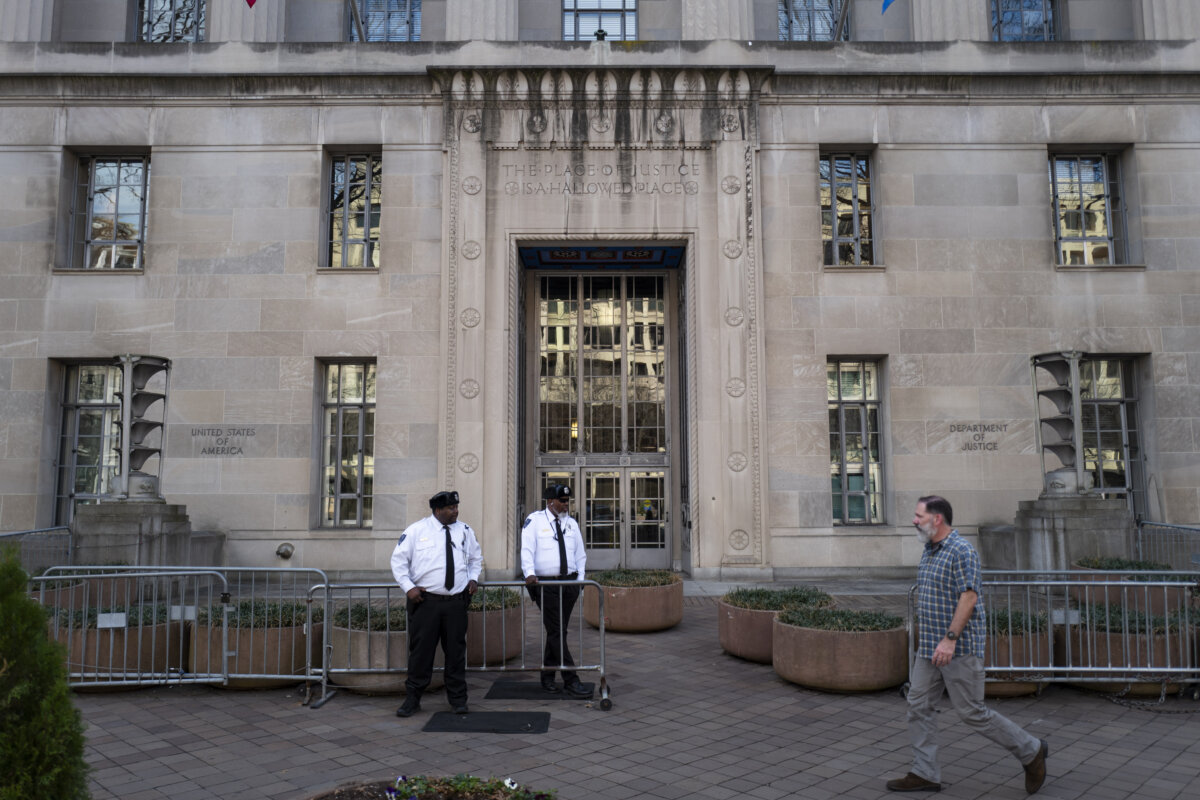
In another U.S.-led action impacting Canada, the U.S. Department of Justice (DOJ) on March 19 announced it had seized four internet domains allegedly being used by Iran’s intelligence service for hacking and transnational repression.
The DOJ said two of the domains were registered in Toronto. A death threat with a $250,000 bounty originating from the Iranian operation had targeted Goldie Ghamari, a former Ontario MPP and outspoken critic of the Iranian regime. She thanked the United States for the seizure of the domains, saying on social media, “Thank you DOJ. Thank you President Trump. God bless America.”
Fighter Jets Escort
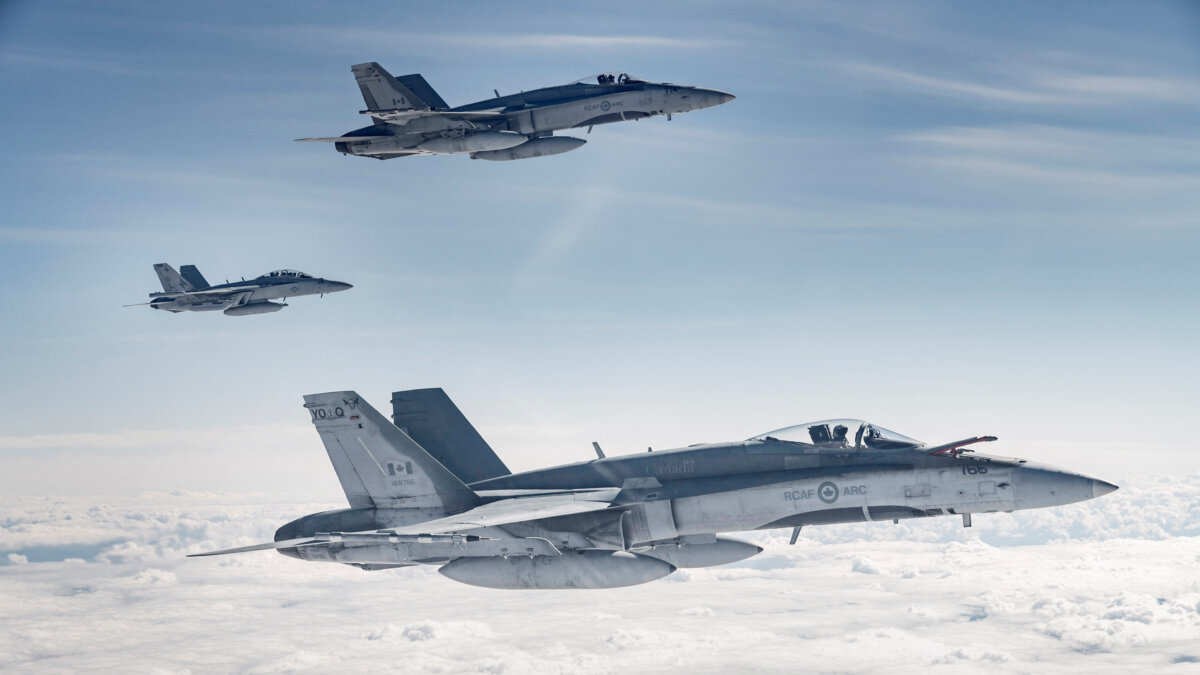
Another incident last week that involved U.S. security capabilities was the monitoring of Montreal-bound commercial planes.
The deployment of fighter jets to intercept foreign aircraft—such as those from Russia—is not uncommon under the North American Aerospace Command (NORAD), but escorting commercial planes is less routine.
What was initially deemed a potential bomb threat ended with a man arrested on fraud charges at the Montreal-Trudeau International Airport on March 18. The incident caused some flight delays but was not related to national security, according to the RCMP.
NORAD chief U.S. Air Force Gen. Gregory Guillot told the U.S. Congress last week that NORAD conducted 16 intercepts of Russian aircraft near U.S. and Canadian airspace last year, and four so far this year.
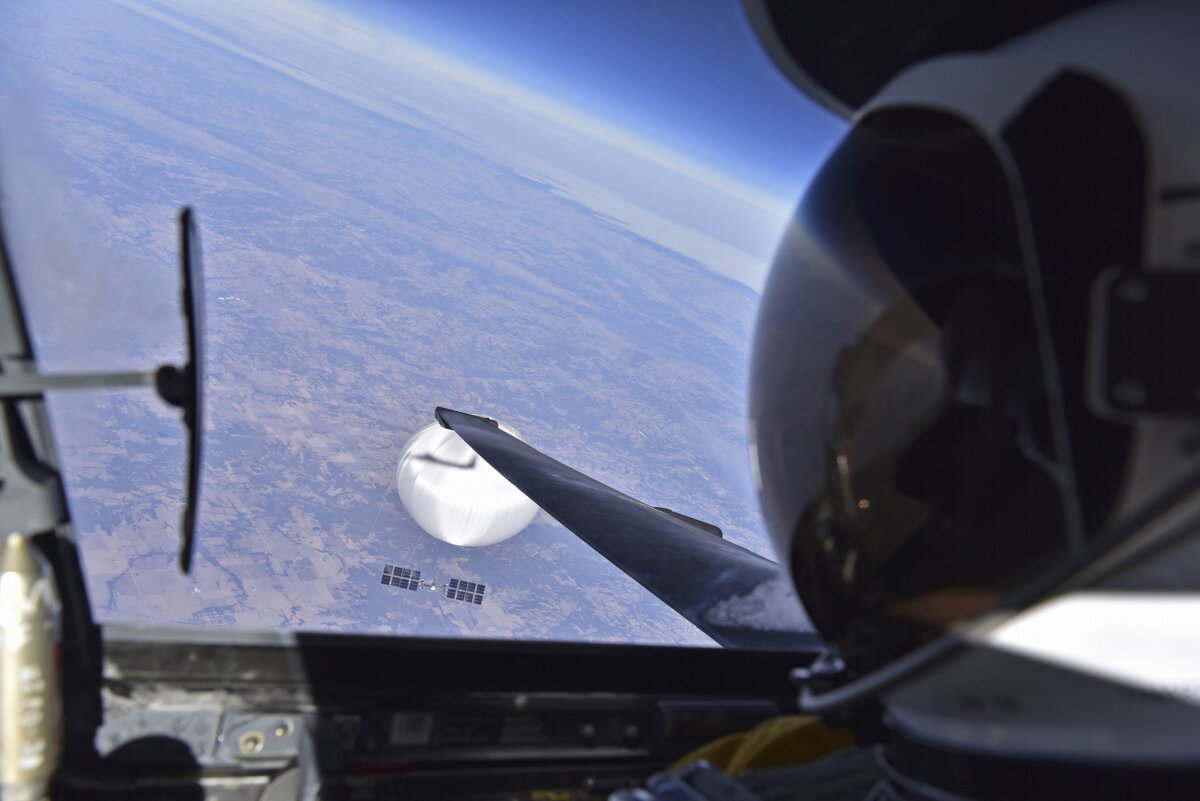
In some cases, U.S. fighter jets have responded to incidents in Canadian airspace. That was the case in 2023 when an American F-22 downed a suspected balloon over the Yukon. Authorities in Ottawa said the Canadian CF-18s had been delayed by freezing rain.
Security Cooperation
In an interconnected world full of multifaceted threats, effective cooperation among allies is key.
The recent events are but a sliver of the exchanges and cooperation that take place between Canadian and American security and military agencies.
Senior Canadian officials say that security cooperation between the two neighbours has remained robust, even while diplomatic tensions over trade persist between the two nations.
“There is no daylight between us,” Defence Minister David McGuinty said in late 2025. In February, a senior intelligence official said that Canada and the United States are working in “lockstep.”
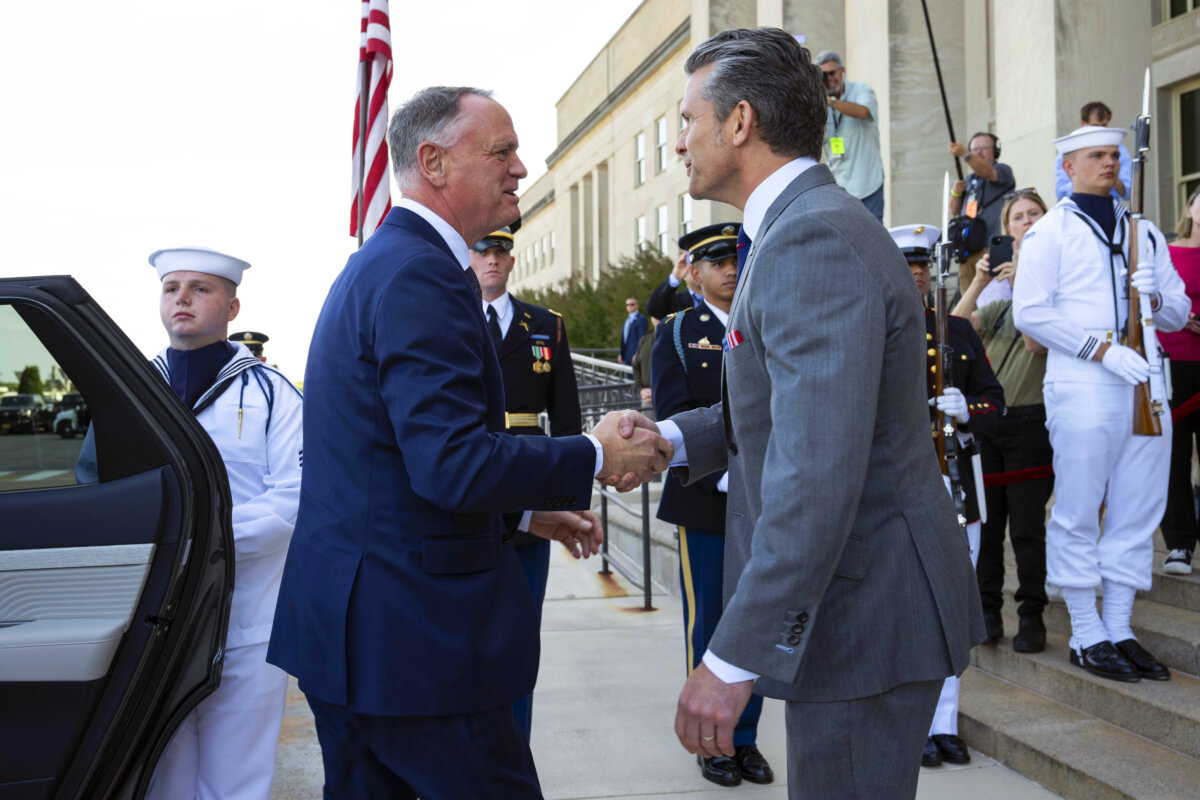
While the North American neighbours are keeping up their traditional cooperation on security, Trump has been a regular critic of Canada’s security posture. The president has accused Canada of having a weak border and military.
U.S. Vice President JD Vance has expressed a similar sentiment, saying earlier this month that Canada has taken advantage of the United States in a “couple different ways” and for “far too long,” with his country having to “subsidize” Canada’s military and security. He added that Canada needs to have more “self-sufficiency.”
Facing the threat of tariffs in late 2024 over Trump’s concerns about border security and drug trafficking, the Liberal government began taking various measures to bolster security. First came a $1.3 billion border plan, then specific pieces of legislation to boost security at the border.
On defence, Prime Minister Mark Carney announced shortly after winning the 2025 election that Canada would meet the NATO defence spending target of 2 percent of GDP in the current fiscal year to “ensure our defence never becomes dependent on others again.”
Canadian veterans in law enforcement and the military say that Canada does indeed depend on the United States for aspects of its security.
“I’d like to say that they’ve overstated it in the U.S., but they haven’t,” RCMP veteran Gary Clement told The Epoch Times in an interview. Clement is a former national director of the RCMP’s proceeds-of-crime program and current president of the Clement Advisory Group.
He said it’s normal for Canada to receive intelligence from allies like the United States as part of the Five Eyes security partnership, which also involves Australia, New Zealand, and the United Kingdom. But Canada shouldn’t rely on the United States to provide information that “our own agencies should have gotten in the first place,” Clement said.
National Police Force
Clement said that part of making the RCMP more capable of dealing with issues such as foreign interference and transnational organized crime is ensuring it is more focused on national priorities.
The RCMP is the federal police force but it serves as the front-line police service in many jurisdictions across the country.
“What will be sacrificed, oftentimes, is federal policing, and that’s the biggest mistake that can be made,” he said.

Public Safety Minister Gary Anandasangaree has defended the RCMP’s involvement in contract policing, saying the national police force is capable of handling both national law enforcement and local responsibilities.
“We can do a very effective federal policing model and still do contract policing with the provinces,” Anandasangaree said on March 23 following a report from the auditor general the same day about police recruitment and personnel shortfalls.
To improve efforts against criminal activity, Clement also said there should be a dedicated prosecutorial body and judiciary specialized in transnational organized crime.
“Our inability to take on not just transnational or organized crime, but foreign interference—the fact we don’t have a strong foreign registry yet, the fact we don’t have a RICO type statute—all of these things put Canada behind the eight ball,” Clement said. RICO statutes refer to the Racketeer Influenced and Corrupt Organizations Act in the United States, a federal law designed to take down crime bosses who may be hard to link back to criminal activity.
Parliament passed a bill in June 2024 to implement a foreign influence registry, but it has yet to be established. Ottawa has recently proposed appointing Anton Boegman, a former B.C. chief electoral officer, as the commissioner overseeing the registry.
Facing the Threat of ‘Hybrid Warfare’
Intelligence veteran McGregor says that beyond the criminal cases Canada needs to respond to, it should also be better prepared in confronting the risks posed by broader “hybrid warfare” efforts by regimes such as the Chinese Communist Party.
“Hostile states, proxies, and transnational criminal actors exploit Canadian openness, weak enforcement, and political hesitation to undermine the West through Canada,” McGregor said.
He noted that Canada has taken some additional steps recently to boost national security, including reinforcing its military posture in the Arctic, hardening the border, and building industrial resilience.
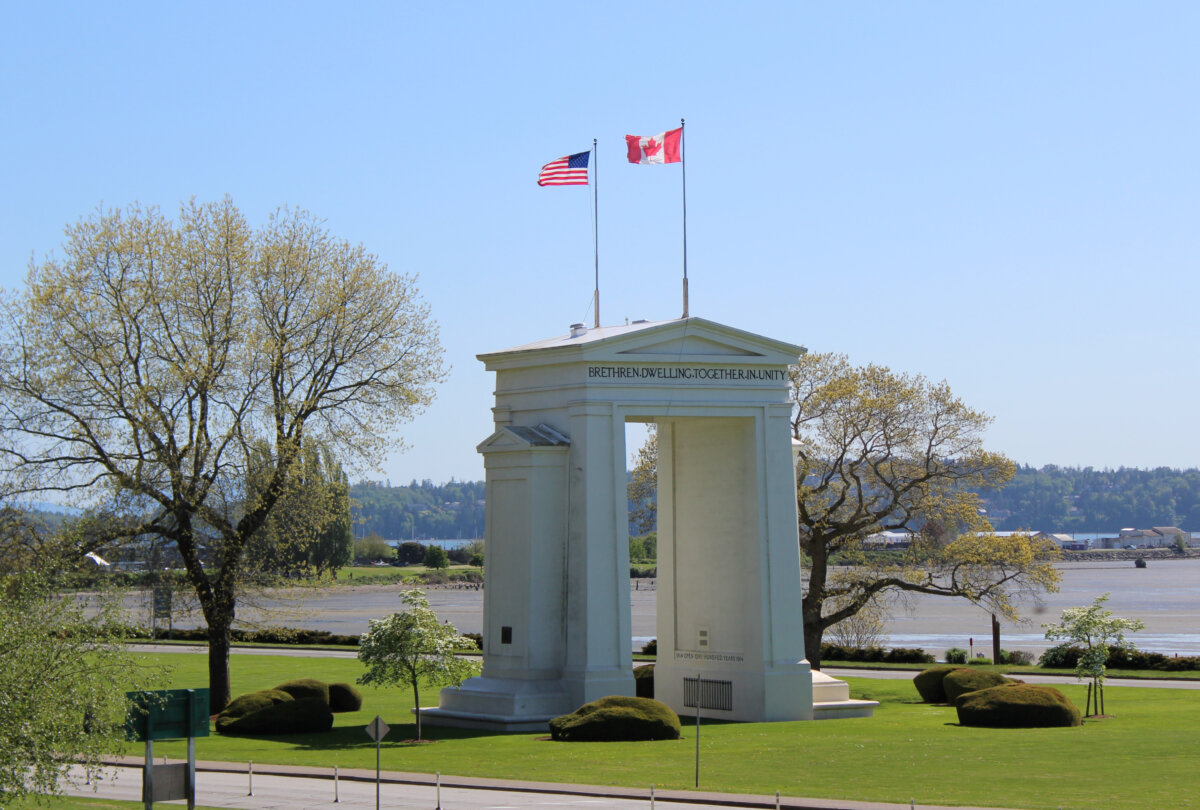
But McGregor said Canada needs to further shore up its capabilities when it comes to counterintelligence and economic security.
As well, he said, Canada should treat its relationship with the United States as “foundational.” He said this doesn’t mean taking U.S. security capabilities as a “substitute for Canadian effort,” but rather as a crucial partnership in confronting the threat environment.
As part of this effort to boost relations with the United States, McGregor said Canada shouldn’t be sending the signal that it is “drifting toward a strategic alignment with China.”
Carney announced a new “strategic partnership” with China during his visit to Beijing in January, which includes a secret deal on law enforcement cooperation.
“If the defence relationship with the United States is weakened, the damage is not only military,” McGregor said in commenting on the larger aspect of defence cooperation.
“It is economic, industrial, political, and strategic. Continental trust underpins market access, supply chain integration, defence production, intelligence sharing, and Canada’s broader credibility as a secure North American partner.”
 Friends Read Free
Copy
Facebook
Tweet
Friends Read Free
Copy
Facebook
Tweet