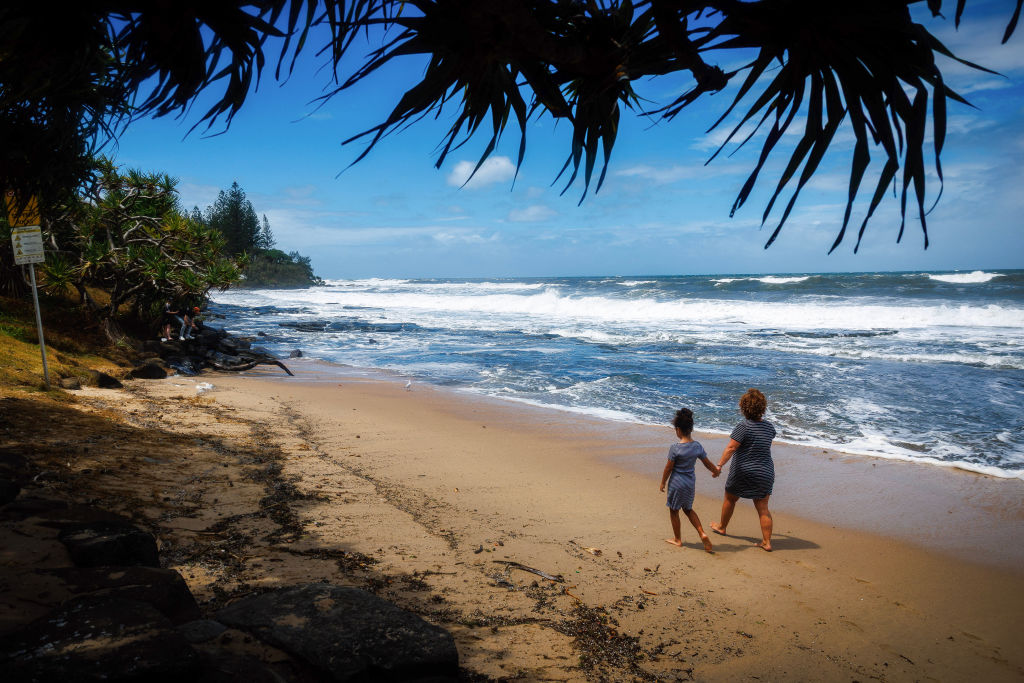

New data from the Regional Australia Institute (RAI) reveals one region continues to soak up the most domestic migrants.
While many city slickers are choosing to relocate to quieter pastures, choosing locations like Tasmania or regional Victoria, it’s the Sunshine State that keeps on scooping up the nation’s internal migrants.
The Sunshine Coast region sits north of Brisbane and encompasses large expanse of towns, including urban centres like Maroochydore, rural hinterland areas such as Maleny, and popular beaches like Mooloolaba.
RAI CEO Liz Ritchie said the news was a good outcome for country Australia.
“We continue to see the usual regions experiencing the largest net internal migration in the year to September 2025,” she said.
“The perennially popular top three spots—the Sunshine Coast with 8.8 percent of total net internal migration to regions, Greater Geelong (7.7 percent) and Lake Macquarie (4.1 percent) all feature, with Fraser Coast (3.6 percent) and Moorabool (3.5 percent) in a battle for fourth and fifth favourite,” she said.
The Regional Movers Index (RMI) is compiled through a partnership with the RAI and the Commonwealth Bank of Australia (CBA).
It shows city-to-region migration has not slowed in Australia, accounting for 11.5 percent of all major relocations.
Meanwhile, net migration to all regions was up 11.8 percent in the 12 months to September 2025—one of the highest levels since the COVID pandemic.
Sydney and Melbourne locals are the largest cohort of domestic migrants.
CBA regional manager Kylie Allen said some sectors still struggled in the regions despite the population influx.
“Wodonga and neighbouring Albury (in Victoria) are seeing investment and infrastructure developments across transport, education, health and defence, creating jobs and trengthening the local economy,” she said.
“We’ve seen our own business customers benefit from an uplift in trade due to the inflow of new residents, and other businesses pivot and diversify into different areas to meet new demand.
“While the outlook is positive, attracting and retaining skilled professionals remains a challenge across regional areas—even with a growing population, some sectors remain under pressure. Continued investment in training and upskilling will be key to meeting demand.”
Queenslanders Paying More
Demand also puts pressure on pricing—a quick search reveals the cheapest dwellings on the Sunshine Coast will set buyers back at least half a million dollars.
Real Estate Institute of Queensland (REIQ) data shows Queenslanders are bearing the brunt of an insufficient housing supply—the state absorbs the highest volume of net domestic migration, according to the Australian Bureau of Statistics—the statewide median house price rose 4.83 percent in November 2025, meaning house prices had risen 12.67 percent in the space of a single year.
“Across every corner of the state, prices are climbing in a concerning but classic supply story—when demand outstrips new housing delivery, prices inevitably move higher,” REIQ CEO Antonia Mercorella said.
“Queensland’s housing market remains remarkably resilient and fiercely competitive, but price growth without sufficient new supply only deepens affordability challenges.
“If we want a future where home ownership remains attainable, governments must stay firmly committed to driving new housing delivery and supporting first home buyers.”
 Friends Read Free
Copy
Facebook
Tweet
Friends Read Free
Copy
Facebook
Tweet