

CNOOC-Nexen Deal Approved
During the latter half of 2012, debate raged over CNOOC’S (China National Offshore Oil Corporation) $15 billion takeover of Calgary-based Nexen.
Shareholders welcomed the deal, looking forward to a 60 percent premium on their stocks, but critics charged the takeover would give the Chinese regime a foothold in the oil sands and open the floodgates to future takeovers by Chinese state-owned oil companies.
CNOOC’s history of pollution and human rights abuses against Tibetans, Falun Gong adherents, and Burmese workers made the takeover especially controversial.
The NDP opposed the deal while Liberal leadership candidate Justin Trudeau endorsed it. The deal was especially unpopular in Alberta, with Tory backbenchers speaking out against it.
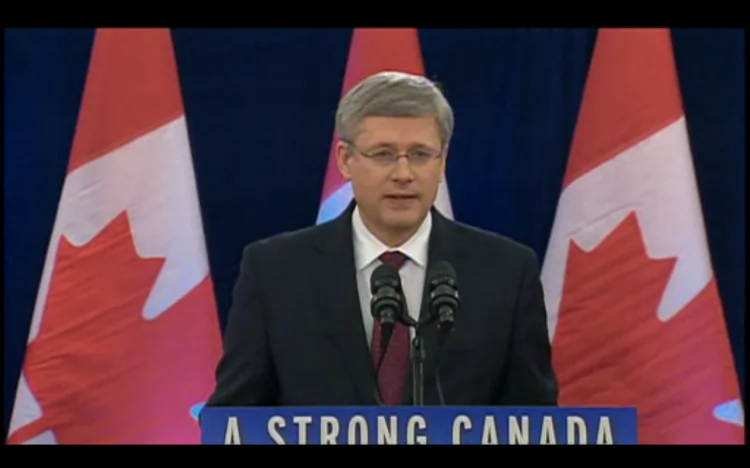
The deal was eventually approved but Prime Minister Stephen Harper said future takeovers by foreign state-owned enterprises will not go through unless the situation is exceptional. The PM said he was worried about the prospect of the oil sands being nationalized by a foreign government.
New Bell-Astral Mega-Merger Bid Submitted
In November, BCE Inc. (owner of Bell Canada) submitted a new $3.38 billion proposal to acquire Montreal-based Astral Media Inc., one month after federal regulatory bodies blocked its previous bid submitted in March.
The deal is subject to approval by the Canadian Radio-television and Telecommunications Commission (CRTC) and the Competition Bureau.
Consumer, industry, and activist groups had earlier raised alarm over the proposed mega-merger, saying that it threatened to give BCE too much market share and would burden consumers with increased costs and reduced TV viewing options.
CRTC said the transaction would squelch competition and was not in the public interest. The merger would have seen BCE control nearly 45 percent of the English TV market and almost 35 percent of the French TV audience.
BCE said its new proposal addresses the CRTC’s concerns and will benefit Canadian consumers, content creators, and the broadcasting industry.
Carney to Head England’s Central Bank
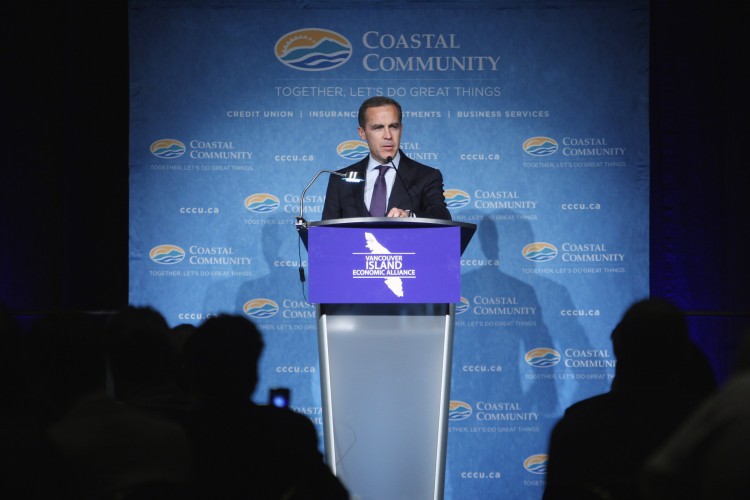
The Bank of Canada announced in late November that Governor Mark Carney will take over England’s central bank next year. Carney will serve a five-year term as Governor of the Bank of England, starting July 1, 2013.
Carney will remain in his current position until June 1. He will also remain as chair of the Financial Stability Board (FSB), a position he assumed for a three-year term in November 2011. The FSB is an international agency that coordinates the work of national and international authorities to promote implementation of policies and reforms aimed at financial stability.
Meanwhile, Carney has encountered controversy in recent weeks after a Globe and Mail story detailed his apparent consideration of a bid for the federal Liberal Party leadership.
Liberal efforts to court Carney were widely reported, but only recently did it come to light that Carney seemed to consider them carefully, going as far as vacationing with Liberal MP Scott Brison.
RIM seeks Turnaround with January BB10 Launch
Research in Motion (RIM) had a challenging year with sagging stock prices, mass layoffs, and product delays of its BlackBerry 10 smartphone, losing market share at a rapid pace.

However, the company hopes for a turnaround with the Jan. 30 debut of the BB10 touch-screen phone. This week RIM launched a BB10 beta-testing program involving over 120 customers, including 64 Fortune 500 companies.
According to market research firm IDC, the BlackBerry will battle Microsoft Windows Phone for No. 3 spot in the worldwide mobile phone market in 2013, after Google Inc. and Apple Inc.
In the lead-up to the Dec. 20 release of Q3 results, RIM’s share prices have more than doubled since late September, when the company posted Q2 results that were more positive than many expected.
In 2012 the Waterloo-based iconic company managed to continue growing its subscriber base, now at 80 million, despite delay of the BB10 launch and Q1 results that were far worse than pessimistic predictions.
In a major leadership overhaul in January, COO Thorsten Heins took over as CEO, replacing co-CEOs Mike Lazaridis and Jim Balsillie.
To cut costs by at least $1 billion by fiscal year-end, Heins closed manufacturing facilities and announced layoffs of 5,000 employees from its 16,500-strong workforce.
Canadians Face Rising Household Debt
The rising indebtedness of Canadian households has remained a key risk to the financial system in 2012, with the federal government continuing to warn Canadians to ensure their borrowing is in line with their ability to service their debt.

A Statistics Canada report released this month showed that the ratio of household debt to annual disposable income reached 164.6 percent in the third quarter of 2012, hitting a new record. Canadian families now on average owe nearly $1.65 for each after-tax dollar they earn, up from about $1.63 in the previous quarter and about $1.61 a year ago.
A November quarterly report by TransUnion stated that the average Canadian’s non-mortgage debt climbed 4.6 percent year-over-year in the third quarter, reaching an average of $26,768, the largest year-over-year increase since the end of 2010.
The rising debt levels make Canadians particularly vulnerable should interest rates rise, house prices fall sharply, or a job loss is incurred. The Bank of Canada has also identified housing market imbalances in terms of sales, construction, prices, and demand as another key domestic risk.
Government agencies, banks, schools, and non-profit organizations alike are pushing forward efforts to promote financial literacy among Canadians.
The Epoch Times publishes in 35 countries and in 20 languages. Subscribe to our e-newsletter.
 Friends Read Free
Copy
Facebook
Tweet
Friends Read Free
Copy
Facebook
Tweet