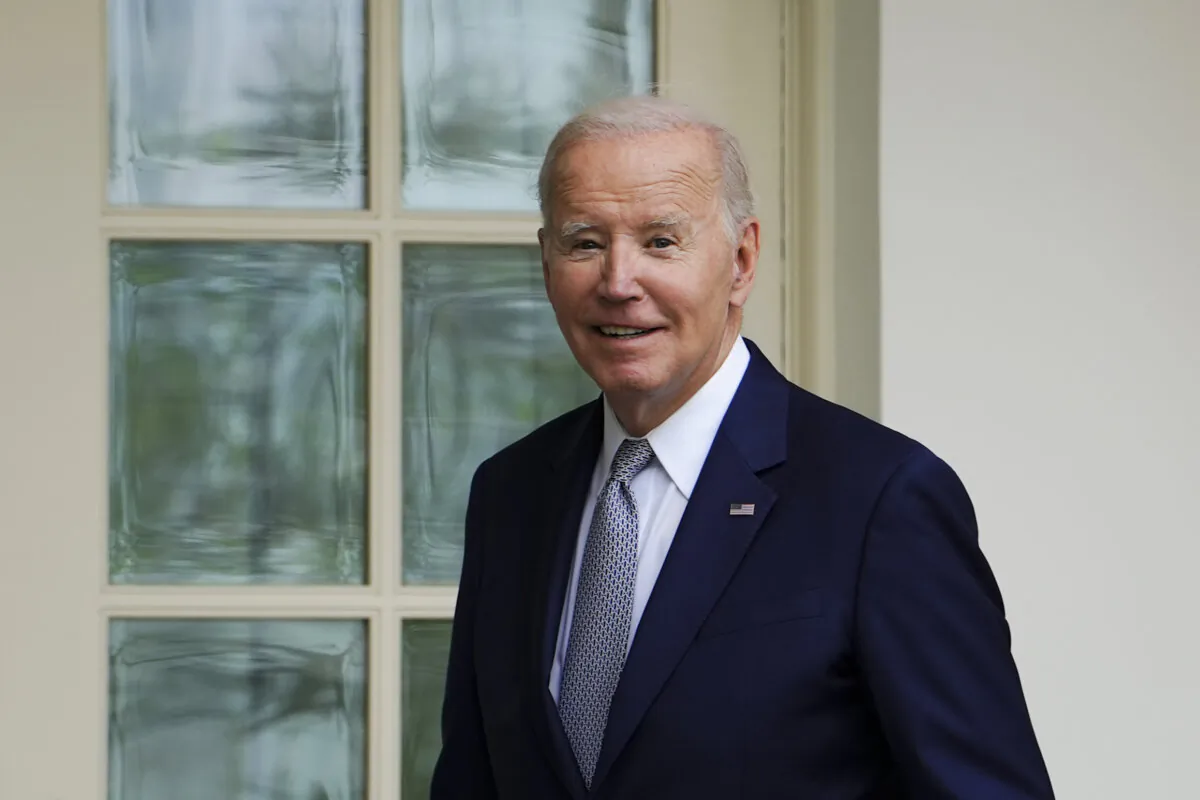

A federal appeals court on July 20 ruled against former President Joe Biden, finding that he was not entitled to an injunction blocking the release of audio recordings and transcripts of his interviews with his memoir’s ghostwriter.
“Biden has not shown a likelihood of success on the merits,” Circuit Judges Sri Srinivasan and Gregory Katsas in Washington said.
The Heritage Foundation, a conservative think tank, sued the government in 2024, alleging it wrongly withheld most of the recordings and transcripts from conversations Biden had with ghostwriter Mark Zwonitzer in 2016 and 2017.
After President Donald Trump took office in 2025, the Department of Justice said that it planned to disclose the withheld materials to The Heritage Foundation and a House of Representatives panel. Biden intervened, seeking court rulings prohibiting the disclosure of the materials.
Judge Dabney Friedrich of the U.S. District Court for the District of Columbia in June ruled in favor of The Heritage Foundation, citing how the case “involves an unusually strong public interest in the release of law enforcement materials,” which she said outweighs the privacy interests protected by exceptions to the Freedom of Information Act, which allows requests for government-held information.
Friedrich stayed her order to let Biden appeal if he chose, and he did, leading to Monday’s decision.
A majority of the split panel of the U.S. Court of Appeals for the District of Columbia Circuit said that the primary question is whether Biden will likely succeed in showing exemptions to the act apply to the recordings and transcripts.
One exemption sought by Biden protects law enforcement records that, if shared, would reasonably be expected to invade personal privacy.
There is significant public interest in a special counsel investigation of Biden’s alleged mishandling of classified information, and because the special counsel relied on the tapes and transcripts, “the requested materials are germane to that interest,” the majority said.
The “extensive redactions” that the Department of Justice entered on the version of the records it plans to release help protect Biden’s privacy, and the public interest outweighs any remaining personal privacy interest, they added later.
The panel gave Biden until Aug. 3 to appeal to the full appeals court or the Supreme Court.
Special counsel Robert Hur’s year-long investigation produced a 345-page report, published in February 2024, that concluded that no criminal charges were warranted against the then-81-year-old president. Hur said the evidence was insufficient to prove a criminal case beyond a reasonable doubt.
A lawyer representing the former president did not return a request for comment by the time of publication.
Jeffrey Clark, vice president of litigation for the Heritage Foundation’s Oversight Project, said in a July 20 post on X that “we continue to beat Joe Biden’s heavily overcompensated lawyers trying to continue to hide the Autopen Presidency.”
Circuit Judge Florence Pan said in a dissent that she would have sided with Biden.
“In my view, Biden has shown a substantial privacy interest,” Pan wrote, adding that the interest of the public does not outweigh the privacy of Biden because many of the materials from the special counsel investigation have already been made public.
“Even if the substantial competing interests might ultimately weigh in favor of releasing the materials, there is no urgency that requires revealing them at this time,” Pan said.
 Friends Read Free
Copy
Facebook
Tweet
Friends Read Free
Copy
Facebook
Tweet